
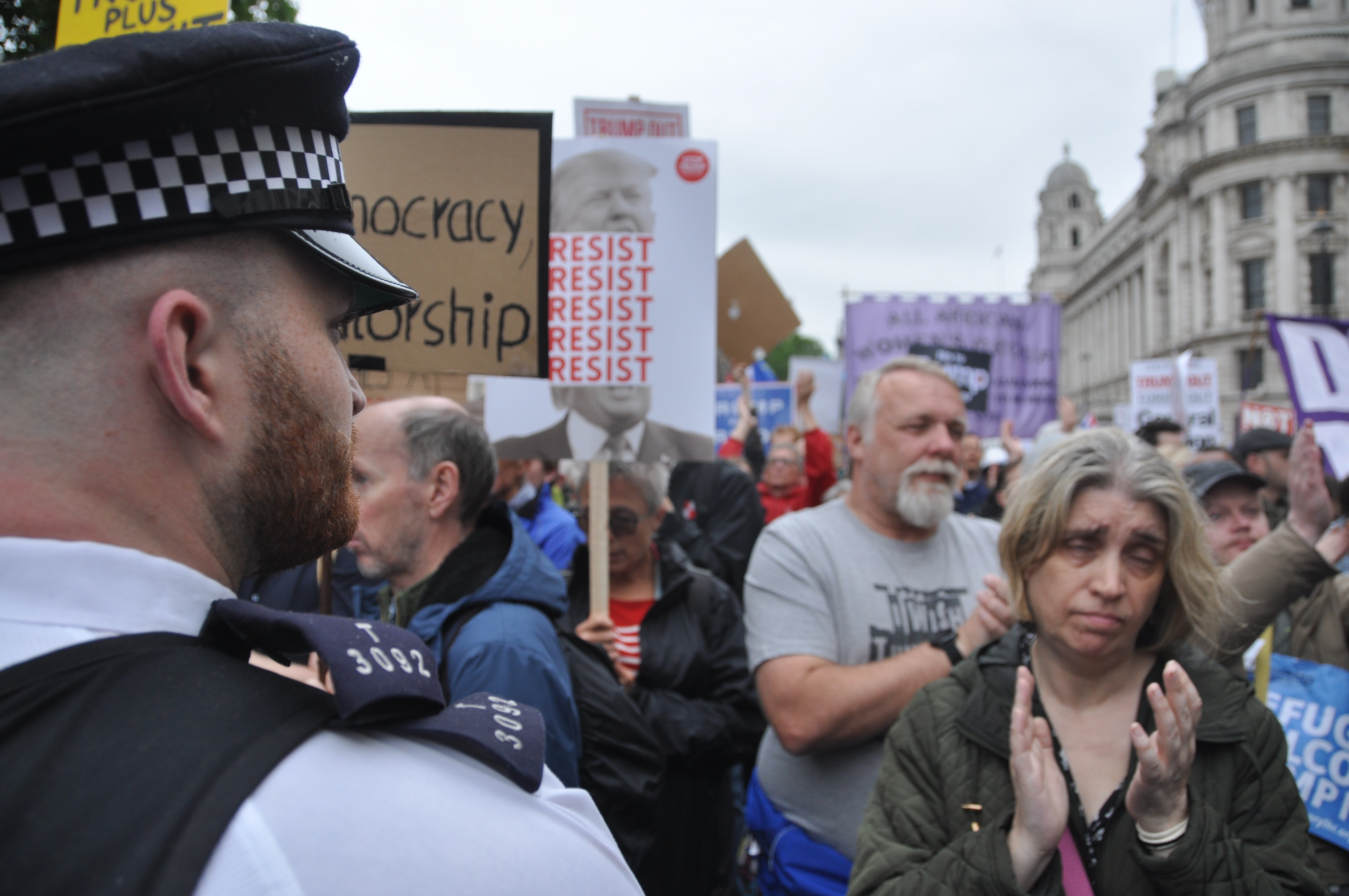
Human Rights Watch (HRW) reported on Wednesday that UK authorities have “severely restricted” the right to protest, contravening international human rights obligations and creating an environment in which peaceful dissent can be treated as a criminal act.
The report noted that the UK’s Labour government has not reversed extensive anti-protest laws introduced by the previous Conservative administration. These include the Police, Crime, Sentencing and Courts Act and the Public Order Act. Further, the government has sought to expand these powers with the Crime and Policing Bill and “unprecedented misuse” of terrorism legislation.
Lydia Gall, a senior Europe and Central Asia researcher for HRW, summarized the organization’s position on these approaches, saying:
The UK is now adopting protest-control tactics imposed in countries where democratic safeguards are collapsing. The UK should oppose such measures, not replicate and endorse them … The UK should be protecting the right to protest instead of stripping away people’s rights. Lawmakers should revise the new law to remove measures that would further restrict the right to protest.
The primary concern is that provisions are “vaguely worded,” giving police the power to ban protests before they take place or imposing “unnecessary and disproportionate conditions” on protests. HRW claimed this results in “subjective and arbitrary police decisions and arbitrary arrests,” which can diminish public trust and space for political engagement. The restrictions treat protests as a threat rather than a right to be protected, and in doing so, HRW said that the UK is not only failing to uphold human rights obligations, but also “undermining the fabric of democracy.”
The UK is legally obligated to protect freedom of expression and peaceful assembly, as the country is bound by the International Covenant on Civil and Political Rights and the European Convention on Human Rights.
Laura O’Brien, a leading civil liberties lawyer, told HRW that there have been issues with police no longer knowing what amounts to a criminal offense and exercising concerning levels of discretion. She described this in the context of pro-Palestinian protests, which were addressed in the HRW report, saying:
We are talking about people with placards, we are not talking about direct action in the sense of “you have broken this, or you have blocked this, or you have caused a disruption.” It’s about the message. The approach of police, it seems, is to arrest first, and decide later.
Previous issues with these tactics include giving environmental protestors probation conditions which are typically designed for serious offenders, as well as charges punishable with up to ten years imprisonment.
HRW urges the government to repeal or revise the pieces of legislation and to establish a public inquiry into the policing of protests to ensure compliance with international human rights law. Their concerns are shared by other domestic and international human rights organizations.
The Crime and Policing Bill is currently pending and is set to be debated in the House of Lords in January 2026.

