
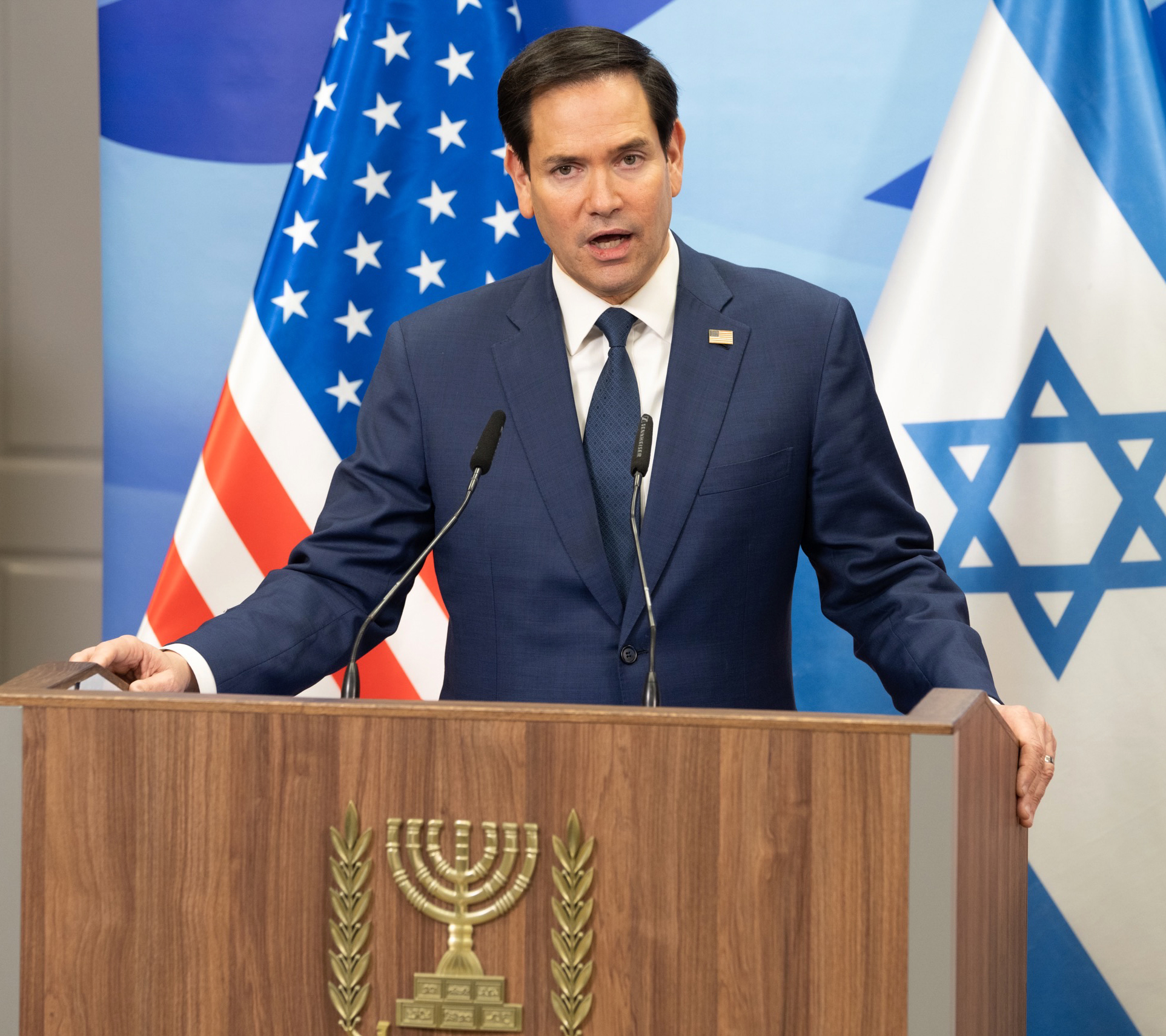
The US government on Friday announced sanctions on two judges from the Appeals Chamber of the International Criminal Court, Gocha Lordkipanidze of Georgia and Erdenebalsuren Damdin of Mongolia, due to their “illegitimate targeting of Israel.” The sanctions bar the named individuals from entry into the US, and extends to their family members. The measures also block any assets the individuals hold in the US.
In a press statement, US Secretary of State Marco Rubio cited provisions of February’s Executive Order 14203, “Imposing Sanctions on the International Criminal Court.” The order established that any non-US person or organization can be sanctioned if they engage directly in an effort of the ICC to investigate, arrest, detain or prosecute a “protected person” without the consent of that person’s country of nationality. Rubio described the conduct of both judges as fitting these stipulations, stating: “These individuals have directly engaged in efforts by the ICC to investigate, arrest, detain, or prosecute Israeli nationals, without Israel’s consent, including voting with the majority in favor of the ICC’s ruling against Israel’s appeal on December 15.”
On December 15, the ICC rejected Israel’s legal challenge to the case that has been opened over possible war crimes in the Gaza Strip. The challenge demanded that the Israeli government be issued a new notification by the Court accounting for the events following the October 7 attacks of 2023. The court rejected this appeal on the basis that a previous notification in 2021 covered potential future events. Both Lordkipanidze and Damdin voted in favor of rejection of the appeal.
This marks the third round of sanctions enacted by the Trump administration in connection with the Israel-Gaza conflict. In February 2025, the administration placed a sanction on the then-chief prosecutor of the ICC, Karim Khan. In June 2025, sanctions were further expanded to four judges: Solomy Balungi Bossa (Uganda), Luz Del Carmen Ibanez Carranza (Peru), Reine Adelaide Sophie Alapini Gansou (Benin), and Beti Hohler (Slovenia). Most recently, in August, sanctions were placed on judges Kimberly Prost (Canada) and Nicolas Guillou (France) and deputy judges Nazhat Shameem Khan (Fiji) and Mame Mandiaye Niang (Senegal).
Criticism of the new sanctions has been expressed by the Presidency of the Assembly of States Parties, describing the measures as “regrettable attempts to impede the Court and its personnel in the exercise of their independent judicial functions in full conformity with the Rome Statute.” The Assembly of States Parties serves as the ICC’s governing body, bringing together delegates from states that are party to the Rome Statute. Past sanctions imposed by the US regarding Israel against the ICC have been described by Human Rights Watch as putting “justice at risk.”
The criticism was rejected by Rubio, stated that “the United States and Israel are not party to the Rome Statute and therefore reject the ICC’s jurisdiction. We will continue to respond with significant and tangible consequences to the ICC’s lawfare and overreach.”

.jpg)