
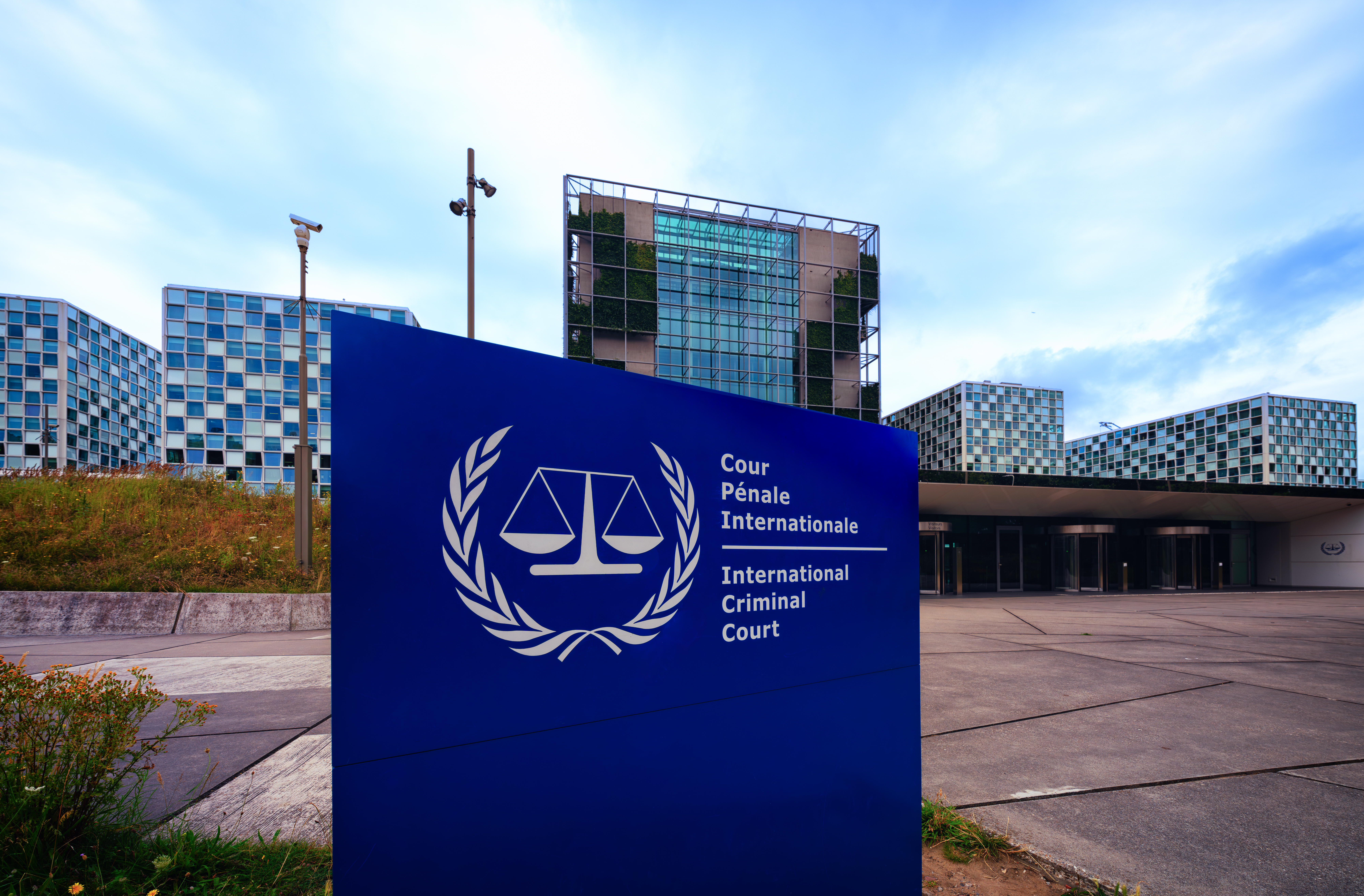
Human Rights Watch (HRW) on Monday urged member states of the International Criminal Court (ICC) to safeguard the court and combat impunity for international crimes at the Assembly of States Parties (ASP), which meets at The Hague in the Netherlands this week. In a press release, it the organization stressed the necessity to do so at this moment, as the court is facing increasing threats, sanctions, and attacks by several states seeking to undermine its mandate.
According to HRW, numerous States Parties have sought to undermine the ICC’s function as a court of last resort. For instance, President Donald Trump issued an executive order in February that authorized the freezing of assets, entry bans, and sanctions against ICC officials and individuals supporting the ICC’s work. The executive order has been used to impose sanctions on ICC court officials, a UN expert, and Palestinian human rights organizations.
HRW underlined that US sanctions can adversely affect the ICC’s goal of preventing impunity because financial institutions tend to adhere to US sanctions. This may result in a loss of funding, and an inability to access bank accounts or other financial services of the court. In response, and in line with calls by ICC Justice Nicolas Guillou, one of the persons on the sanctions list, HRW recommended that the European Union se its blocking statute to counter the effect of US sanctions. This statute blocks the extra-territorial application of laws adopted by third countries considered to be contrary to international law.
Another pronounced issue is States Parties’ failure to arrest and surrender individuals against whom the ICC has issued arrest warrants. For instance, Hungary did not arrest Israel’s Prime Minister Benjamin Netanyahu when he visited Budapest in April, and, following this, formally withdrew from the ICC on June 2. The withdrawal is to take effect on June 2, 2026. Three other State Parties—Burkina Faso, Niger and Mali—also announced their intention to withdraw in September.
In addition, Russia under the government of Vladimir Putin issued arrest warrants in 2023 and 2024 against ICC officials in response to the warrants issued for Putin and Russian Foreign Minister Lavrov. The court also faced a second serious cyber attack in June. Noting this trend, Liz Evenson, HRW’s international justice director, stated that “government efforts to undermine the ICC reflect broader attacks on the global rule of law, aiming to disable institutions that seek to hold those responsible for the worst crimes to account.”
Finally, HRW emphasized that the ICC continues to achieve meaningful outcomes in international justice. In March 2025, the Philippines arrested and surrendered former president Rodrigo Duterte, who faces charges of crimes against humanity related to the country’s “war on drugs.” The ICC also issued milestone judgments regarding the Central African Republic (CAR) and Darfur situations. On July 24, the ICC convicted two senior leaders of the CAR’s Anti-Balaka movement. They were found guilty of numerous war crimes and crimes against humanity committed during the CAR’s internal conflict beginning 12 years ago. On October 6, the ICC convicted Ali Muhammad Ali Abd-Al-Rahman, a former Janjaweed militia leader, of 27 counts of crimes against humanity and war crimes committed in Darfur, Sudan.
Scheduled for December 1 to 6, the ASP will principally consider the issue of non-compliance by ICC States Parties. HRW’s Evenson emphasized that the ICC “remains the court of last resort for thousands of victims and their families who have nowhere else to turn.”
The ICC, established in 2002, has jurisdiction over individuals suspected of committing international crimes enshrined in the Rome Statute, such as war crimes, crimes against humanity, and genocide.

_(54032051190).jpg)