
Human Rights Watch (HRW) reported on Tuesday that Tunisian authorities have arrested three prominent activists following a “sham trial.” The organization urged authorities to immediately overturn the “unjust convictions” and release those detained.
Bassam Khawaja, deputy Middle East and North Africa director at HRW, highlighted the political significance of the detentions:
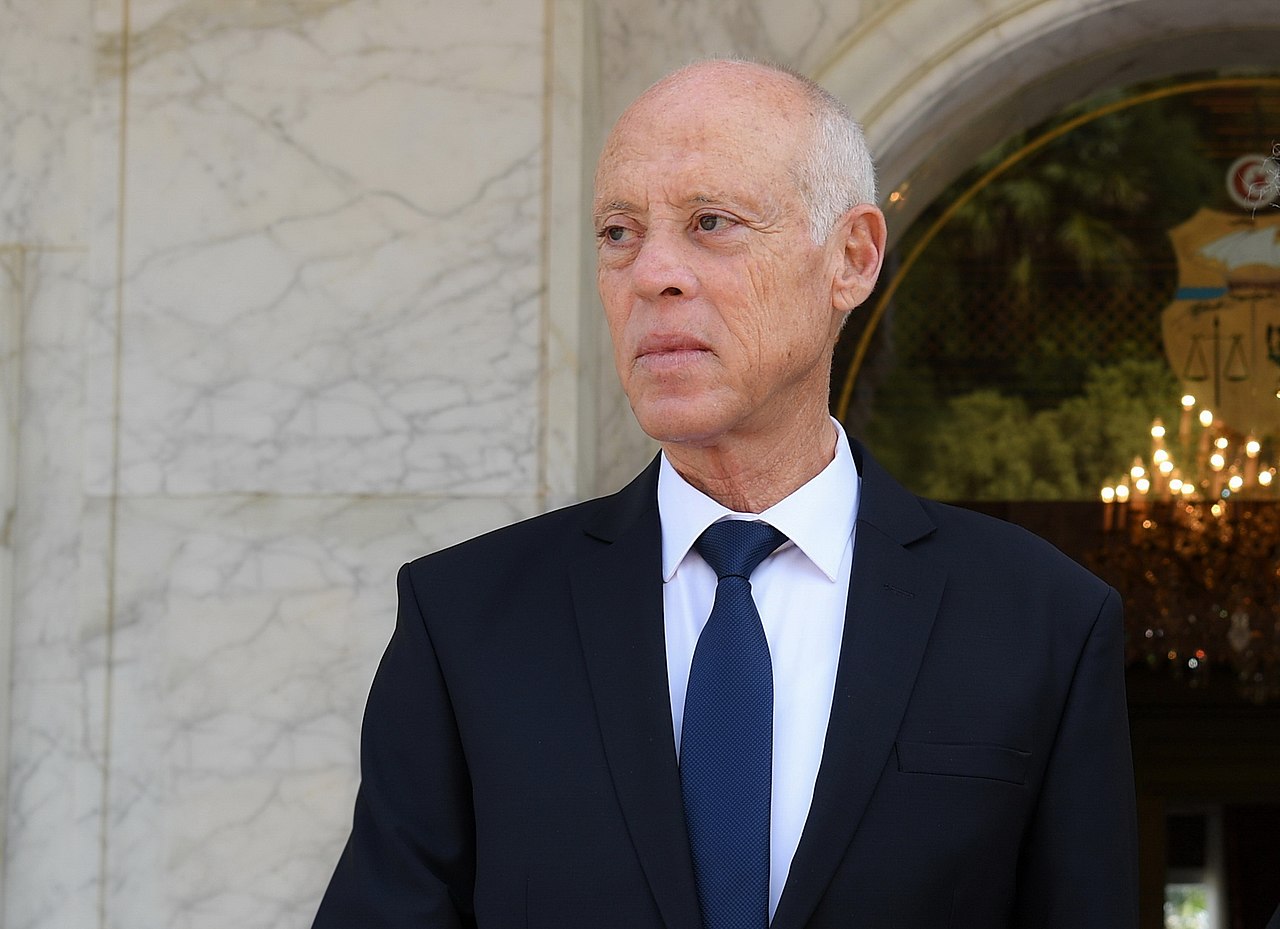
The arrests of prominent opposition figures are the latest step in President Kais Saied’s scheme to eliminate any alternative to his one-man rule… The Tunisian authorities have effectively criminalized political opposition and human rights activism, crushing any hope of a return to a democratic process. Tunisia’s international partners…should condemn the country’s spiraling descent into authoritarianism.
Those arrested are Chaima Issa, a political activist, Ayachi Hammami, a human rights lawyer, and Ahmed Neijib Chebbi, a prominent opposition figure. Issa is a member of the National Salvation Front, the main opposition coalition to President Kais Saied, as well as a co-founder of the Citizens Against the Coup collective, formed to oppose Saied’s seizure of sweeping executive powers. Hammami was initially a defense lawyer in the case but was later charged as a defendant. Chebbi is also a lawyer who co-founded the National Salvation Front.
These arrests follow what HRW has deemed the politically motivated “Conspiracy Case.” In this case, the Tunis Court of First Instance issued sentences after three sessions, without an opportunity for the defendants to present defense arguments and without other due process protections. The initial decision sentenced 37 people to prison terms for “conspiracy against state security” and terrorism offenses under Tunisia’s Penal Code and a 2015 Counterterrorism Law. Amnesty International has expressed similar criticisms about the legitimacy of the case.
HRW published a report in April finding that arbitrary arrests and detentions of people deemed critical of the Tunisian government have increased since Saied’s concentration of power in early 2023. The investigation found that detainees are often held in “harsh” conditions and that authorities have “failed to provide adequate medical care.” Detainees have also been subject to 24-hour surveillance and artificial light.
President Saied was re-elected in October 2024, after a first term characterized by an overhaul of the country’s institutions to “give him more authority.” He pledged to cleanse the country of corruption and to defend against foreign and domestic threats. President Saied has defended the detentions, and condemned a European Parliament resolution calling for the release of detainees as “blatant interference” in Tunisian affairs. He maintains that others “can learn lessons from us [Tunisia] on rights and freedoms.”
HRW will closely watch the ongoing detention of the activists with concern over Tunisia’s international legal obligations. Tunisia is a party to the International Covenant on Civil and Political Rights (ICCPR) and the African Charter on Human and People’s Rights. Both agreements guarantee the right to freedom of expression and assembly, fair trials, and not to be subjected to arbitrary arrest or detention.

