
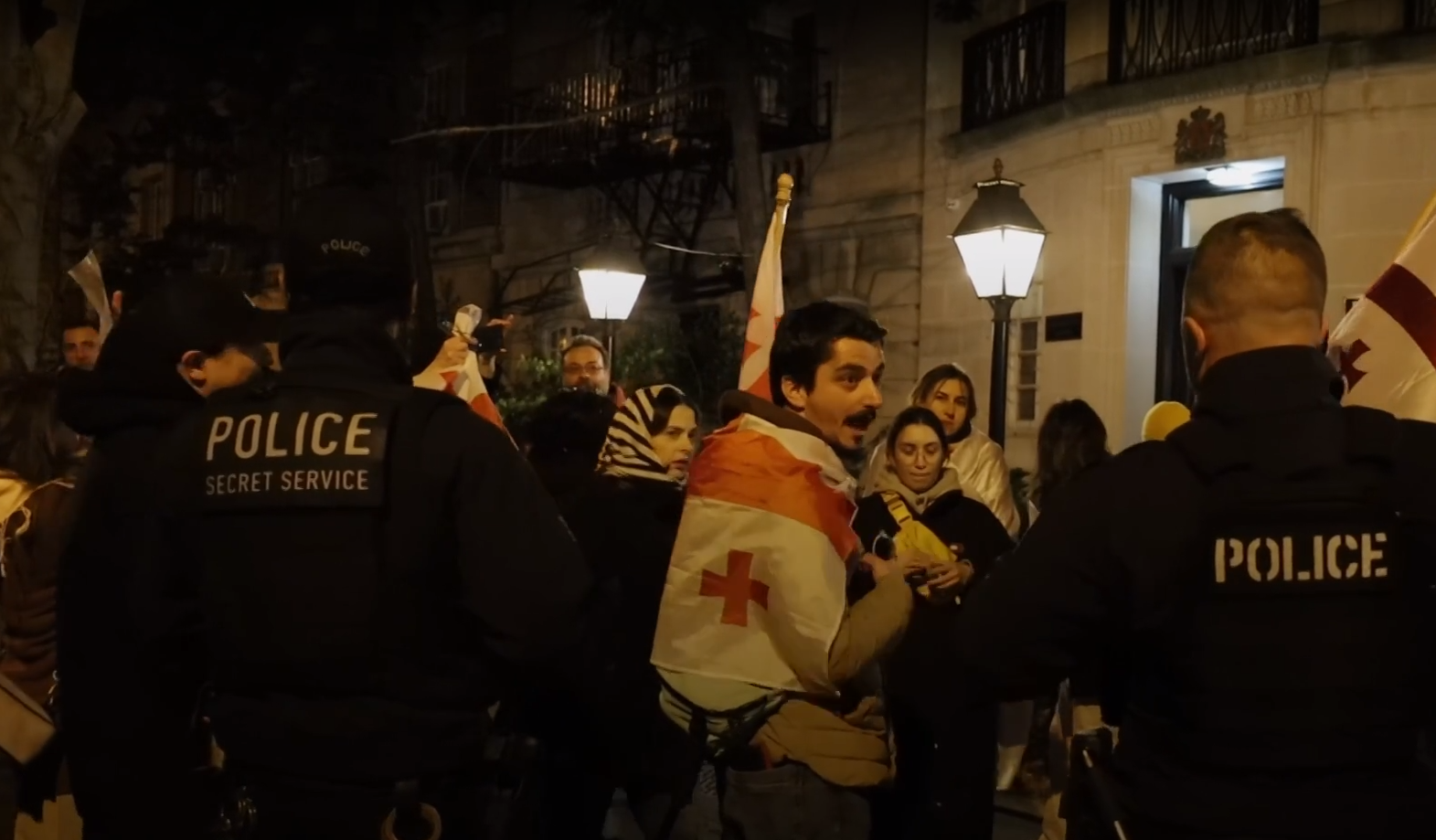
Human Rights Watch on Thursday condemned new laws in the Republic of Georgia, stating they effectively criminalize peaceful protest by imposing heavy fines and empowering police to detain demonstrators. These measures, adopted in late 2024 and enforced throughout 2025, have left citizens vulnerable to detention and financial penalties simply for exercising their right to peaceful assembly.
In November 2024, Georgia’s ruling party suddenly suspended the country’s long-standing bid to join the European Union (EU), a move that triggered widespread public outrage and mass demonstrations across the capital, Tbilisi, and other cities.
The government responded to the protests with an enactment of new laws that sharply curtailed the right to peaceful demonstrations.
In February 2025, lawmakers extended the duration of detention for administrative offenses from 15 days to 60 days targeting protest-related infractions. These offenses include petty hooliganism, disrespecting police orders, or going contrary to assembly rules. New offenses, including “verbal insult” of officials, is punishable by up to 45 days in custody. Spontaneous demonstrations now require advance notification, while indoor gatherings demand written authorization beforehand.
Parliament in July 2025 approved measures mandating 30-60 days of detention for individuals with outstanding fines who commit even minor protest-related violations. This effectively punished repeat participants in assemblies by tying financial penalties to custodial sentences. Adjustments were also made to the Administrative Code by creating a direct link between unpaid fines and custodial punishments, further discouraging civic participation.
In October 2025, amendments comprised of an escalation in criminal charges. Repeated minor protests actions such as mask-wearing, blocking roads, erecting temporary structures or joining a protest blocked by the police were reclassified as felonies. The punishment is up to two years in prison for ordinary participants and up to four years in prison for those identified as organizers.
Human Rights Watch emphasized that these measures, together with abusive policing, violate Georgia’s obligations under international law. Georgia, being a state party to the International Covenant on Civil and Political Rights (ICCPR), is legally bound to respect and protect the civil and political right of its citizens, including freedom of expression and peaceful assembly pursuant to Article 21 of the ICCPR.
Georgia’s government has rejected accusations that its new protest laws and policing tactics are repressive, framing domestic and international criticism as foreign interference and misinformation. Georgian President Mikheil Kavelashvili accused outlets like BBC of spreading “completely unverified information” that harms Georgia’s reputation.
