
Abu Bakar Khan is a JURIST staff correspondent and a lawyer based in Pakistan.
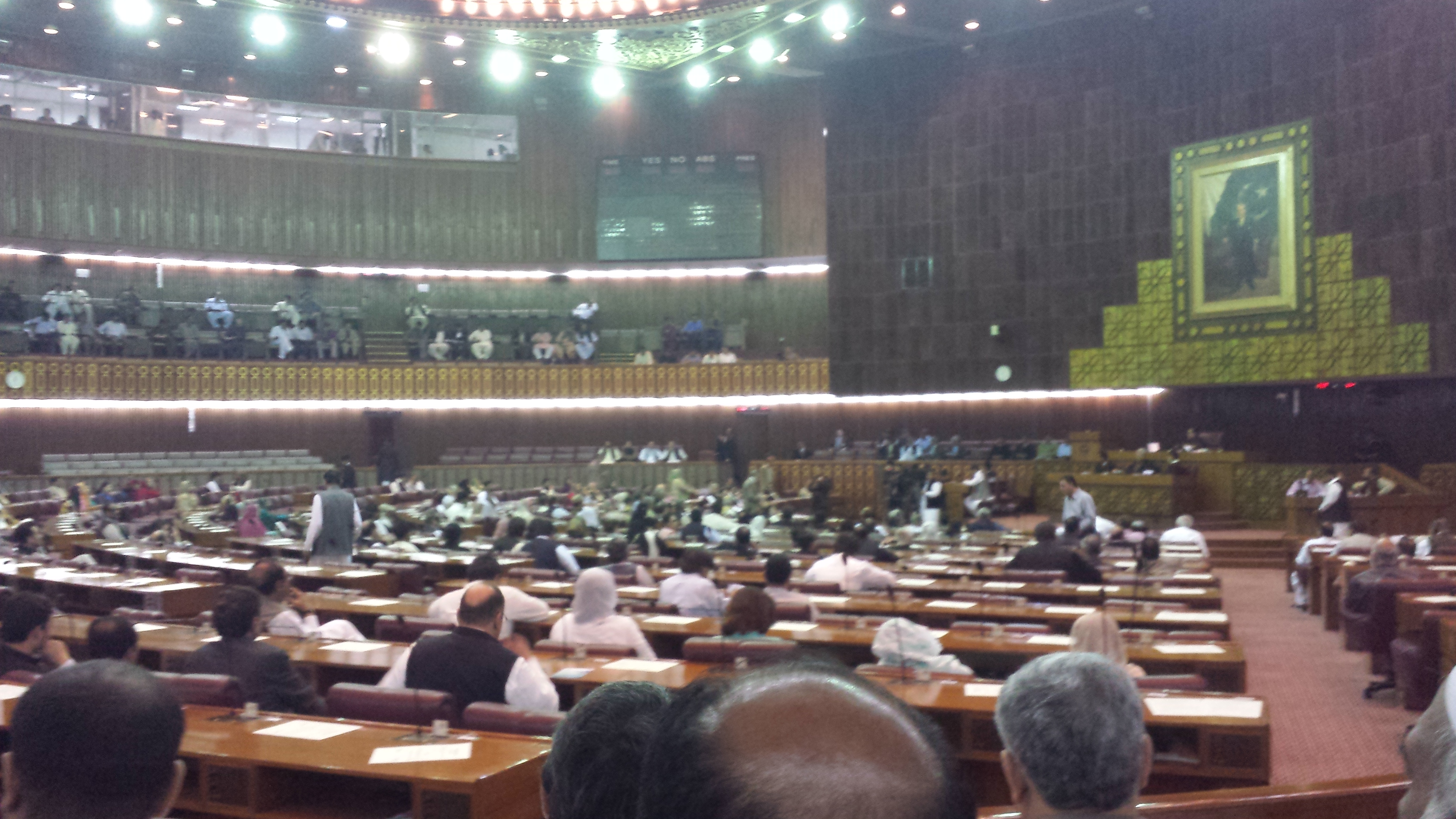
On November 13, the 27th Amendment to the Constitution of Pakistan completed a legislative journey that lasted less than a week. Introduced in the Senate on November 10 and approved the same day, the amendment passed through the National Assembly with revisions on November 12, and returned to the Senate for final approval on November 13. President Asif Ali Zardari assented to the amendment that same night, and it was immediately published in the official gazette. What began as a rapid parliamentary exercise ended as one of the most far-reaching constitutional restructurings in Pakistan’s recent history.
The 27th Amendment comes just one year after the controversial 26th Amendment—one that had already reshaped judicial authority and administrative control within the superior courts. While the 26th Amendment faced sustained opposition, criticism, and ongoing legal challenges, the 27th Amendment moved through Parliament with striking urgency and no public engagement.
At the heart of the restructuring is the creation of a Federal Constitutional Court (FCC), which will now be the country’s apex constitutional court, the highest court in Pakistan. Under the newly added Article 175E, the FCC will have the exclusive jurisdiction over questions of constitutional interpretation, disputes between the federal and provincial governments, and the enforcement of fundamental rights. Under the executive’s direction, a newly created forum—designed, appointed, and structured by the executive—has taken over the jurisdiction that the Supreme Court of Pakistan held for decades.
The Constitution’s new Article 175I raises the retirement age from 65 for Supreme Court judges to 68 for FCC judges, an increase that will enable the executive’s preferred judges to enjoy longer tenures, and to serve as Chief Justice of the FCC. On the advice of the Prime Minister and Chief Justice, the President appointed the FCC’s first Chief Justice, and the first round of judges. In other words, the FCC’s founding composition will consist of judges handpicked by the executive.
Going forward, FCC judges will be appointed by a reconstituted Judicial Commission, of which judicial members are now a minority. Of the Commission’s thirteen members, only five are judicial, giving executive and parliamentary representatives a decisive majority. There is still no stated criterion for selecting superior court judges.
Unlike the Supreme Court—whose jurisprudence and constitutional doctrine have developed through decades of reasoned decisions—the FCC will not be bound by any prior judicial precedent, yet its decisions will bind all other courts under Article 189. As the Supreme Court’s constitutional jurisdiction shrinks, its institutional authority diminishes along with it.
The controversial amendment also introduces profound changes to the Judicial Commission of Pakistan (JCP) and the Supreme Judicial Council (SJC). High court judges may now be transferred across provinces without their consent under Article 200. A judge who refuses transfer could face disciplinary proceedings before the SJC, which will now be comprised of executive-appointed members (Article 200(4)). These proceedings are not public and carry the risk that judges could be removed. With these changes, there is no option to disagree with the executive establishment. This amendment strikes directly at structural guarantees of judicial independence. Judges deciding cases involving powerful interests may now weigh the professional consequences more heavily than the constitutional questions before them.
Beyond the judiciary, the 27th Amendment significantly changes Pakistan’s military command structure. It amends Article 243 to create the position of Chief of Defence Forces (CDF), and concentrates military authority in the hands of the Army Chief. Article 243(7) of the amendment also codifies special protections for senior military leadership: five-star officers will retain rank, uniform, and privileges for life. In addition, Article 243(9) grants to the President, Field Marshal, Fleet Admiral, and Air Force Marshal lifetime immunity from arrest and all criminal and civil proceedings. No elected official enjoys such protections.
The 27th Amendment formalizes the military’s dominance over constitutional institutions, a power it already wields in practice. It enshrines into the constitutional text the supremacy of uniform over ballot. Taken together, these reforms shift the balance of power between Pakistan’s institutions, marking a structural turning point that weakens judicial autonomy, expands executive reach, and further entrenches military power over constitutional order.
Its composition and method of appointment mean that the FCC will likely reflect the preferences of the executive, at least in the short term. A judiciary vulnerable to transfers cannot dissent freely. A judiciary whose constitutional jurisdiction has been reallocated cannot check executive excess. And a judiciary disciplined by bodies with executive majorities cannot speak truth to power.
Pakistan’s evolution through the 1973 Constitution, the Eighteenth Amendment, and decades of jurisprudence has affirmed judicial independence and civilian supremacy. The 25th and 27th Amendments clash with that trajectory. These amendments strengthen the authority of unelected institutions while weakening checks and balances safeguards.
United States Founding Father and second president John Adams once wrote, “The judiciary must be independent of every other power; otherwise, there is no liberty, no security, no justice.” Those words carry an unsettling resonance in Pakistan today. A judiciary dependent on the executive cannot check it. A judiciary dependent on administrative approval cannot be impartial. When courts lose their independence, people lose their last defence. This is more than a legal argument—it is a constitutional redefinition of the relationship between citizen and state.
The 27th Amendment may strengthen the architecture of power, but it weakens the moral architecture of the Constitution. It transforms judicial office into a mode of compliance. It constitutionalizes military supremacy. And it rewrites the relationship between citizen and state without public debate, transparency, or consensus. What emerges is a constitutional framework in which unelected institutions hold unprecedented power, security, influence, and protection, while the judiciary which is historically the final guardian of constitutionalism faces new vulnerabilities.
The long-term consequences will depend on how Pakistan’s courts, bar associations, political institutions, and citizens respond. One reality, however, is already clear: the constitutional balance that once defined Pakistan’s separation of powers has swung, and the path back to judicial independence now appears longer, steeper, and far more uncertain than ever before.

