
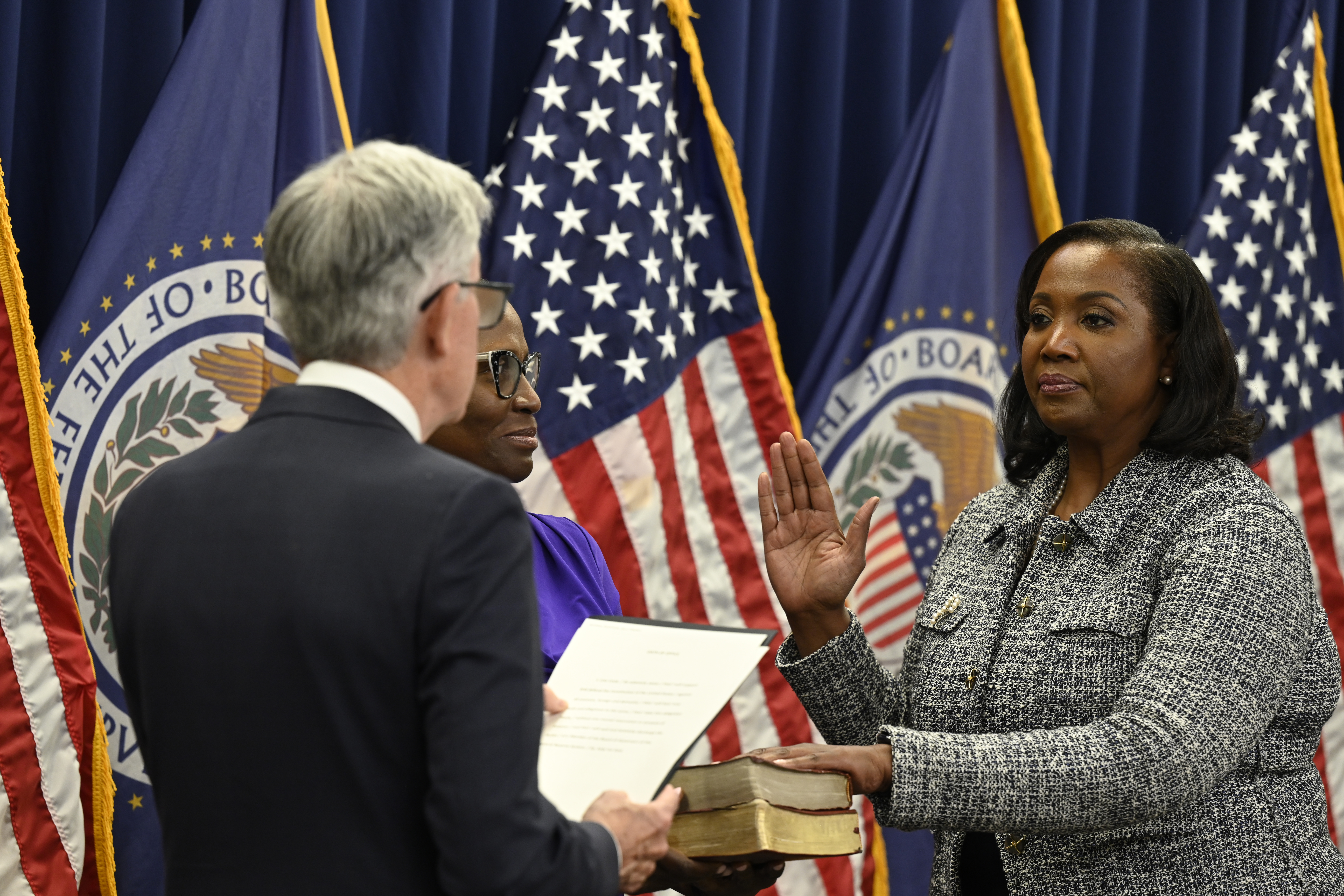
The US Supreme Court on Wednesday agreed to decide whether President Donald Trump may fire Federal Reserve Governor Lisa Cook, freezing the termination order until January 2026 oral arguments.
Trump fired Cook in late August alleging that she falsified her mortgage statements. In a letter to Cook posted to Truth Social, Trump said:
The Federal Reserve has tremendous responsibility for setting interest rates and regulating reserve and member banks. The American people must be able to have full confidence in the honesty of the members entrusted with setting policy and overseeing the Federal Reserve. In light of your deceitful and potentially criminal conduct in a financial matter, they cannot and I do not have such confidence in your integrity.
The termination follows a dispute over Cook’s purported reporting of two different homes as her primary residence, which could lead to beneficial tax and mortgage implications. Documents revealed that Cook declared her Atlanta property as her “vacation home,” and the loan estimate, a document prepared by the credit union, states “Property Use: Vacation Home.”
Cook sued Trump over the firing, challenging Trump’s “unprecedented and illegal attempt to remove [her] from her position which, if allowed to occur, would the first of its kind in the Board’s history.”
The Board of Governors is responsible for setting monetary policy, supervising and regulating banks, and maintaining financial stability, and the governors each serve staggered 14-year terms. The Federal Reserve Act provides that such members may only be terminated “for cause.”
Cook’s complaint argues that falsification of mortgage documents does not satisfy the “for cause” exception, which only encompasses instances of “inefficiency, neglect of duty, malfeasance in office, or comparable misconduct.” The Supreme Court upheld the constitutionality of these “for cause” statutory protections in Humphrey’s Executor v. United States, which dealt with the removal of a member of the Federal Trade Commission (FTC):
We think it plain under the Constitution that illimitable power of removal is not possessed by the President in respect of officers of [quasi-legislative and quasi-judicial bodies]. The authority of Congress, in creating quasi-legislative or quasi-judicial agencies, to require them to act in discharge of their duties independently of executive control cannot well be doubted, and that authority includes, as an appropriate incident, power to fix the period during which they shall continue in office, and to forbid their removal except for cause in the meantime.
Some have considered whether the Supreme Court may look to overturn Humphrey’s Executor in light of other cases pending before the Supreme Court, including a challenge to the firing of an FTC commissioner, among other recent agency removals.

.jpg)