
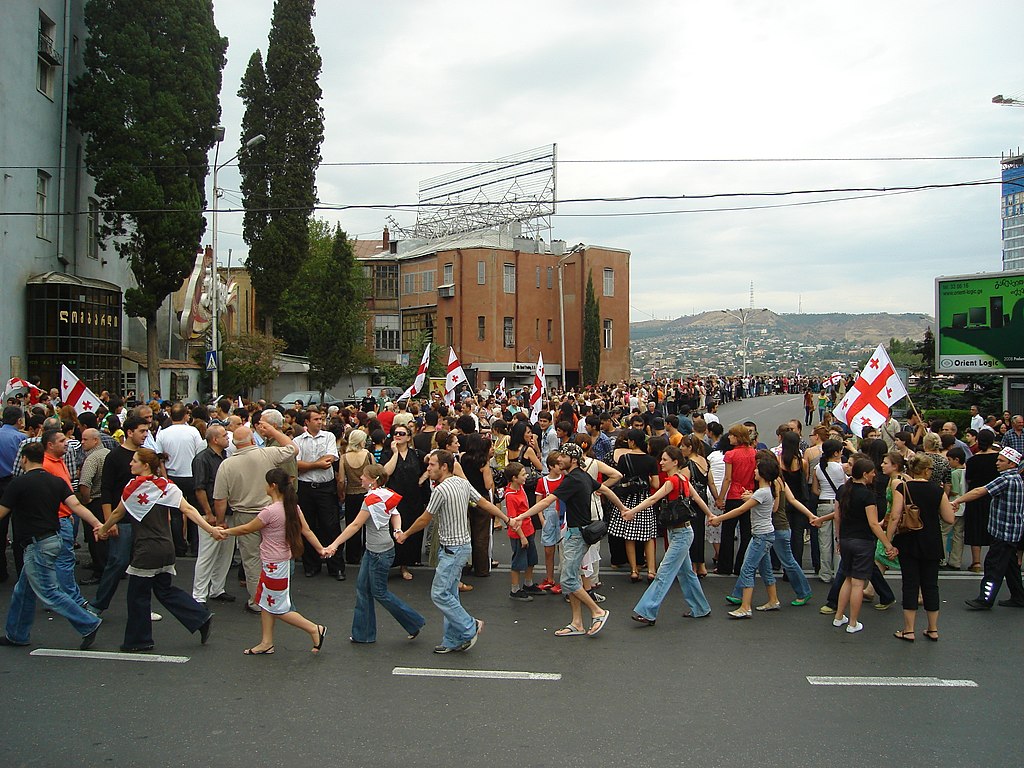
Amnesty International on Friday expressed concern over the campaign of repression in Georgia in the run up to its October 4 local elections, citing reprisals against opposition figures, the silencing of independent media and civil society, and the arbitrary detention of protesters.
Amnesty International’s Eastern Europe and Central Asia deputy director Denis Krivosheev stated: “The Georgian authorities must uphold their human rights obligations and stop the unlawful use of police force, arbitrary detentions and the torture or other ill-treatment of protesters. These abuses have already pushed the country into a deep human rights crisis following parliamentary elections in October 2024.”
The rights group said political influence and the misapplication of the criminal justice system to stifle dissent has led to scores of political activists and protesters being faced with ambiguous charges that culminated in criminal prosecutions alongside prison terms. In addition to the unfairness of such trials, Amnesty International highlighted that the circumstances surrounding the charges placed before the accused were incorrect, for instance, the arrest of opposition politician Gela Khasaia, who was accused of “intentionally causing minor bodily harm” during a violent incident that he claimed he witnessed, instead of participated in. Restrictive laws have also been utilized to curtail the activities of independent civil society and media groups, with the requirement that they register under the “foreign influence” law.
Amnesty International further stated that Prime Minister Irakli Kobakhidze’s labeling of the organizers of the protests as “radical” and promise of a “strict” response is wordage that, when read contextually, amounts to state-sanctioned vilification of political opponents. The rights group additionally noted that women who were actively protesting on the streets have also been targeted in indiscriminate gender-based violence and gendered reprisals, such as sexist insults and full-body strip searches, exposing the deeply entrenched misogyny that exists in the mechanisms of state enforcement. Degrading treatment is prohibited under Article 3 of the UN Convention against Torture (CAT) and Article 8 of the European Convention on Human Rights (ECHR).
Groups have also had their bank accounts blocked due to criminal proceedings based off of “sabotage” allegations, with their leaders being repeatedly questioned before judicial and state bodies, among other forms of intimidation. Rights groups have noted that these actions reflect a deliberate strategy to concentrate power by silencing dissenting voices, effectively eroding the space for political opposition and independent civil society.
The European Parliament noted last year that by criminalizing legitimate activism, the state not only undermines the rule of law but signals that democratic norms are subordinate to political expediency, threatening the very foundations of accountable governance in Georgia. The right to freedom of expression is enshrined under Article 19 of the International Covenant on Civil and Political Rights (ICCPR), and although it is not absolute, rights groups have found that the incidents in Georgia likely do not fall under the proscribed internationally allowed exceptions for the protection of national security or public order.

.JPG)