
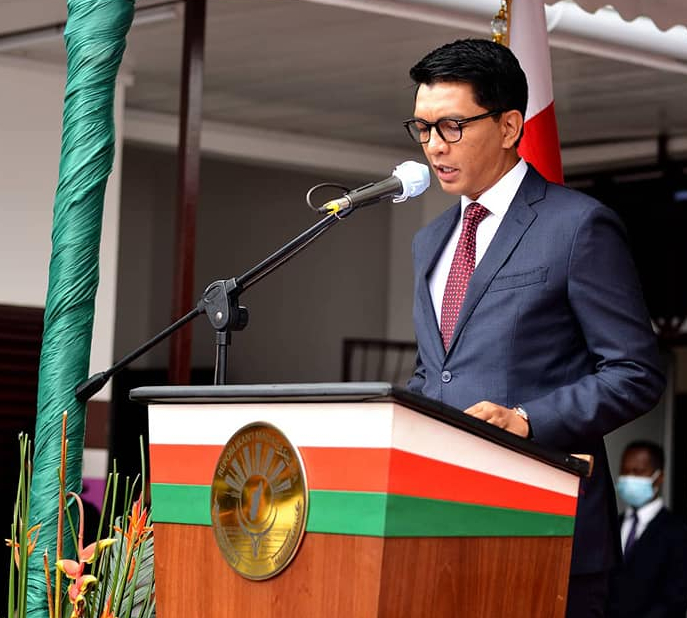
Madagascar President Andry Rajoelina on Sunday declared that an attempted coup was underway, according to a statement released by the presidential office. Rajoelina remains in an undisclosed location as unconfirmed reports from opposition officials and military sources indicate that he fled the country on a French military aircraft.
National tensions escalated on Saturday after troops from the Technical Personnel Administrative Crops (CAPSAT), the same unit that helped Rajoelina seize power in a 2009 coup, urged fellow soldiers to disobey orders and support youth-led protests that began on September 25. The protests, organized by “Gen Z Madagascar,” initially focused on utility failures, but expanded to included broader grievances including corruption, rights abuses, and governance failures. The United Nations reports that at least 22 people have been killed in the demonstrations, with dozens more injured, though the government has disputed these figures.
CAPSAT announced on Saturday that it had assumed control of all military forces in the country, declaring that all orders for land, air, and naval forces would now originate from CAPSAT headquarters. CAPSAT subsequently appointed General Demosthene Pikulas as new Army Chief of Staff on Sunday.
Rajoelina’s televised address on Monday was delayed after armed forces reportedly threatened to take control of state media. Rajoelina has not announced his resignation, creating legal ambiguity about Madagascar’s executive authority. Rajoelina has described the recent events as an attempted illegal and forcible seizure of power, contrary to constitutional principles and democratic norms under the rule of law.
The US Embassy has advised American citizens to shelter in place due to a “highly volatile and unpredictable” situation, while the African Union called for dialogue and restraint.
This is the latest in the wave of youth-led “Gen Z protests” that have been taking place around the world as a response to issues such as government corruption, nepotism, inequality, and authoritarianism. These protests have sometimes led to regime change, such as in Bangladesh in 2024 and Nepal last month, where youth protesters overthrew their governments. Other countries such as the Philippines have faced violent crackdowns in response to civilian demonstrations.

