
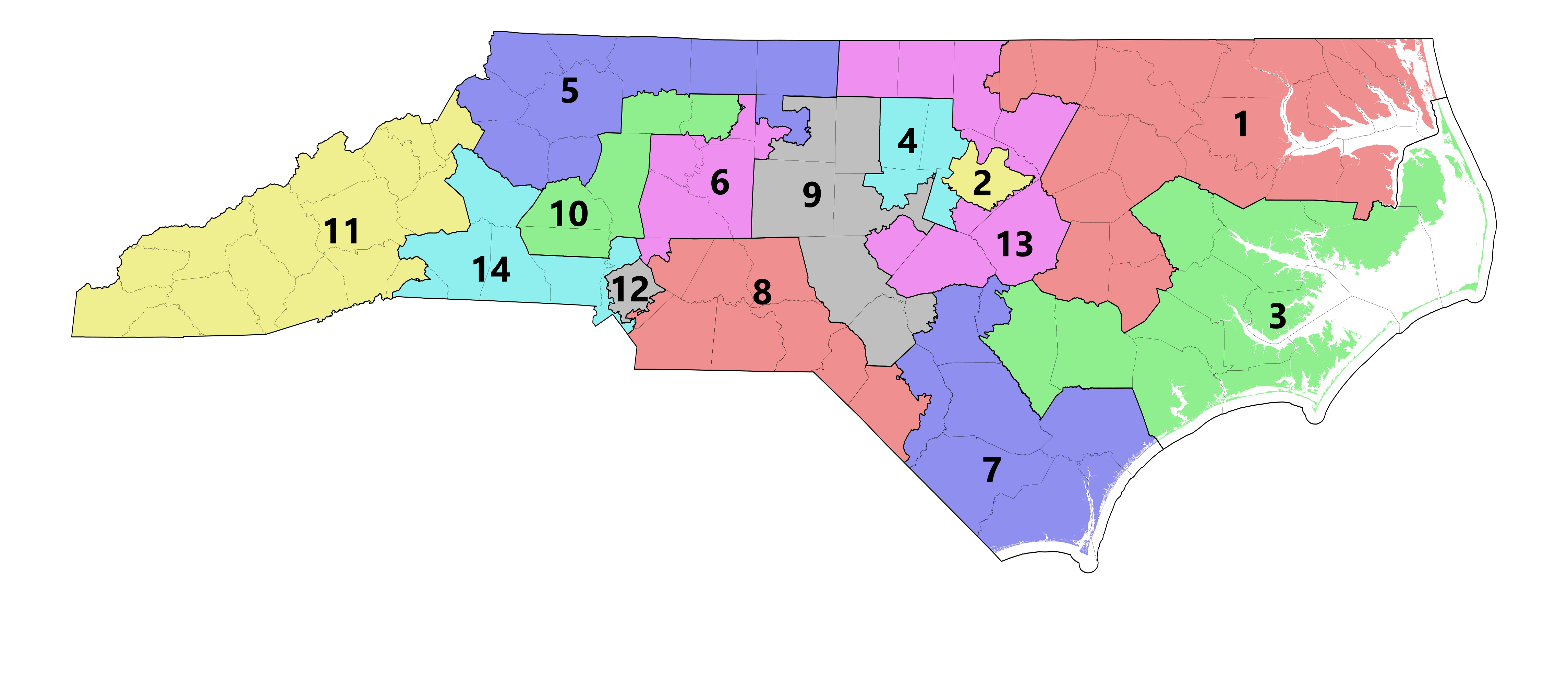
The North Carolina Senate voted on Tuesday to create a new congressional map for the state, reallocating voters from the Republican-controlled third district to the Democrat-controlled first district. The state’s House of Representatives will vote on the map on Wednesday.
Republicans currently control 10 of 14 congressional seats in North Carolina, and make up 30 out of the country’s 50 senators. The first district is held by Democratic Representative Don Davis, who won the district by a margin of less than 7,000 votes, or under 2%, in 2024. It was also won by President Trump. The proposed map would move counties from the third district to the first district, and vice versa, potentially allowing Republicans to control 11 seats in the next elections. This move echoes wider redistricting efforts, with President Trump reportedly calling on Republican congressmen in Texas to redistrict the state ahead of the midterm elections in 2026. Governor Greg Abbott in August accordingly signed a bill into law to redraw the state’s congressional map. In response, California Governor Gavin Newsom signed a redistricting plan which will be voted on in November. Other states where redistricting may take place include Illinois, Maryland and New York.
The leader of the senate, Phil Berger, said that “[t]his new map respects the will of the North Carolina voters who sent President Trump to the White House three times.” Senator Ralph Hise, who helped to create the map, stated that the “purpose of this map was to pick up a Republican seat.” The vote drew strong criticism from Democrats, with Representative Don Davis describing the map as “beyond the pale.”
Redistricting, the process of redrawing congressional maps, takes place every ten years to reflect new census data. It can however occur more frequently. When this process is manipulated to favor one party, it is called “gerrymandering.” This practice has been criticized as undemocratic, on the basis that it does not fairly represent voters’ preferences. While partisan gerrymandering is not prohibited in law, it can be challenged if enacted based on categories covered by the Equal Protection Clause, such as race. As Representative Davis’ district contains numerous counties that are majority African American, and he is one of three African American representatives in the state, the redistricting could be open to a legal challenge. However, a case currently being heard before the Supreme Court, Louisiana v. Callais, could render Section 2 of the Voting Rights Act unconstitutional, which would stymie legal challenges to racial gerrymandering.
Republicans currently have a legislative majority in the US House of Representatives, holding 219 out of 435 seats. Democrats would need to gain five seats to have a majority in the upcoming midterms.
