
Nine international human rights organizations, including Human Rights Watch (HRW), urged the European Union (EU) and its member states on Wednesday to take action to stop Georgia’s assault against human rights and civil society organizations.
In a joint statement, the rights organizations called on the EU to publicly condemn Georgian authorities for their attacks on local civil society groups, in line with the EU Guidelines on Human Rights Defenders. EU member states should also commit to deliver a joint statement on human rights in Georgia during the 60th session of the UN Human Rights Council, the rights groups said. Iskra Kirova, Europe and Central Asia advocacy director at HRW, stated: “The harassment of these groups violates Georgia’s obligations under multiple human rights treaties. EU member states should muster the consensus to press the government to change course.”
The joint statement also urged the EU to adopt the OSCE Moscow Mechanism, where participating states jointly declared their commitment to human rights, fundamental freedoms, democracy, and the rule of law. This entails that human rights in a participating state become a legitimate concern to all other participating states. The Moscow Mechanism is a follow-up to the OSCE Vienna Mechanism, which was already triggered against Georgia in 2024.
The statement is a direct response to the Prosecutor’s Office of Georgia’s recent decision to freeze the assets of seven Georgian NGOs under the claim that these organizations funded the violent actions of protesters against police in 2024. The International Society of Fair Elections and Democracy, one of the seven groups involved in the case, commented on the prosecutor’s decision by stating, “It violates fundamental human rights and serves to sabotage the European integration process.”
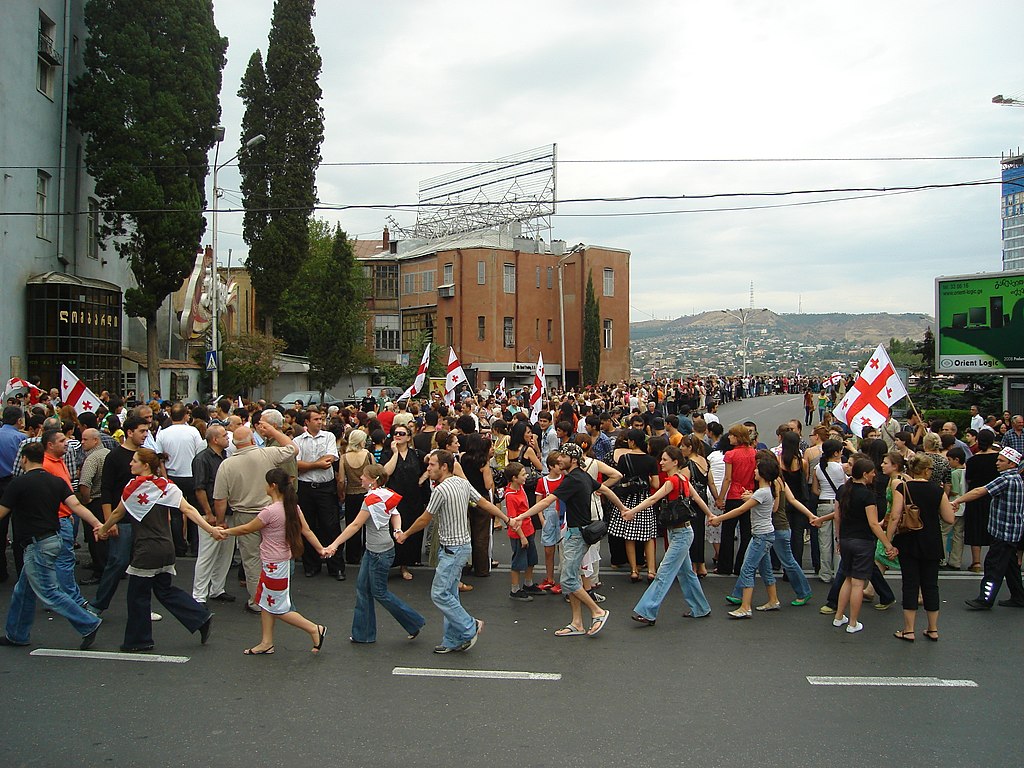
Protests in Georgia commenced in October 2024 following claims of election manipulation and the government’s decision to suspend Georgia’s EU accession negotiations. A severe crackdown against protesters following the passage of Georgia’s “foreign influence” law saw eleven receiving prison sentences of up to two years each for “disrupting public order,” the arrest of opposition leaders, and gender-based violence and harassment against women protesters. As a result, the EU adopted a resolution rejecting the legitimacy of the newly elected Georgian authorities in February 2025.

.JPG)