
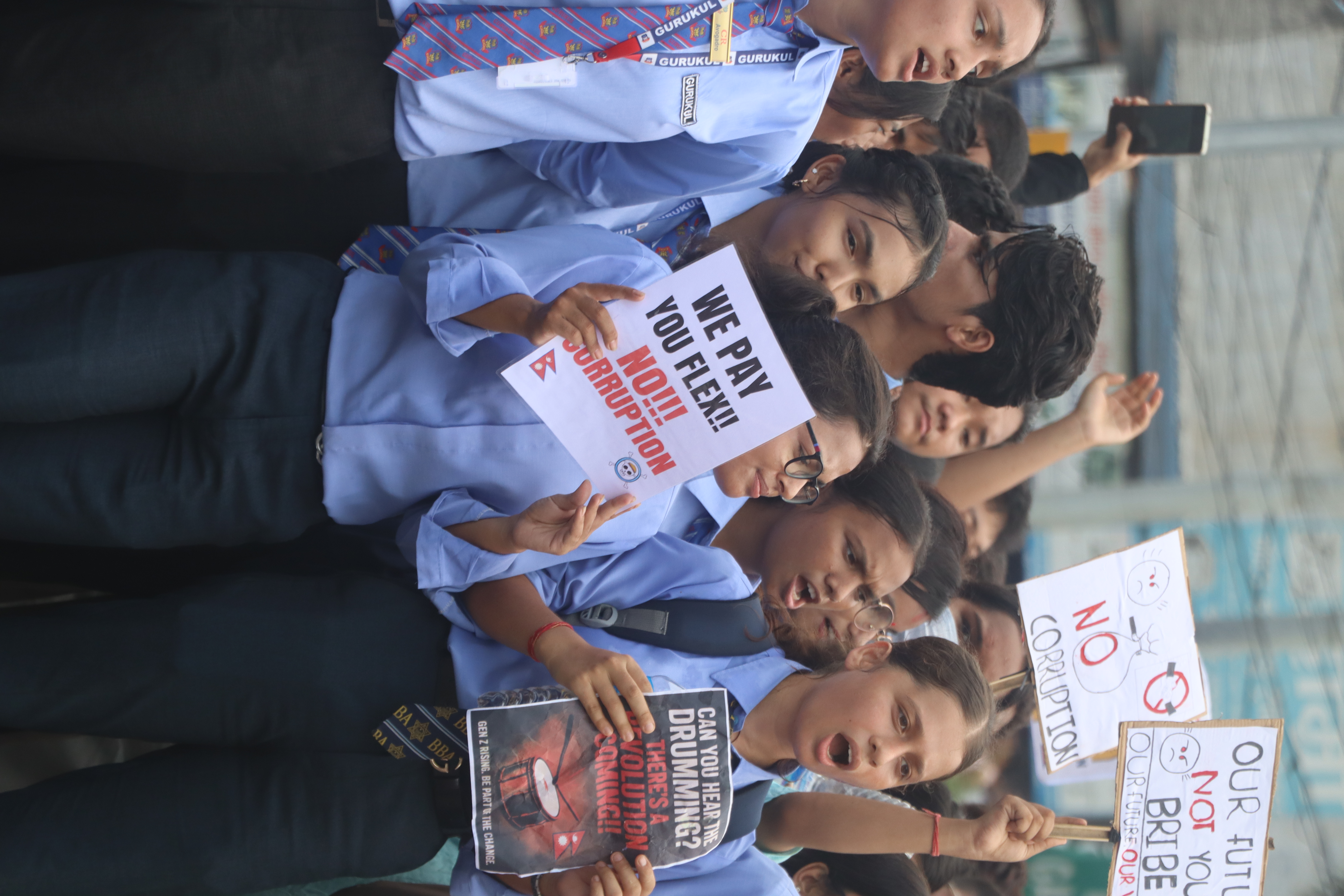
Protests in Nepal turned violent on Monday, resulting in at least 19 deaths and over 400 injuries as young activists took to the streets to voice their frustrations over government corruption and a recently imposed social media ban, according to official reports.
Prime Minister KP Sharma Oli resigned from his post on Tuesday, his secretariat confirmed. His resignation marks the end of a political career that saw him hold office from 2015-2016, 2018–2021, and again from July 2024 until his exit on Tuesday.
The severe crackdown also prompted the resignation of Home Minister Ramesh Lekhak. Protesters set fire to the house of Minister for Communication and Information Technology Prithvi Subba Gurung in Lalitpur. They also threw stones at the Bhaisepati residence of Deputy Prime Minister and Finance Minister Bishnu Paudel.
Demonstrations were triggered by the government’s decision to restrict unregistered social media platforms, a move that was met with widespread disapproval. Young people, using hashtags like “Nepo Kid” and “Nepo Babies,” organized rallies to express their discontent. Protests began in Kathmandu, where thousands marched from Maitighar to the federal Parliament in New Baneshwor, voicing anti-corruption chants and holding signs mocking political leaders.
Many protesters were students in uniforms and young professionals carrying placards in Nepali, reading “Gen Z mocks the corrupt.” Demonstrations quickly spread to other cities, including Pokhara, Butwal, Bhairahawa, Bharatpur, Itahari, and Damak. In Jhapa district, protesters threw stones at Prime Minister Oli’s residence.
Authorities responded with water cannons, tear gas, rubber bullets, and in several cases, live ammunition. Hospitals reported that most of the deaths were caused by gunshot wounds to the head and chest. At least 347 people remain hospitalized, overwhelming trauma centers in the capital and eastern Nepal. In response, the Kathmandu District Administration imposed curfews in areas surrounding the president’s office, the prime minister’s residence, and Singha Durbar, and extended restrictions to several other districts.
Political fallout came swiftly. Home Minister Ramesh Lekhak resigned on “moral responsibility” grounds after his party, the Nepali Congress, criticized the excessive use of force by the police. Prime Minister Oli stated that “the government has assured an investigation committee will be formed to probe today’s incidents, assess the damage, analyze the causes, and recommend steps to prevent such accidents in the future, with a report to be submitted within 15 days.”
The government also repealed social media bans that prompted the protests. A government minister reportedly said that the move came after an emergency meeting late Monday night held to “address the demands of Gen Z.”
International human rights organizations condemned the violence. The UN resident coordinator in Nepal, Hanaa Singer-Hamdy, described the events as “unlike Nepal” and expressed deep concern for civilian safety, stressing the urgent need to ensure unrestricted medical access for the injured. Amnesty International accused Nepalese authorities of using unlawful lethal force and urged accountability through an independent probe. Nepal’s National Human Rights Commission stressed that both protesters and security forces must show restraint while reaffirming the constitutional right to peaceful assembly.
The protests are the latest sign of discontent among Nepal’s young generation, who have grown increasingly frustrated with corruption, poor governance, and shrinking opportunities at home. The government’s decision to block 26 social media platforms, including Facebook, Instagram, YouTube, WhatsApp, and X, was seen by many as an attack on freedom of expression and a direct trigger for the demonstrations.
The Constitution of Nepal guarantees citizens the right to peaceful assembly without arms under Article 17(2)(b). Many students who joined Monday’s protests reportedly wore school and college uniforms and carried no weapons. Under both Nepalese law and international human rights standards, firearms may only be used when less extreme measures are insufficient and then only to the minimum extent necessary. The events in Kathmandu and beyond have raised urgent questions about whether security forces respected these safeguards, and whether the state’s response has undermined the very rights it is constitutionally bound to protect.

,_8_september_2025.jpg)