
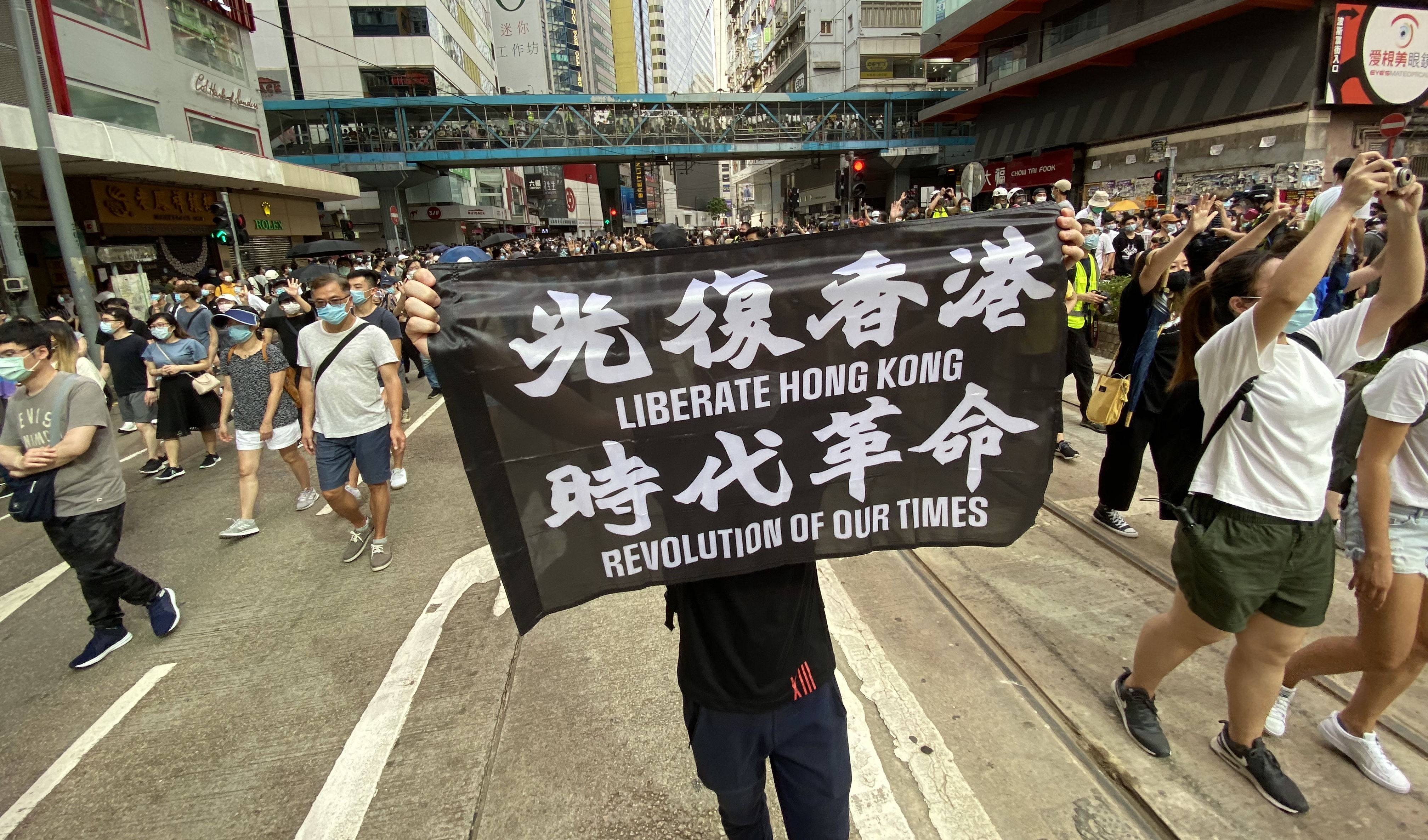
The appeal proceedings of 13 individuals, part of Hong Kong’s landmark national security case in which 47 pro-democracy activists were convicted, commenced on Monday. Amnesty International stated the hearing was a “pivotal chance to correct mass injustice.”
The court will hear the appeals of 12 defendants who were convicted and sentenced in November 2024. The court will also hear an appeal from Hong Kong’s Department of Justice against the acquittal of Lawrence Lau, a former district councillor. The proceedings are expected to take approximately 10 days. According to a judicial announcement, they will take place in the West Kowloon Law Courts Building, which houses one of the city’s largest courtrooms.
Amnesty International’s China director Sarah Brooks said: “The Hong Kong 47 case stands as one of the most shocking examples of the crackdown on human rights in the city. This appeal hearing is a chance for the courts to start righting the wrongs of this unprecedented mass prosecution.”
The 47 pro-democracy activists were arrested and charged in 2021 after organizing and participating in an unofficial primary election in July 2020 to select candidates for the Legislative Council elections later that year. The group was accused of conspiring to commit subversion under the National Security Law. Of the 47 individuals, 31 pleaded guilty, while 16 pleaded not guilty. Two individuals were acquitted.
The National Security Law, under which the activists were convicted, was enacted in June 2020. Research published by Amnesty International last month suggests that since its introduction five years ago, over 80 percent of individuals convicted under the national security law were unjustly prosecuted.
Brooks stated:
The appeal is a pivotal test—not just for these 13 individuals, but for the future of freedom of expression in Hong Kong. Only by overturning these convictions can Hong Kong’s courts begin to restore the city’s global standing as a place where rights are respected and where people are allowed to peacefully express their views without fear of arrest.
The law has garnered criticism from the United Nations and NGOs for eroding freedom of expression through authorities employing it to target opposition voices, human rights defenders, journalists, researchers, and civil society activists.

