
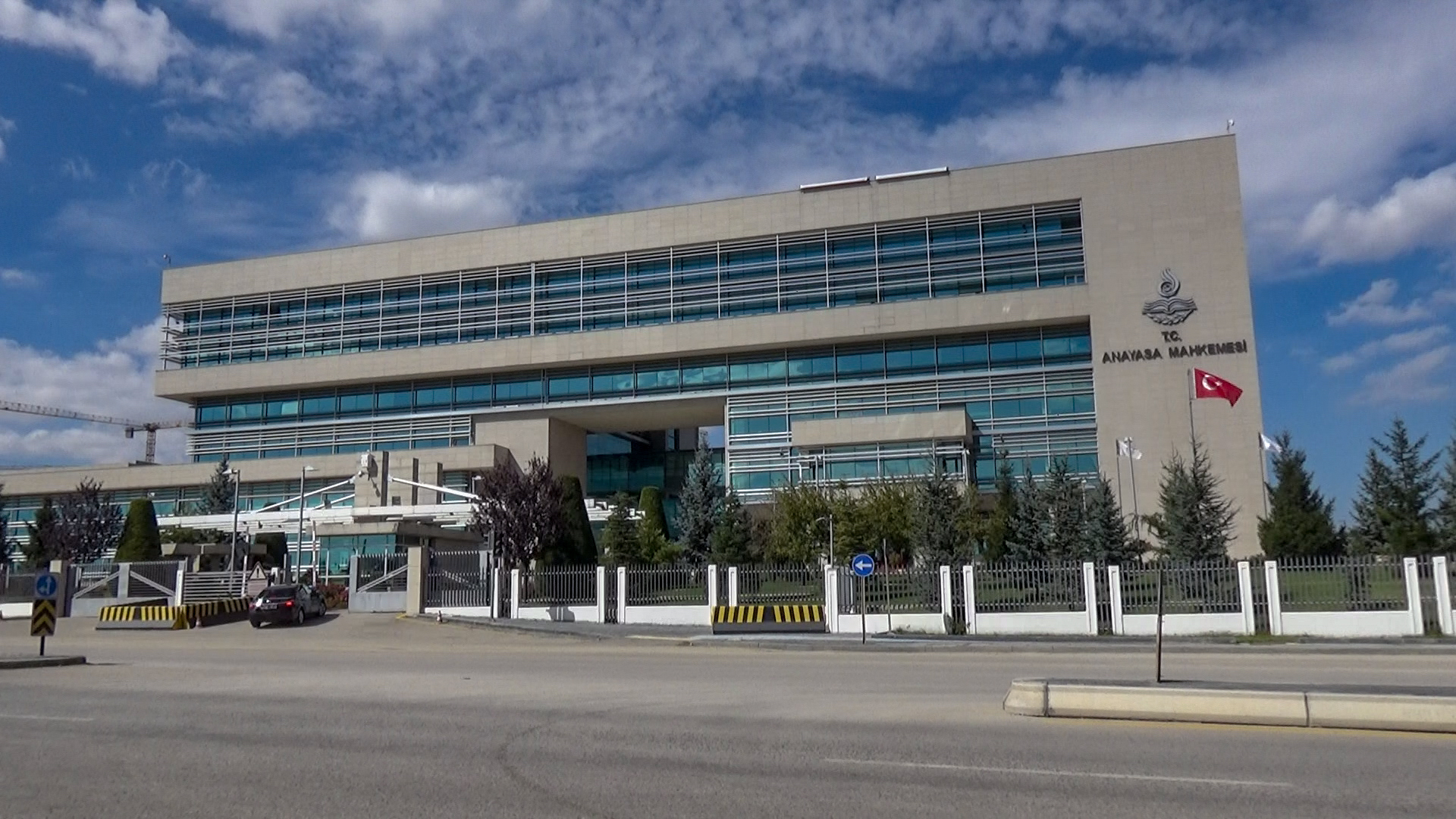
Human Rights Watch (HRW) on Monday issued a statement criticizing a recent decline in the rule of law and independence of the judiciary in Türkiye. HRW expressed concerns that the effectiveness of Türkiye’s Constitutional Court (TCC) could deprive human rights defenders and dissenters of domestic remedies for violations stemming from government repression.
HRW cited the increasing politicization of the judicial system and its role in enabling a cycle of political influence by the government. The rights group said that judicial capture by the ruling coalition parties allowed the government to exercise undue influence over the judiciary by pressuring judges and prosecutors to act in a manifestly partisan fashion.
The statement also highlighted judicial practices aimed at evading Türkiye’s obligations under the European Convention on Human Rights (ECHR) and circumventing the implementation of judgements of the European Court of Human Rights (ECtHR). HRW cited incidents where Turkish authorities performed procedural compliance without substantively engaging with the convention standards, and a pattern of authorities explicitly refusing to comply with the convention obligations and denying the existence of systemic issues undermining the impartiality of the judicial system. The rights group singled out the TCC’s deterioration as an effective remedy in cases of detention and political persecution as a particular area of concern. HRW argued that the president and the ruling party’s ability to appoint members of the TCC and a lack of transparent policy regarding which cases are prioritized and which cases are delayed both compromise judicial neutrality.
The statement echoes an open letter signed by 58 human rights organizations regarding the threat to the right to political participation, the rule of law, and human rights in Türkiye. The letter read: “The attack by President Erdoğan’s government on Türkiye’s main political opposition seriously undercuts the right to political participation, which is the foundation of the country’s rule of law and human rights framework.: It charged government repression with leading to “a pervasive chilling effect on human rights and civil society.”
HRW insisted on the importance of the erosion of the rule of law and human rights protections in the EU’s relationship with Türkiye. Article 21 of the Treaty on European Union affirms that the EU’s core principles in external relations include the advancement of the rule of law, fundamental freedoms, and respect for the principles of international law.
An Amnesty International report called for Turkish authorities to release imprisoned opposition leaders in line with binding ECHR judgements. The organization urged Türkiye to ensure that state officials refrain from making comments on ongoing criminal prosecutions that may prejudice the outcome of proceedings.
These criticisms come at a time when the EU has already denounced the erosion of the rule of law in Türkiye. On February 13, the European Parliament adopted a resolution concerning human rights and the rule of law, explicitly condemning the arbitrary dismissal and imprisonment of mayors Mehmet Sıddık Akış and Abdullah Zeydan. MEPs had urged the European Commission to consider imposing restrictive measures against Turkish officials involved in human rights violations.

