
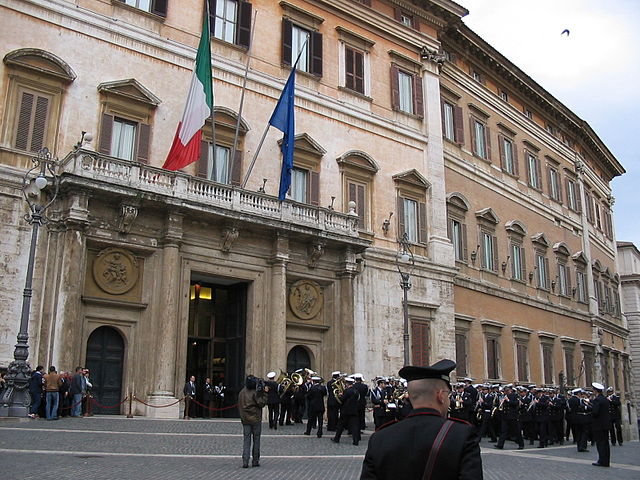
The Italian Senate voted to pass a controversial security bill into law on Wednesday, expanding powers for police and introducing stricter laws around protest-related offenses.
The Security Decree was passed by a vote of 109 to 69. It was introduced by Prime Minister Giorgia Meloni’s far-right government, and approved in the lower house of Parliament on May 29. Prime Minister Meloni celebrated the bill’s approval in a statement on X (formerly Twitter), praising it as decisive step to strengthen the protection of citizens and uniformed officers. She said that the government is strengthening tools available to the police forces to defend those who defend citizens every day.
The bill introduces harsher penalties for protesters participating in unauthorized demonstrations, disruptive sit-ins, or property damage during the protest. Passive protests, such as blocking a road, are also criminalized. The bill enhances police protections, criminalizing resisting or injuring a police officer on duty and providing large stipends to cover the legal fees of officers facing conduct-related investigations.
In January, people across Italy protested the bill in public demonstrations organized by Amnesty International.
In the voting session, the opposition staged a protest in the Senate chamber, sitting and shouting “shame, shame.” The leader of the Democratic Party, Francesco Boccia, described the bill as authoritarian. He highlighted that non-violent protests will now lead to prison sentences of two or more years based on where the passive resistance is carried out, whether on the street, in a square, in a university, in prison or in a factory.
The bill faced criticism from the Council of Europe in December 2024. Commissioner for Human Rights, Michael O’Flaherty, wrote a letter to the President of the Senate of Italy raising concerns around the bill’s potential to infringe on the rights to freedom of expression and peaceful assembly. He wrote:
The rights to freedom of expression and of peaceful assembly, enshrined in Articles 10 and 11 of the Convention, are a cornerstone of democratic society, ensuring that citizens can engage in public discourse and express disagreement with, or demand improvements in laws, policies, and practices. … It is my view that these provisions, which introduce offences that are defined in vague terms, and include other severe restrictions, create room for arbitrary and disproportionate application.
Rights organizations have also criticized the bill.

