
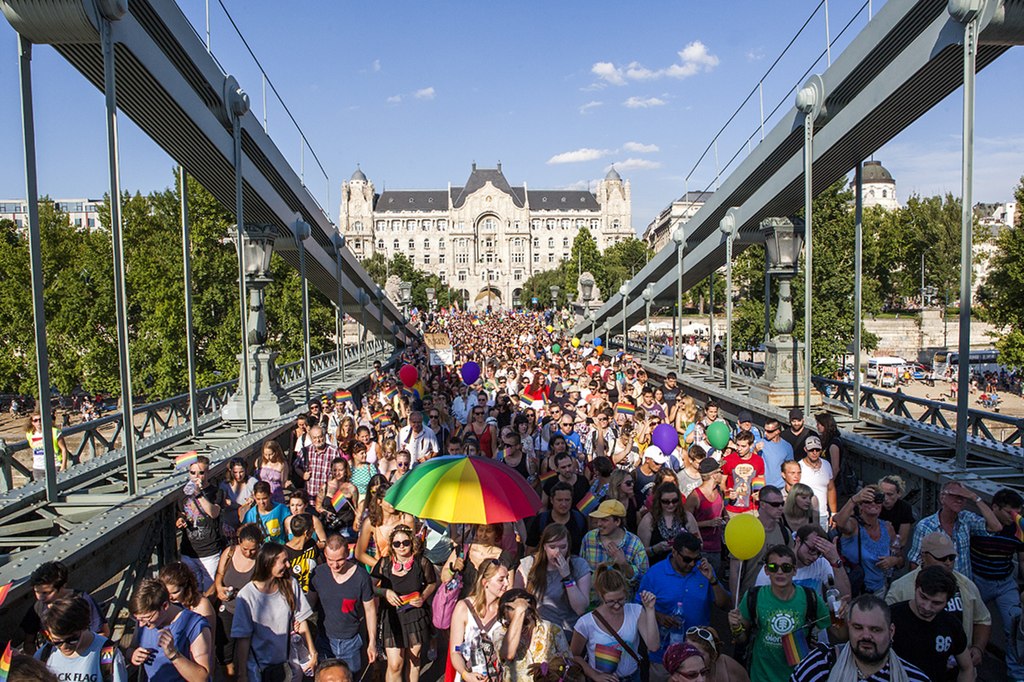
The Hungarian Supreme Court ruled on Saturday that a ban on the annual Budapest Pride march is unlawful, as there was no legitimate goal behind the prohibition.
The state, the defendant in this case, relied on a recent amendment to the Fundamental Law of Hungary to support the decision to ban the Pride march. The defendant argued that the objective behind the ban was to protect children, echoing one of the provisions in the amendment, stating that all other interests and laws can be overruled in the name of protecting children. However, the court held that there was no evidence that banning the Pride parade would protect children. Similar demonstrations had been allowed to take place in the past without police bans or interference, and it was not evident to the court how the Pride parade in particular endangered the safety of children. The case will not be referred to the European Court of Justice since the court ruled in favor of the plaintiffs.
The controversial amendment was passed in mid-April of this year, effectively banning LGBTQ+ public events. The amendment to the law also denies gender identity, stating that sex changes are not recognized in Hungary to protect the stability of the family and to create an environment that is protective of children’s development.
In late March, thousands of people protested in Budapest against the amendment, but after its proposal by the ruling nationalist-conservative political party, Fidesz, it made its way to being passed.
Hungary’s anti-LGBTQ+ laws have also been at issue with the EU. As of last week, 20 of the EU’s 27 member states issued a joint declaration accusing Hungary of violating the EU’s fundamental values through these laws and policies. Furthermore, Hungarian Prime Minister Viktor Orbán and Fidesz have been the subject of debate in the EU for allegedly violating the rule of law and the EU’s fundamental values.

