
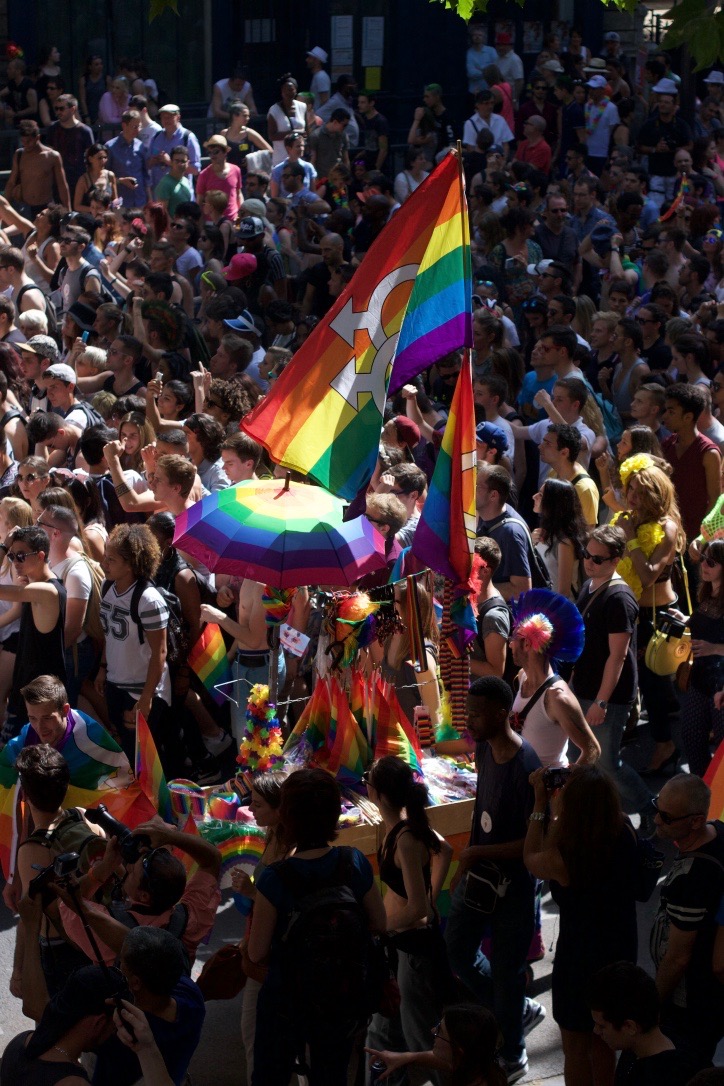
The US-based Human Rights Research Center (HRRC) on Friday called on Hungarian authorities to permit this year’s annual Budapest Pride march to proceed without interference, urging respect for the fundamental right to peaceful assembly.
The HRRC’s intervention comes as Budapest police recently denied permission for the upcoming June 28 Pride march, now celebrating its 30th anniversary, citing compliance with Hungary’s newly enacted legal provisions that effectively ban public LGBTQ+ events. The Hungarian Supreme Court recently ruled that the Budapest police’s decision was unlawful.
The police’s denial follows the constitutional amendment that came into effect in April 2025, effectively banning the right of LGBTQ+ people to publicly assemble in Hungary. The amendment characterized such events as LGBTQ+ “propaganda” in public spaces and restricted gatherings that are “contrary to the interest of child welfare.” These provisions impose steep fines for violations and empower police to use facial-recognition surveillance to identify the attendees of LGBTQ+ marches.
The European Commission is currently assessing whether Hungary’s legislative changes warrant the expansion of ongoing infringement proceedings against the country. As part of this scrutiny, approximately €18 billion in EU funds allocated to Hungary remain frozen over rule of law concerns.
This is not the first time Hungary’s actions against LGBTQ+ rights have drawn condemnation. Over the past few years, the country has implemented measures such as banning educational materials that discuss homosexuality and restricting adoption rights for same-sex couples. In 2021, Hungary introduced legislation that prohibits content perceived to promote homosexuality to minors.
The Budapest Pride movement has a long history of resilience. The first Pride march in the city was held in 1997, making it the first annual LGBTQ+ march in post-communist Central Europe. Despite frequent counter-demonstrations, hostility, and instances of police inaction in the early 2000s, the event has grown into a significant cultural and political festival. A landmark moment was the 2011 court decision permitting the Pride route to pass through central Budapest.
Pride events have evolved into both celebrations of LGBTQ+ identity and critical platforms for demanding equal rights and legal protections. The HRRC’s call places the spotlight on Hungary’s compliance with its obligations, raising the possibility of intensified legal and political scrutiny from European institutions in the coming months.

