
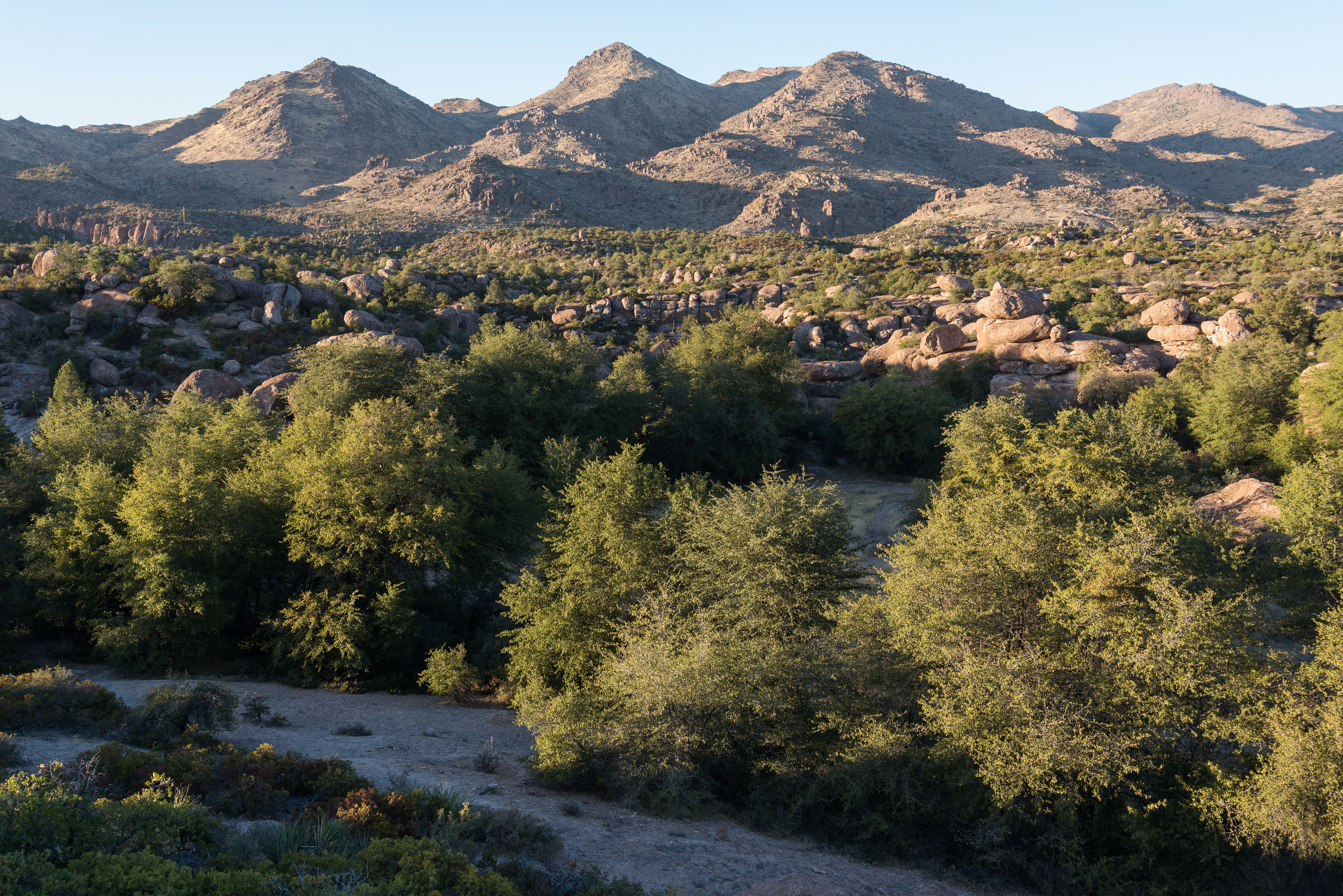
The US Supreme Court denied a petition for certiorari from nonprofit Apache Stronghold on Tuesday, which sought an injunction on a federal government land transfer of an Apache holy site to a copper mining company.
Chí’chil Biłdagoteel, more commonly known as Oak Flat, is a 6.7 square-mile site east of Superior, Arizona. The petition for certiorari filed by Apache Stronghold, a nonprofit whose mission is to defend Apache holy sites and freedom of religion, states that the “site includes old-growth oak groves, sacred springs, burial locations, and a singular concentration of archaeological sites testifying to its persistent use for the past 1,500 years.”
The land swap was first proposed at the end of President Donald Trump’s first administration, and Apache Stronghold sued to enjoin the transfer. Former President Joe Biden’s administration paused the transfer proceedings to discuss the swap further with the USDA and the Native tribes in the area. Nevertheless, the suit proceeded in 2024 to the US Court of Appeals for the Ninth Circuit, and the court decided in a 6-5 split to allow the transfer to proceed.
Apache Stronghold then petitioned for certiorari of the Supreme Court, arguing that the land transfer violated the Religious Freedom Restoration Act, which prevents the government from imposing a “substantial burden on the exercise of religion” unless the action “furthers a compelling governmental interest and is the least restrictive means of furthering that compelling governmental interest.” The petitioners claim this land transfer constitutes a substantial burden in that it “threatens the permanent eradication of Western Apache religious identity.”
The Supreme Court denied the petition, approving the decision of the Ninth Circuit. In a dissent, Justice Neil Gorsuch, a Trump appointee, joined by Justice Clarence Thomas, stated:
While this Court enjoys the power to choose which cases it will hear, its decision to shuffle this case off our docket without a full airing is a grievous mistake—one with consequences that threaten to reverberate for generations. Just imagine if the government sought to demolish a historic cathedral on so questionable a chain of legal reasoning. I have no doubt that we would find that case worth our time. Faced with the government’s plan to destroy an ancient site of tribal worship, we owe the Apaches no less. They may live far from Washington, D. C., and their history and religious practices may be unfamiliar to many. But that should make no difference. “Popular religious views are easy enough to defend. It is in protecting unpopular religious beliefs that we prove this country’s commitment to…religious freedom.”

