
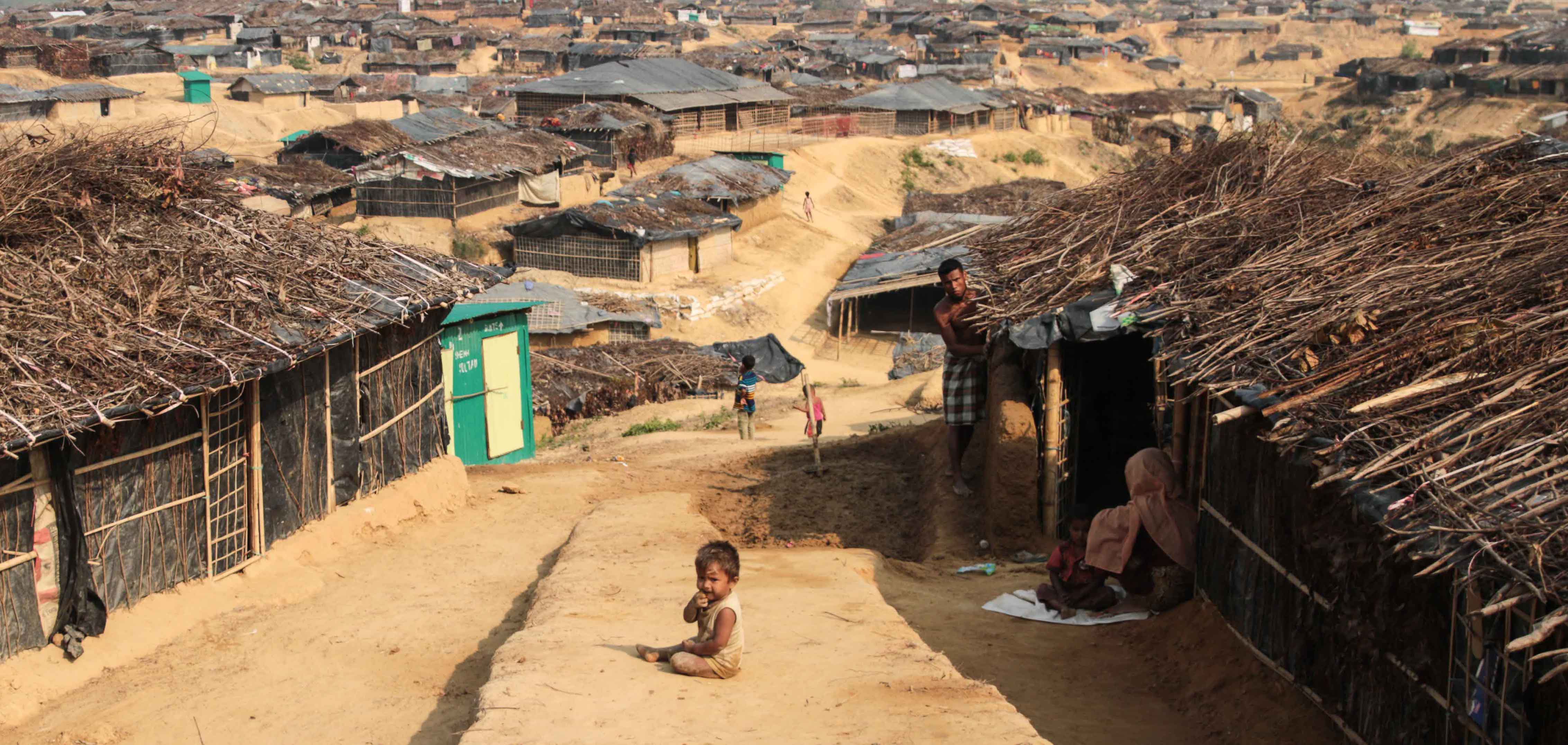
Amnesty International on Thursday warned that the abrupt suspension of US foreign aid has put human rights and millions of lives at risk globally by halting critical programs such as the provision of essential health care, food security and humanitarian support for people in extremely vulnerable situations globally, including women, girls, survivors of sexual violence, and other marginalized groups, as well as refugees.
The organization criticized US Secretary of State Marco Rubio’s testimony before Congress on May 21 and 22 as a weak answer to the grave human rights impact of the foreign aid cuts and contrary to evidence gathered by Amnesty and other organizations. Rubio wrongfully asserted that there have been no deaths associated with these cuts, despite factual documentation of an increase in mortality associated with the cuts.
The foreign aid cuts followed an executive order issued by President Donald Trump on January 20, 2025, as well as other executive orders that targeted specific groups and programs, which Amnesty considers an evasion of congressional oversight and contrary to US law. The cuts came alongside a withdrawal of U.S. participation in multilateral institutions such as the World Health Organization (WHO), the UN Human Rights Council, UNESCO, and UNRWA, as well as the Paris Climate Agreement.
Amanda Klasing, the national director of government relations and advocacy with Amnesty International USA, called the Trump administration’s decision on foreign aid abrupt, chaotic, reckless, and profoundly damaging. She added that:
The decision to cut these programs so abruptly and in this untransparent manner violates international human rights law, which the U.S. is bound by, and undermines decades of U.S. leadership in global humanitarian and development efforts. While U.S. funding over the decades has had a complex relationship with human rights, the scale and suddenness of these current cuts have created a life-threatening vacuum that other governments and aid organizations are not realistically able to fill in the immediate term, violating the rights to life and health and dignity for millions.
Following the abrupt suspension of US aid, many vital health services across several countries, such as Guatemala, Ukraine, Haiti, Syria, and Yemen, among others, have been suspended or shut down. In Guatemala and Haiti, funding cuts disrupted programs supporting survivors of sexual violence and key HIV services, including prevention and treatment. In South Africa, it has led to the termination of HIV prevention and community outreach programs for orphans and vulnerable children, leaving people without care. Other countries affected include Syria, where a detention camp at Al-Hol—holding 36,000 people, mostly children, who are questionably detained for their perceived affiliation with the Islamic State armed group—lacks essential services such as ambulance services and health clinics. In South Sudan, health services for victims of armed conflict, clinical services for victims of gender-based violence, psychological support for rape survivors and emergency nutritional support for children have been stopped.
Migrants, particularly those in dangerous situations, refugees, people seeking asylum, and internally displaced persons, have also been affected by funding cuts. In Afghanistan, 12 out of 23 community resource centers, which provided approximately 120,000 returning and internally displaced Afghans with housing, food assistance, legal assistance, and referrals to healthcare providers, have been shut down. Similarly in Mexico, funding cuts have led to the suspension of food programs, shelter, and legal support for stranded people seeking safety following the end of asylum at the US-Mexico border.
In response to the migrants’ situation, Klasing called on the U.S. government to restore funding immediately, stating that the abrupt cuts undermine the humanitarian support that displaced people around the world need to access protection and place already marginalized people in acute danger.
Various rights groups have called on the US to secure human rights following the foreign aid freeze, with Amnesty in Myanmar and the United Nations in Ukraine and Afghanistan being the latest incidents.
Amnesty International has urged the Trump administration to restore foreign assistance to programs where the chaotic and abrupt cut in funding has harmed human rights and ensure that future aid is administered consistently with human rights law and standards. It has also called on the Trump administration and Congress to work together to ensure that any changes to foreign assistance are carried out transparently, in consultation with affected communities, civil society, and international partners, and in compliance with international human rights law and standards. Further, Amnesty has also encouraged all capable states to fulfill their obligations under UN General Assembly Resolution 2626 by committing at least 0.7 percent of gross national income to overseas aid without discrimination to help fill critical funding gaps left by the abrupt US aid suspensions.

.jpg)