
 Features
Surviving an execution does not cancel a death sentence. A 1947 Supreme Court ruling allowed a second attempt, and today’s Eighth Amendment standards are demanding.
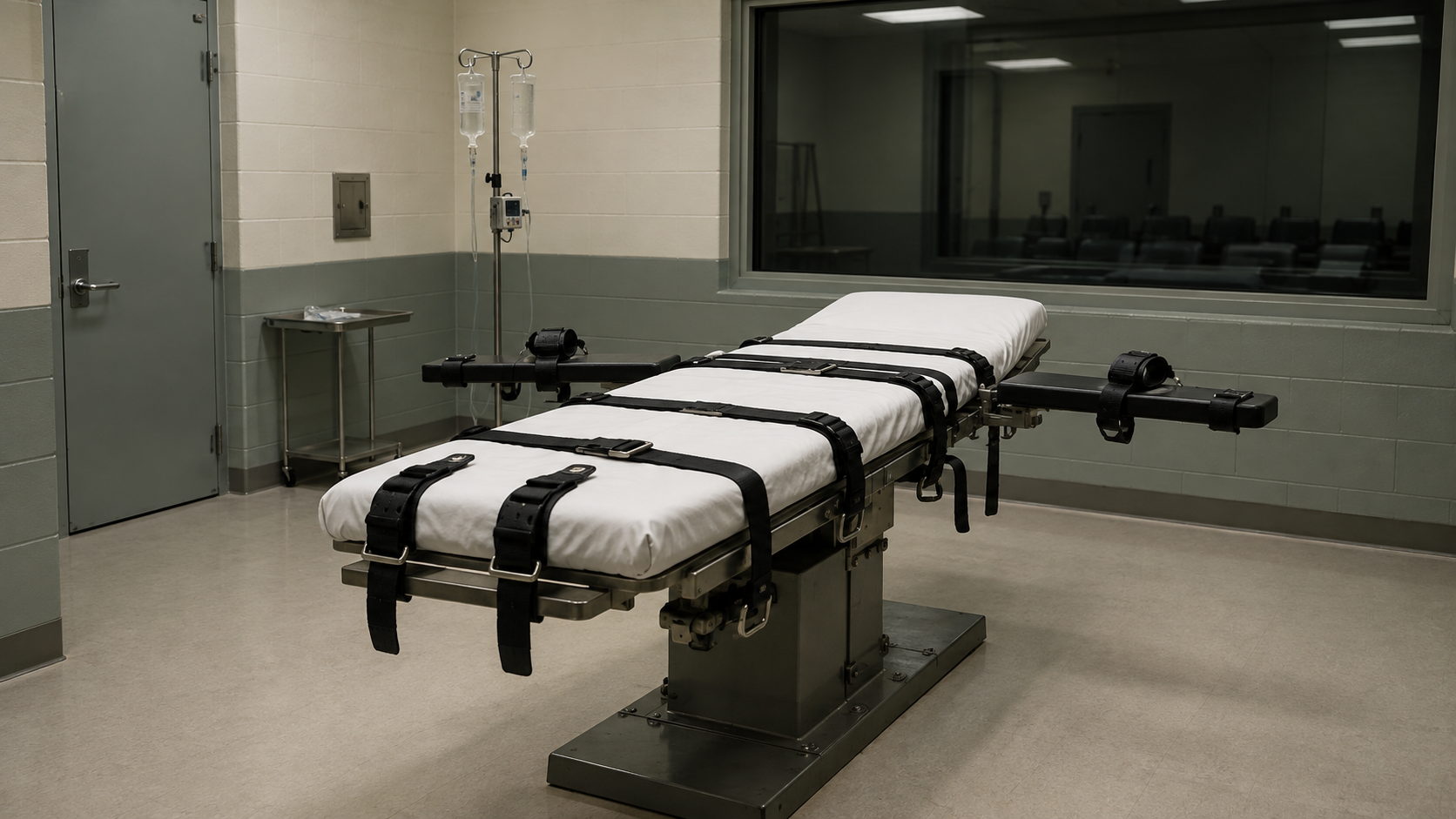
Tennessee failed on September 30 to carry out what would have been its first execution of a woman in more than 200 years. Christa Pike survived what her lawyers describe as two lethal doses of pentobarbital. She is now back in prison, her death sentence still in place.
Lethal injection was adopted as a supposedly more humane way to put prisoners to death. The promise was familiar: electrocution had itself spread as a less painful alternative to hanging, a history the US Supreme Court recounted in Baze v. Rees. Pike’s case raises a question those changes in method have not resolved: What protection does the Constitution offer when an execution goes wrong?
Records released Oct. 12 show that dispatchers struggled to verify the request for an ambulance while Pike lay unconscious.
Corinna Barrett Lain, a University of Richmond law professor and author of Secrets of the Killing State: The Untold Story of Lethal Injection, told JURIST that even serious failures in carrying out an execution may not persuade courts to prohibit another attempt.
Pike was 18 when she murdered 19-year-old Colleen Slemmer, a fellow student in Job Corps, a federal job-training program, in Knoxville in 1995. She was sentenced to death the following year. The jury found that the murder involved torture or serious physical abuse beyond that necessary to cause death, according to the Tennessee Supreme Court’s account.
Does Surviving an Execution Cancel the Sentence?
No. A failed attempt does not overturn or commute the death sentence.
The leading Supreme Court precedent is Louisiana ex rel. Francis v. Resweber. In 1947, the court permitted Louisiana to make a second attempt to electrocute Willie Francis after the first failed because of an apparent equipment malfunction.
Francis had argued that another attempt would violate constitutional protections against double jeopardy and cruel and unusual punishment. The court rejected his challenge by a 5-4 vote. The four-justice plurality assumed that officials had acted carefully and humanely and treated the failure as an unforeseeable accident.
The closest modern parallel is Ohio’s. After executioners spent nearly two hours trying to find a usable vein in Romell Broom in 2009, the Ohio Supreme Court ruled 4-3 in 2016 that the state could try again, and the US Supreme Court declined to review the case.
Lain doubted that Pike’s warnings would change that analysis. “I wish I were so optimistic,” she said. “I wouldn’t hang my hat on it being an unforeseeable accident.”
She pointed to Kenneth Smith and Alan Miller, both of whom survived failed lethal injection attempts in Alabama in 2022 and were subsequently executed using nitrogen gas in 2024.
In Smith’s case, the US Supreme Court refused to halt the execution or hear his appeal on Jan. 25, 2024. Justice Sonia Sotomayor, dissenting, noted that he had warned before the first attempt that officials would struggle to establish IV access. Alabama executed him that day.
Miller’s lawyers say they secured an agreement limiting any future attempt to nitrogen hypoxia, and he later settled a separate challenge to that procedure before his September 2024 execution.
Both men’s first attempts were halted after problems establishing IV access. Pike’s lawyers say she received two rounds of execution drugs. That difference would be part of the facts confronting a court if Tennessee sought to execute her again.
Tennessee has faced the question before. On May 21, executioners spent more than an hour trying to establish IV access for Tony Carruthers before calling off his execution, and Governor Bill Lee granted him a one-year reprieve. After Pike’s attempt, Lee said her case was unique because no one knew why the execution had failed when the protocol was followed.
What Would a Challenge to the Method Have to Show?
In Bucklew v. Precythe, decided in 2019, the US Supreme Court held that the Eighth Amendment, which prohibits cruel and unusual punishment, does not guarantee a painless death. A prisoner must identify an alternative method that the state could feasibly and readily implement, that would significantly reduce a substantial risk of severe pain, and that the state has refused to adopt without a legitimate justification related to punishment.
That requirement applies both to general challenges to a method and to claims that it would be unconstitutional because of a particular prisoner’s medical condition.
“That’s an incredibly low bar,” Lain said. “Most people think they have constitutional protection against a torturous death. They do not, because the Supreme Court has ruled that torturous deaths do not necessarily violate the Constitution.”
Had Pike Raised Concerns Before the Execution?
Yes. Before Sept. 30, Pike challenged Tennessee’s lethal injection protocol, arguing that her medical condition and small, compromised veins would make it difficult to establish intravenous access.
The Tennessee Supreme Court denied a stay on September 23, concluding that “any risk of harm posed by her allegedly small veins is speculative.” Its decision followed an evidentiary hearing before a court-appointed special master.
In their Oct. 2 evidence-preservation motion, her attorneys alleged that officials failed to establish or maintain functioning IV lines, failed to recognize the problem, and administered another dose of pentobarbital. The motion says her original complaint had specifically warned that difficulties establishing or maintaining IV access could cause the drug to leak and inflict needless suffering.
Pike had also challenged the protocol’s lack of a resuscitation provision. In its September 23 order, the Tennessee Supreme Court rejected that argument as a basis for a stay, citing precedent that the state had no obligation to attempt revival after an execution attempt. It called her contention that she might survive “too speculative” to establish a likelihood of success. That ruling addressed her pre-execution challenge to the protocol; it did not decide what medical care she would be owed after surviving.
According to the Oct. 2 motion, Pike’s earlier complaint had sought a resuscitation team including an independent physician and an ICU ambulance. Her attorneys said she remained unconscious and on a ventilator as of the evening of October 1.
The Department of Correction said after the attempt that officials followed every step of the state’s protocol, which had been approved by the attorney general’s office.
Lain called following the protocol “the first step in performing an execution in a lawful manner.” But she cautioned it is only that.
A corrections department “could comply with the protocol’s directive to insert the catheter, but do it entirely incompetently,” Lain said. A protocol may direct the warden to “monitor” an execution, she said, but “the warden isn’t a medical professional and won’t know what to look for. They will know there’s a problem when it’s obvious, and that is too late.” Even an improperly performed execution, she said, “doesn’t necessarily mean it is unconstitutional.”
What Do the Newly Released 911 Records Show?
A caller inside Riverbend Maximum Security Institution requested an ambulance at 8:40 p.m. Central on September 30, saying Pike remained alive after receiving 10 grams of pentobarbital. She was unconscious and breathing slowly and with difficulty, according to the emergency communications center’s written account of the call, reported by ABC News.
The caller could not supply a verification code. Around 9 p.m., a prison control employee told a dispatcher that nobody from the facility had called. At 9:08 p.m., Pike’s attorney Kelly Gleason called 911 seeking urgent care. Three minutes later, a dispatcher sought a highway patrol officer so emergency medical personnel could enter the prison.
The center withheld the first call’s audio under Tennessee law, releasing a written account instead. Other calls were released as recordings. These records add to the questions about emergency planning raised in Pike’s pre-execution lawsuit; they do not establish what caused the injections to fail.
What Happened When Pike’s Lawyers Sought Medical Help?
Telephone access had also come before the Tennessee Supreme Court. In the same September 23 order, the court said it was “troubled” that the state had offered no assurance that Pike’s counsel would have access to a phone within viewing distance of her client. But it declined to grant a stay: Pike had not shown she would lack all means of contacting co-counsel or a court, or that she was likely to suffer an Eighth Amendment violation requiring court intervention. The court noted that during Carruthers’ attempted execution, his counsel had been able to make calls and file an emergency motion.
After the injections failed, Pike’s lawyers reported difficulty reaching officials. The Tennessean reported that calls to an emergency court number reached voicemail and calls to governor’s office contacts went unanswered. The lawyers obtained an emergency hearing and learned afterward that ambulances were already on the way, according to the local news outlet.
Pike’s attorneys announced October 10 that she had been discharged from a hospital and returned to the Debra K. Johnson Rehabilitation Center, where she continues to receive medical care following the Sept. 30 execution attempt.
What Is Being Investigated?
On Oct. 7, Chancellor I’Ashea Myles, a Davidson County trial judge, directed the state to preserve evidence from the attempted execution, Reuters reported. Pike’s lawyers sought materials including syringes, drug packaging, IV lines, and restraints.
Lee has halted scheduled executions for the rest of 2026. Former US Attorney Ed Stanton will lead the review, examining whether officials followed the protocol and whether changes are needed.
Stanton also conducted Tennessee’s 2022 review. Following that investigation, Lee ordered leadership changes, revisions to the lethal injection protocol, and a review of training.
“This is Groundhog Day — the same governor made the same statement and did the same pause on executions in 2022,” Lain said. “The state has already done an independent review, and since that time it has botched two executions so badly that the prisoner survived their own execution.”
Lee announced Oct. 3 that Correction Commissioner Frank Strada would resign in October. Strada maintained that officials had acted in accordance with the protocol.
Speaking with JURIST, Lain questioned whether another review could address what she regards as structural problems with lethal injection: difficulty accessing prisoners’ veins, barriers to obtaining qualified medical personnel, and pharmaceutical companies’ opposition to supplying execution drugs.
“Seven years of deep research into lethal injection has convinced me that lethal injection is broken and cannot be fixed,” she said.
States have enacted secrecy laws that hide “most every aspect of lethal injection,” she said. “If you can’t fix a flaw, the next best thing is to hide it.”
Could Pike’s Medical Condition Prevent Another Execution?
Pike’s injuries could affect the risks of another execution attempt. Her cognitive recovery could also become relevant to whether she is legally competent to be executed.
In an October 8 statement, Pike’s attorneys reported that she was walking with assistance, regaining movement and strength in her arms, and eating a regular diet. But they said she continued to have difficulties with concentration and memory, and that physicians had cautioned it could take months to assess lasting cognitive injuries.
In Madison v. Alabama, the Supreme Court explained that the relevant inquiry is whether a prisoner can rationally understand why the state intends to execute them. A particular diagnosis or specific memory lapse does not alone determine the answer.
What Happens Next?
The Tennessee Supreme Court’s execution order specified Sept. 30, 2026. Another attempt would require a new date and would remain subject to executive reprieves and court orders.
Tennessee’s governor can reduce a death sentence to life imprisonment. Pike’s attorneys have renewed their request for commutation to life without parole.
Lain said she has little confidence the Supreme Court would intervene but that the case against another attempt “may have great weight in the court of public opinion.” She noted the public has been horrified by Pike’s case.
She went on: “Extreme cruelty inspires backlash. And backlash could have a greater abolition impact than the activists themselves. So Tennessee may want to tread very carefully on this one.”
