
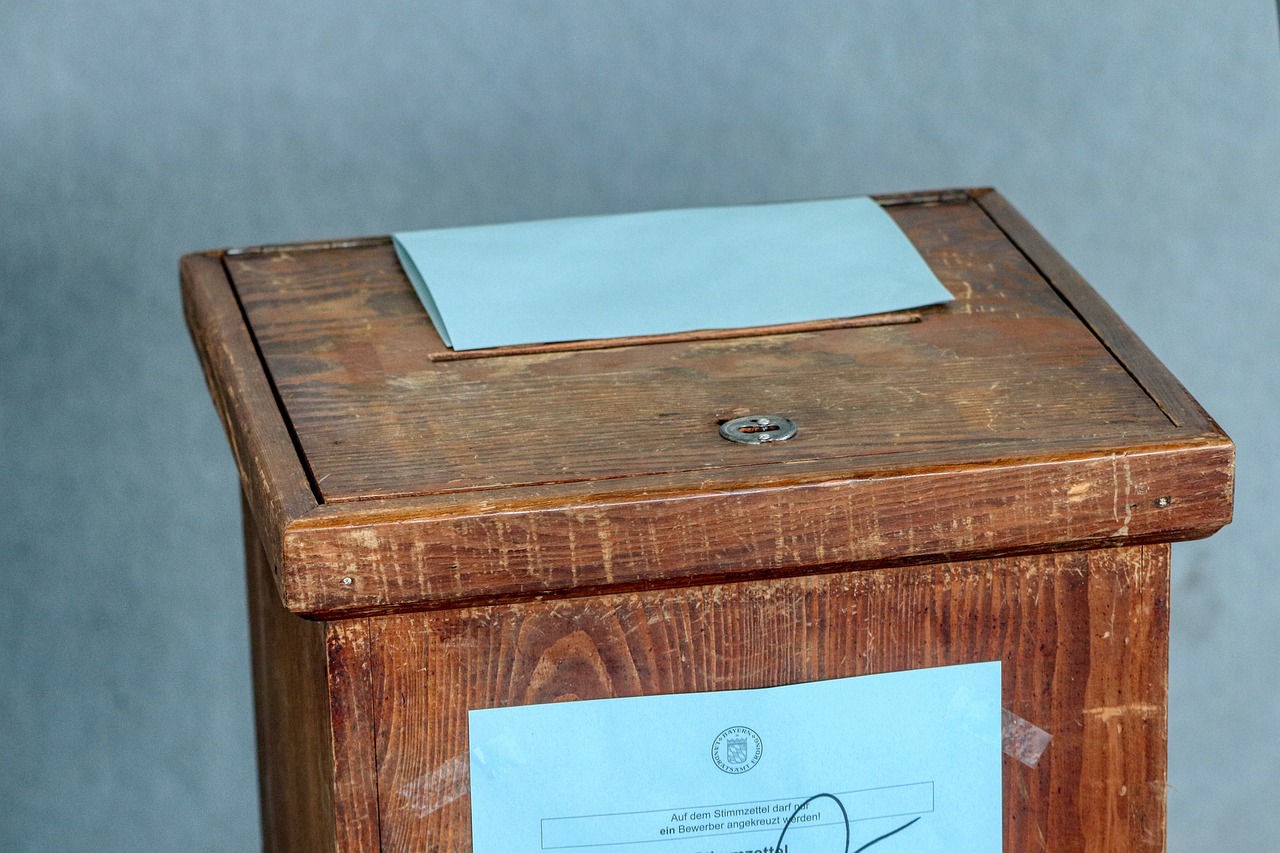
Ghana’s Supreme Court on April 29 unanimously upheld a five-year voting ban for people convicted of electoral offenses, ruling that Parliament may restrict the constitutional right to vote beyond the limits written into the Constitution, 1992. The decision in Fred Akweter v. Attorney General & Electoral Commission rejected a challenge by Akweter, a Ghanaian lawyer, who had argued that the franchise can be limited only on the grounds the Constitution itself names: citizenship, age, and soundness of mind.
The case is of constitutional significance because it challenges the Representation of the People Act, 1992 (PNDCL 284) on the grounds that its provisions unjustly deprive certain citizens of Ghana of their fundamental right to be registered as voters or to participate in elections. Since this right is expressly guaranteed by the Constitution without exceptions, the success of the action would necessitate striking down portions of PNDCL 284 that impose such restrictions.
Legal framework
The Akweter case centered on whether the constitutionally guaranteed right to vote can lawfully be restricted by Parliament beyond those expressly stated in Article 42 of the Constitution, 1992. Article 42 provides that “every citizen of Ghana of eighteen years of age or above and of sound mind has the right to vote and is entitled to be registered as a voter for the purposes of public elections and referenda.” The plaintiff argued that Sections 27, 28, 29, 36, and 41 of the PNDCL 284 are inconsistent with the Constitution. These stated provisions mandate the courts to suspend the voting rights of persons convicted of the relevant offenses for five years from the date of completing their terms of imprisonment.
In this case, there arises a conflict between Parliament’s powers to enact laws to limit rights and the entrenched rights constitutionally guaranteed under the Constitution, 1992.
Argument of the parties
It was the argument of the plaintiff that the right to vote under Article 42 of the Constitution, 1992 is a fundamental and inalienable entitlement guaranteed to all Ghanaian citizens aged eighteen and above of sound mind, and that this right comprises both the procedural right to register and the substantive right to cast a ballot. He contended that the Constitution’s limitations on voting are exhaustive and therefore Parliament cannot introduce additional restrictions such as those found in PNDCL 284, which imposes a five-year voting ban on persons convicted of electoral offenses. The plaintiff urged the Court to adopt a liberal and purposive interpretation of fundamental rights, insisting that any limitation must be expressly authorized by the Constitution. He further argued that the Electoral Commission has a mandatory duty to register all eligible voters and cannot impose extra eligibility criteria, and that excluding convicted persons amounts to unjustified discrimination contrary to the principle of universal suffrage. On this basis, he asked the Court to declare the impugned provisions unconstitutional and void, and to compel compliance with Article 42 by ensuring that all qualified citizens are registered and allowed to vote.
The Attorney General acknowledged the centrality of the right to vote in Ghana’s constitutional order, describing it as a foundational pillar of democracy and a fundamental entitlement of every qualified citizen, but emphasized that like all rights, it is not absolute. Citing Article 12 of the Constitution, the Attorney General argued that rights may be lawfully limited where such restrictions are necessary, proportionate, and serve the public interest. Drawing on jurisprudence and scholarly authority, the Attorney General maintained that the Constitution envisions equilibrium between individual liberties and the needs of the state. On this basis, the Attorney General defended the impugned provisions of PNDCL 284 as legitimate safeguards designed to protect electoral integrity by deterring misconduct such as fraudulent registration and ballot interference.
The Electoral Commission, as the 2nd defendant, opposed the plaintiff’s case by emphasizing that while the right to vote under Article 42 is constitutionally guaranteed, it is not absolute. Referring to Article 12 and precedents such as Mensima v. Attorney General, counsel argued that fundamental rights must be balanced against broader societal interests like public order and the integrity of democratic institutions. The Commission maintained that the five-year disqualification imposed by PNDCL 284 is a legitimate and proportionate restriction, designed to safeguard electoral integrity and deter misconduct. It stressed that individuals who undermine the electoral process cannot invoke constitutional protections to shield themselves from sanctions. Counsel further argued that the Constitution must be read holistically: while Article 42 guarantees the right to vote, Article 45 empowers the Commission to ensure credible elections, and statutory measures like PNDCL 284 form part of this framework. Importantly, the Commission highlighted that the restriction is temporary, not permanent, and therefore fair and proportionate to the severity of electoral offenses. By reinforcing the credibility of elections and maintaining public confidence, the Commission concluded that the impugned provisions are constitutional, valid, and necessary, urging the Court to dismiss the plaintiff’s claims.
Supreme Court’s decision
The Court, giving a unanimous decision, held that the claims of the plaintiff lacked merit and that Sections 27, 28, 29, 36, and 41 of PNDCL 284 imposed legitimate and constitutional restrictions. The Supreme Court delivered its lead judgment through His Lordship Dennis Dominic Adjei, who stated:
We are satisfied that the restrictions were properly made on a right to vote and to be registered as a voter under the universal adult suffrage, the restriction was made with a legitimate aim to disenfranchise the citizens convicted of the impugned crimes to prevent crimes involving some electoral offenses to ensure that democratic regime is preserved to function to promote civic responsibility and respect for rule of law, and the five-year disqualification from elections or public elections as the case may be is proportional to the offenses concerned.
Implications for Ghanaian democracy
The Supreme Court’s decision in Akweter carries significant implications for Ghanaian democracy. By upholding the five-year disenfranchisement of electoral offenders under PNDCL 284, the Court reinforced Parliament’s authority to enact laws to restrict or limit the rights of Ghanaian citizens and the Electoral Commission to regulate elections. Ghana’s approach to this subject has not been any different from other jurisdictions. The learned Justice Adjei demonstrated knowledge of international law in giving his erudite judgment. He gave a very detailed reference to the International Covenant on Civil and Political Rights (ICCPR) and the African Charter on Human and Peoples’ Rights (Banjul Charter) to which Ghana is a signatory. Both international instruments emphasized the right to vote of individuals and its non-absoluteness.
The UN Human Rights Committee, the body established under Article 28 of the ICCPR, addressed these limits in General Comment No. 25. At paragraph 10, the Committee stated that the right to vote must be grounded in law and may carry only reasonable restrictions, such as a minimum voting age. More directly on point, paragraph 14 provides that where a criminal conviction is the basis for suspending voting rights, the grounds must be objective and reasonable, and the length of the suspension should be proportionate to both the offense and the sentence. The five-year disqualification imposed by Sections 27, 28, 29, 36, and 41 of PNDCL 284 falls within this framework.
At the regional level, the African Charter per Article 13 guarantees the right of every citizen to participate freely in the government of his country, either directly or through freely chosen representatives. This right is subject to the rights of others, collective security, morality and common interest as stipulated under Article 27(1) and (2). Reading these provisions in conjunction with each other, it may be inferred that a citizen’s right to vote may be curtailed or restricted in order to protect the right of others, collective security, morality and common interest.
The case therefore highlights a critical juncture in Ghana’s constitutional jurisprudence: whether democracy is best preserved by expanding rights or by restricting them in the name of electoral order.
Conclusion
Ultimately, Parliament has the right to enact laws to restrict rights which are not absolute, including the right to vote or being registered as a voter, but the restrictions shall be fair and reasonable to achieve a legitimate aim, and the restriction shall be proportional to the offense for which a citizen was convicted. Parliament derives its power from Article 12(1) and (2) of the Constitution, 1992 to enact such laws. In this vein, should Ghana rethink disenfranchisement as punishment despite being in accordance with international standards?
