
 Features
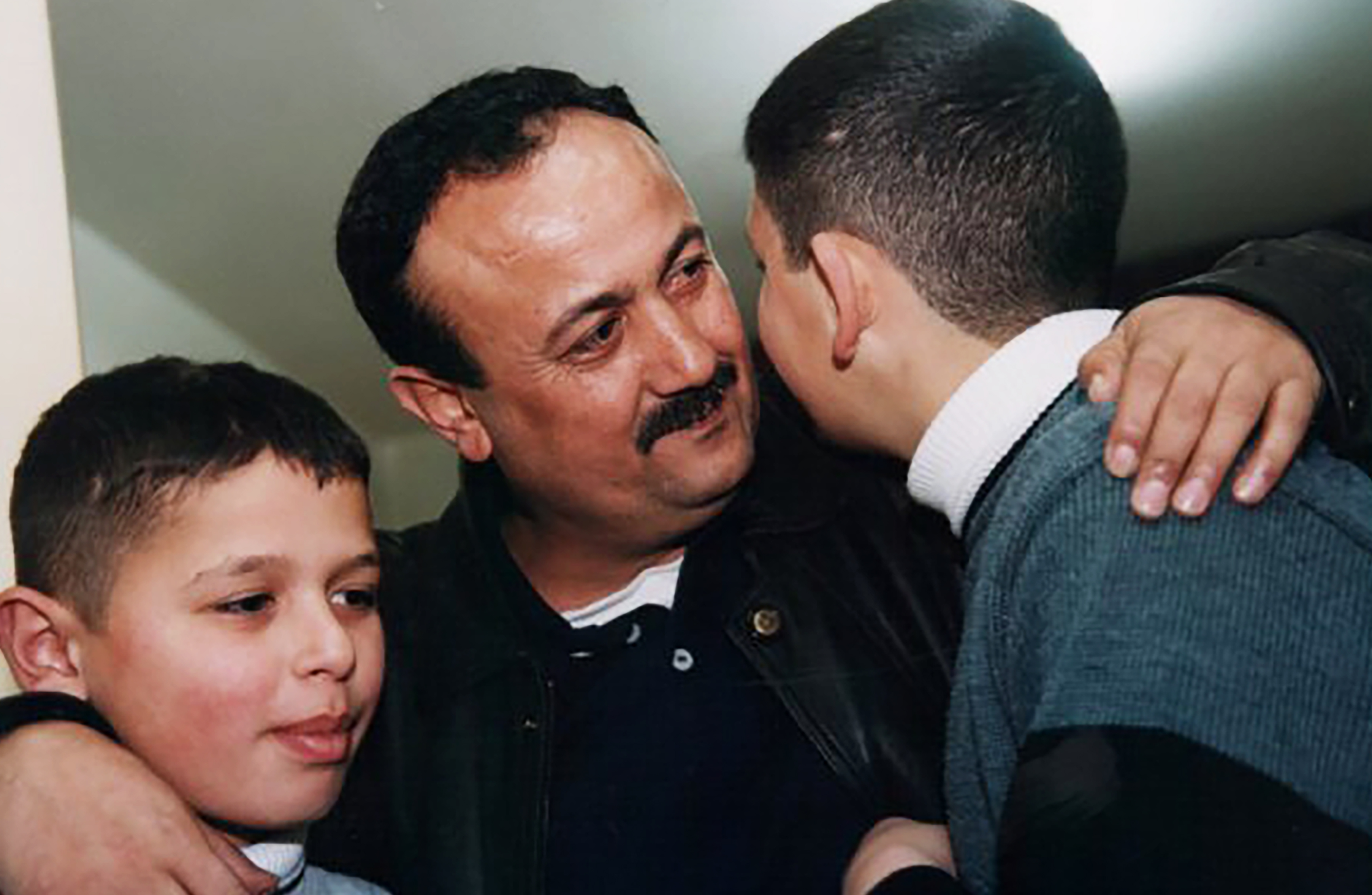
Marwan Barghouti has spent more than two decades behind bars. Born in 1959 in the West Bank village of Kobar, Barghouti rose from student activist to a leading figure in Palestinian political life—a vocal proponent of the two-state solution, he was elected to the Palestinian Legislative Council in 1996 and known for his ability to foster consensus among rival Palestinian factions. Israeli authorities arrested him in 2002, during the Second Intifada; he was subsequently sentenced to five life terms plus 40 years following his 2004 conviction on five counts of murder and one of attempted murder for directing attacks led by the Tanzim militant group. Barghouti refused to mount a defence, rejecting the jurisdiction of an Israeli court over a Palestinian resident of the occupied West Bank, and in 2004 was convicted and sentenced to five life terms plus forty years.
Comparisons to Nelson Mandela have followed him ever since. Like Mandela, Barghouti politically leads from prison, commanding a legitimacy that incarceration has not diminished. A Palestinian Center for Policy and Survey Research poll conducted in October 2025 found that he would win 49 percent of the vote in a three-way presidential race and 58 percent in a head-to-head contest against Hamas’ Khalid Mishal. Barghouti’s support of a two-state solution was most notable upon his co-authoring of the Palestinian Prisoners’ Document in 2006, in which jailed leaders of rival factions agreed to the framework of a Palestinian state within the 1967 borders. Former Israeli head of intelligence, Ami Ayalon, described Barghouti as “the only leader who can lead Palestinians to a state alongside Israel.”
Since October 7, 2023, Barghouti—now age 66—has been held in solitary confinement and, according to his lawyer, subjected to a pattern of escalating physical abuse. In this interview, JURIST’s Senior Editor for Long-Form Content, Pitasanna Shanmugathas, spoke with Ben Marmarelli, an Israeli lawyer who is the legal representative of Marwan Barghouti and a vocal critic of Zionism. Marmarelli speaks candidly about the beatings Barghouti has endured, the starvation and deprivation facing Palestinian political prisoners more broadly, what he describes as the systematic use of sexual violence against prisoners as policy, the Israeli legal system’s treatment of Palestinians in military courts, and why virtually no other Israeli lawyer is willing to talk about any of it.
Pitasanna Shanmugathas: You are a lawyer in Israel, and you describe yourself as staunchly critical of not only the Israeli government but of Zionism itself. Were you always critical, or can you talk about your personal evolution in political thinking?
Ben Marmarelli: No, I was not always critical in the way I am now. To be honest, I was always anti-government and anti-establishment—I was something of an anarchist since childhood. But I did not really understand politics until my first year at university at age twenty-four. From that point on, I became fully aware and anti-Zionist.
I want to be clear about what that means, because “critical of the government” is a Zionist framing—a liberal Zionist framing. Being critical of right-wing governments is not my position. My point is that left-wing Zionist governments are exactly the same. All Zionists are the same. It doesn’t matter whether the name is Itamar Ben Gvir or Yair Golan—they are all Zionists. They all believe in Jewish supremacy. They all believe in an apartheid state. That is the whole point of Zionism: it produces a colonialist, apartheid system. Israel was an apartheid state from its very establishment — and that establishment was carried out by left-wing Zionists, who controlled the Israeli government until 1977. The people who carried out the Nakba were kibbutzniks, socialist Zionists. They committed what I regard as the foundational crime: the ethnic cleansing of 531 Palestinian villages. So no, I do not describe myself as “critical of the government.” I oppose the ideology.
Shanmugathas: And that opposition crystallized through your university education?
Marmarelli: Yes. When you grow up in Israel, you do not really understand Zionism—it is like water to a fish. The fish does not recognize the water; it is simply the entire world. That is the situation for most Israeli citizens. The Zionist indoctrination begins in infancy, and you do not even understand that you have been shaped by it since birth. I only fully understood what Zionism is, what colonialism is, and what the state of Israel is as a colonial project when I studied sociology in my first semester at university. I went on to complete a master’s degree in sociology. But the foundation was laid in that first introduction to sociology course, with a very good professor. That is when I understood what colonialism is, what Zionism is.
Shanmugathas: And does any of the history of the atrocities against Palestinians get taught in Israeli law schools?
Marmarelli: No. In law school, they do everything they can to avoid these subjects. Law school in Israel is perhaps the worst place for it. Out of a hundred and fifty courses, perhaps one elective touches on any of this, if that.
Shanmugathas: How has Israeli society changed since the October 7th attacks—the mindset of the Israeli public?
Marmarelli: The Zionists were always genocidal. They committed what I regard as genocide beginning in 1948, and the ethnic cleansing of Palestine has been ongoing ever since. What happened on October 7th did not change the ideology. What changed is the language. Before October 7, open declarations of genocidal intent were mostly confined to the extreme right. After October 7th, those sentiments became outspoken across the Zionist population. They are no longer ashamed of it. And that shift in language has had practical consequences—it has given prison guards, for example, greater confidence to commit terrible crimes against prisoners. The torture of Palestinian political prisoners has become more widespread and more severe since October 7, and I believe that is directly connected to the language now used by politicians at every level.
Shanmugathas: And what was your personal reaction to the October 7 attacks when it happened?
Marmarelli: What happened on October 7th was an attack by Hamas and other resistance groups. It was live, it was televised, and the Israeli population watched it in real time. They heard the conversations of people who were being killed. And I think virtually the entire Israeli population was traumatized by that.
But the trauma is also a product of incomprehension. They still ask why it happened, because they have no idea. They do not know that they helped create a sealed enclosure in Gaza. Gaza has no airport, no port. Everything that enters Gaza is controlled by the Israeli state. That has been the situation since 1967—the Palestinians there cannot even fish in their own waters. Yet the Israeli population has told itself a story: that Israel “gave” Hamas freedom by withdrawing in 2005, so why would anyone attack? They do not understand the occupation, they do not understand apartheid, they do not understand the oppression of millions of people who have been violently dispossessed for eighty years. And so they are genuinely at a loss to explain why they are being attacked. That incomprehension is itself a product of the indoctrination I described.
Shanmugathas: And this is surprising, in a way, given that Israel is presented internationally as a democracy with a free press. Even publications like Haaretz, often referred to as the Israeli “New York Times,” carry voices like Gideon Levy who are sharply critical of how Israel treats Palestinians. So how can the overwhelming majority of the population remain so unaware?
Marmarelli: Israel was never a democracy, and it never had a free press—not for all its citizens. A free press would mean Palestinian publications. Haaretz is a Zionist publication. It has some remotely critical voices, and they are all still Zionists. Gideon Levy is a Zionist—he may support a one-state solution, which is good, but he is still what you might call controlled opposition. And in any case, almost no Israelis read Haaretz. Most Israelis regard it as extreme left, even though it is Zionist through and through. So the one publication that occasionally carries critical voices reaches a very small, highly educated, liberal readership. The majority of Israelis never encounter it.
Shanmugathas: As a result of your outspoken criticism of Zionism and its actions against Palestinians, you have received numerous complaints submitted to the Bar Association by right-wing organizations seeking your disbarment. Can you talk about what those complaints allege?
Marmarelli: Right-wing organizations have teams of people who prepare these complaints, and virtually every social media post I make becomes the basis for one. Not every complaint reaches me—only those that the Bar Association’s ethics committee considers somewhat valid. Those are the ones I am required to respond to, which takes time and effort. It is a war of attrition. The substance of the complaints is that my public posts do not respect the dignity of the legal profession—essentially, that I am speaking out against Zionism and the state.
Shanmugathas: And are you receiving threats to your life as a result?
Marmarelli: Yes, regularly. Private messages, online.
Shanmugathas: You are the lawyer for Marwan Barghouti. For JURIST readers who may be unfamiliar, can you talk about who he is, why he is imprisoned, and how you came to represent him?
Marmarelli: I should say that I am perhaps not the right person to give the full history of Marwan—there are better accounts of that. What I can say is that he has been consistently in prison since 2002, convicted in what I regard as a kangaroo court in 2004. He received five life sentences plus forty years. I first became involved as a substitute for his previous lawyer, Avigdor Feldman, who could not visit him and asked me to fill in. That was in December 2025. After that visit, the family asked me to take over his representation, and he has been my client since December.
Shanmugathas: He was convicted for his role as a supposed leader in the Second Intifada—specifically, charges related to allegedly directing violent attacks. You have called it a kangaroo court.
Marmarelli: All Palestinian political prisoners face kangaroo courts in Israel. No Palestinian has ever received a fair trial. For Palestinian citizens of Israel, the system is deeply biased. For Palestinians who are not citizens—who appear before military courts in the occupied territories — it is entirely kangaroo. These are colonialist courts, the same kind the British ran in their colonies, the Dutch in theirs. You appear before a court run by the occupying power, and you are always convicted. There is no real possibility of acquittal, especially not for a leader of the resistance. I have seen this in my own practice. I had a case involving a Palestinian citizen of Israel charged with incitement—for a Facebook post. I brought the judge 60 cases of Jewish Israelis who had said things far worse and received nothing, maybe a slap on the wrist. My client received 16 months in prison, later reduced to twelve on appeal. Twelve months in a security prison, among the prisoners I am describing, for a Facebook post.
Shanmugathas: I want to turn to the torture issue. UN Special Rapporteur Francesca Albanese, in March 2026, described torture as, in her words, “state doctrine” in Israel. Marwan Barghouti, now 66, has been beaten repeatedly and those beatings have escalated since October 7th. Can you tell us about the most recent assaults against him?
Marmarelli: I am the only one who can speak to the most recent attacks against Marwan, because I am the only one who has most recently seen him. What I reported publicly after my visit on April 12th is as follows:
“On April 12, 2026, I visited Marwan Barghouti in my capacity as his lawyer. What I confirmed through this visit is deeply alarming. In recent weeks, Marwan Barghouti has been subjected to three violent assaults. On April 8th in Ganot Prison, he was severely beaten and left bleeding for more than two hours. He requested medical care and was denied treatment. On March 25th, he was assaulted during his transfer from Megiddo to Ganot. On March 24th, in Megiddo Prison, guards entered his cell with a dog, forced him to the ground, and the dog repeatedly attacked him.
These are not isolated incidents. They form a clear pattern of escalating abuse: violence, medical neglect, and treatment that places him at immediate risk.
He had a great deal to say. Above all, he wanted to know more about his family and the Palestinian people — what is happening in the Palestinian and Israeli scene. I tried to tell him everything I know.
But even that conversation took place under absurd conditions: the phones did not work, so we had to shout through the glass just to hear each other. For five hours, I sat there without food or water, trying to make sure this visit meant something.
This is what a legal visit looks like today: basic conditions denied, communication obstructed, and even the most elementary human and professional standards ignored. And still, despite all of that, his mind was sharp, focused, and deeply engaged with everything happening outside those prison walls.”
I want to add some context to those events. My visit on March 16th was cancelled without notice by the Israeli Prison Service (IPS), supposedly because of the war with Iran. I filed a petition to the district court in Nazareth on March 22nd, demanding a visit as soon as the law requires. In response to my petition, the IPS entered Barghouti’s cell and beat him on March 24th. On March 25th, they transferred him from Megiddo Prison in the north to Ganot Prison in the south — and prisoners are always beaten during transfers; it is a regular feature of the process. The transfer also served to nullify my petition, since it had been filed to the northern court. On the very last day of their deadline to respond, at five-thirty in the afternoon—thirty minutes past the five o’clock cut-off — they filed a reply noting that the prisoner was no longer in the north and that I would need to file a new petition. That is how the system is used to exhaust lawyers.
Shanmugathas: Do you believe Marwan Barghouti is being singled out and treated more severely than other prisoners because of who he is?
Marmarelli: No. I do not think Marwan is receiving harsher treatment. I think he is receiving ordinary treatment — the ordinary treatment that Palestinian prisoners receive. That is precisely what makes it so alarming.
Shanmugathas: Can you describe his conditions in prison in more detail?
Marmarelli: Since October 7th, prison guards entered the cells of all Palestinian prisoners and took everything. The prisoners have no books, no personal belongings. For Marwan, who is an exceptionally well-read and educated man — who spent years organizing educational programs inside the prison and helped hundreds of Palestinian prisoners complete university bachelor’s and master’s degrees inside Israeli prisons— this is particularly devastating. He loves to read. He educated many prisoners over the years. All of that has been completely shut down since October 7th.
Beyond that, the prisoners are being starved. This is policy — the National Security Minister, Itamar Ben Gvir, made the reduction of food one of his first acts in office. He was proud of it. In 2024, Palestinian political prisoners were receiving approximately eight hundred calories per day. Eight hundred calories regardless of whether you are a small person or a tall one. Some of the taller prisoners look today as though they have stepped out of Holocaust imagery — that is not hyperbole, it is what I have seen.
The prisoners are also denied basic hygiene products—soap, razors. They are denied adequate clothing. I had a client who wore the same pair of underwear from October 7, 2023, until I filed a petition in December 2025 and secured him a second pair. According to the IPS, two pairs of underwear per prisoner is the standard. Cells designed for six people now hold twelve. There are periods when they have no mattresses. They are supposed to receive one hour of outdoor time per day — Marwan reported that in twenty days at Ganot Prison, he received seven outdoor hours out of twenty possible. They have no phone calls, no letters, no family visits. The Red Cross has not been permitted inside the prisons since October 7, 2023. Members of the Knesset have been denied access. Only the specific lawyer of a specific prisoner can visit, and even that access is constantly obstructed.
All of this violates Israeli law. All of this violates Supreme Court rulings. The government is defying its own legal framework openly and proudly. And the Supreme Court, in the context of the ongoing judicial overhaul, has largely ceased to defend even the small rights it once protected.
They also try to exhaust the lawyers. In my last visit, I was left in the visitation room for five hours with no food, no water, no toilet access, and no phone. That is also a form of attrition.
Shanmugathas: And when you do see Marwan in jail — what is his state of mind?
Marmarelli: He is mentally very strong. They have not managed to harm him mentally. He is alert, he is interested in everything happening outside, he wants to know about his family, about politics, about what is happening in Palestine and Israel. When I saw him in February and then not again until April—two months without any information from the outside world — he used every one of those 30 minutes I had with him to understand the situation. And the conditions of the visit itself were absurd. We see prisoners through thick fortified glass and communicate through phones on either side. On my last visit, none of the phones were working, so we had to shout through the glass just to hear each other. After thirty minutes or so, the guards come and tell you to finish up. His mind is sharp, focused, and deeply engaged—and that is remarkable given what he is living through.
Shanmugathas: You have also alleged systematic sexual abuse of Palestinian prisoners. Can you speak to that?
Marmarelli: Yes. This involved a different client, not Marwan. What happened was this: I had filed a request in March to visit this client at Ganot Prison, and the IPS set a date six months away—in October. I filed a petition. The court was angry with the IPS and ordered that I be given a visit as soon as possible. After that court decision, in July 2025, the IPS began setting dates promptly, as the law requires. But after a few visits, my client told me—this was in November—that every single time I came to visit, he was subjected to rape beforehand. He asked me to stop coming. That is when I understood: this was not the act of one guard. It was different guards each time, which means it is not random, it is a policy. They do not want lawyers visiting, and when a court forces them to allow visits, they torture the prisoner before each one so that the prisoner will ask his own lawyer not to return. In this client’s case, the assault was carried out with a mop handle inserted anally, before each visit. I should note that I do not have documentary evidence that this is formal policy from above—but the consistency across guards makes it, in my view, clearly systematic.
Shanmugathas: The Israeli parliament recently approved the death penalty for Palestinians convicted of murdering Israelis. What are your thoughts, and could it apply retroactively to Barghouti?
Marmarelli: It cannot apply retroactively to Marwan. His case was decided over twenty years ago. You cannot reopen a closed criminal case and impose a new punishment—that is not possible even within the Israeli legal framework.
But the more important point about this law is the shift in policy it represents. The death penalty was already on the books in Israel—it had simply never been invoked by the prosecution since 1962, when Nazi war criminal Adolf Eichmann was executed. That restraint was a policy choice, not a legal one. In the military courts that try Palestinians from the occupied territories—courts where the judges are IDF officers, some of whom may not even be qualified lawyers—the prosecution had previously begun requesting the death penalty even before this new law passed. What this law changes is judicial discretion. Previously, even if the prosecution asked for death, a panel of judges could impose a lesser sentence. Under this new law, if a defendant is convicted of murder in the context of what is characterized as ideological violence, the panel must impose death. It becomes mandatory. And since only Palestinians appear before military courts, only Palestinians will ever face this penalty in practice. That is explicit in the law—Israelis are carved out—and would have been true even without the explicit carve-out.
So the policy already changed before this law passed. The law simply removes the last discretionary check. And since 1962, the state had managed to express its view that the death penalty should not be used. That era is now over.
Shanmugathas: As recently as October 2025, President Donald Trump was directly asked about urging Israel to release Marwan Barghouti, and he said he would make a decision soon on whether to call for his release. Nothing has been said from Trump since. Do you believe there is any possibility that Marwan will be released in the near future?
Marmarelli: As everyone knows, Israel refused to release Marwan in the hostage deal. And since Trump is, in my view, essentially a servant of Israeli interests, I do not think Marwan will be released—no. There is a global campaign for his release, and that is really the only avenue, because legally, through the courts, there is no mechanism for his release.
Shanmugathas: As an Israeli Jewish lawyer, what do you think lawyers within the Israeli legal profession should be doing that they are not?
Marmarelli: What I want them to do is what I do: tell the world. All lawyers who deal with Palestinian political prisoners know the situation I am describing. They all know about the torture, the sexual abuse, the killings—more than a hundred Palestinian prisoners have been killed by the IPS since October 7, through beatings, denial of medical treatment, denial of food, and rape. And virtually none of these lawyers speak about it publicly. They are afraid. They are afraid of bar complaints, afraid for their safety, afraid for their livelihoods. And so they stay silent.
For law students entering the profession—including those in Israel and Palestine—I would say this: study sociology, because what you learn in law school is a very partial account of reality. And be brave. If you want to make a real difference, you cannot back down every time the state tries to intimidate you. A bar complaint, a death threat, a manipulated court decision—if you retreat every time, you are not doing your job. Fighting for justice means accepting that the state will fight back. You have to be prepared to stand your ground.
Editor’s Note: JURIST interviews reflect the views and firsthand accounts of the interviewees, and do not necessarily reflect the views of JURIST News
