
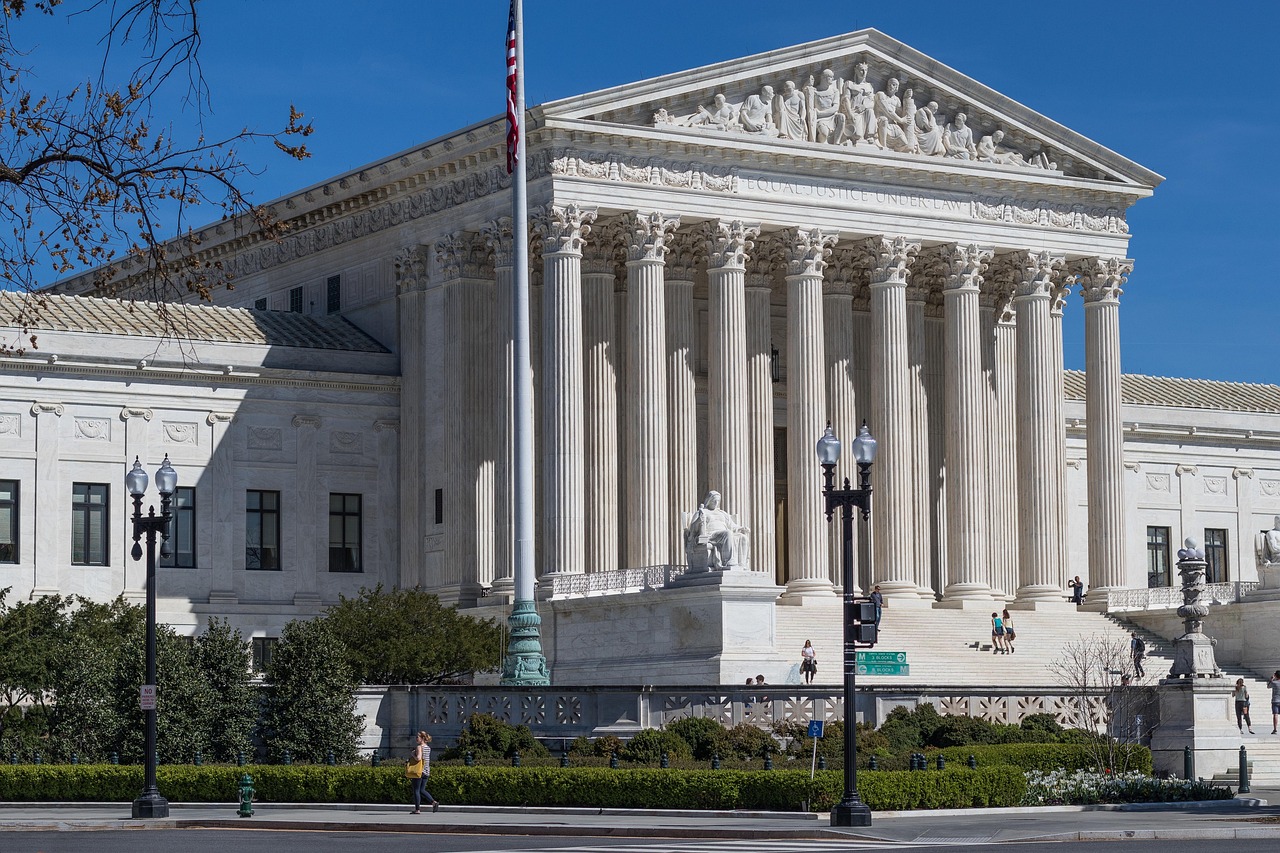
The US Supreme Court will hear oral arguments on Wednesday in Trump v. Barbara. The Court will get to decide a case that reaches far beyond the usual debates over immigration policy. President Trump aims to withhold birthright citizenship from certain children born on US soil, based solely on their parents’ immigration status. Ultimately, the Court will determine whether the executive branch can narrow a principle many Americans have long believed was settled by the Fourteenth Amendment and United States v. Wong Kim Ark, and codified by statute.
Trump v. Barbara stands apart from the usual storm of immigration controversies. The Supreme Court has already put this case on a rare fast track, signaling just how deeply it cuts into the nation’s core and how vital it is for the Court to resolve the question without delay.
The case probes the strength of legal precedent and the boundaries of presidential authority. It decides whose names appear on citizenship documents, whose identities the government must honor, and whether the promise of birthright citizenship will endure. However the Court decides, this case is poised to shape the meaning of American citizenship for generations to come.
What is this case about?
The question before the Court centers on President Trump’s Executive Order 14,160, which directs federal agencies to deny citizenship documents to certain children born in the United States after the order takes effect. Specifically, it targets children whose mothers were either in the country unlawfully or only temporarily, and whose fathers were neither US citizens nor lawful permanent residents. Challengers claim the order clashes with both the Fourteenth Amendment and the federal law that defines citizenship at birth. The administration counters that the order does not alter existing law, but instead revives what it sees as the original intent of the Citizenship Clause by denying automatic birthright citizenship to those it believes are not truly “subject to the jurisdiction” of the United States.
The Court last year in Trump v. CASA considered only emergency applications for preliminary injunctions and clarified that the merits of whether the order violated the Citizenship Clause or the Nationality Act were not at issue. Trump v. Barbara now presents the Court with the opportunity to decide the underlying constitutional and statutory challenges to the order itself, rather than just the scope of interim relief.
At the center of the case is a single phrase in the Fourteenth Amendment: “subject to the jurisdiction thereof.” The amendment provides that “[a]ll persons born or naturalized in the United States, and subject to the jurisdiction thereof,” are citizens of the United States. Both sides agree that the case turns on how that language should be read. They disagree on what “jurisdiction” means.
What the government says
The government’s brief argues that the Fourteenth Amendment does not grant citizenship to everyone born in the United States who is generally subject to American law. Instead, the clause requires both birth in the United States and being “subject to the jurisdiction thereof.” The government interprets the second requirement as being “completely subject” to U.S. political jurisdiction, owing “direct and immediate allegiance,” and being entitled to its protection. Under this view, the clause covers children of citizens, freed slaves, and aliens with lawful “permanent domicil and residence” in the United States, but excludes children of aliens who are only temporarily present or present unlawfully.
The brief supports its argument with text, history, and early precedent. It asserts that the Citizenship Clause was intended to overrule Dred Scott v. Sandford and secure citizenship for freed slaves and their children, not to guarantee automatic citizenship for children of temporary visitors or undocumented immigrants. The government describes the Civil Rights Act of 1866 as the clause’s “blueprint,” noting that the phrase “not subject to any foreign power” shows that birthright citizenship was based on allegiance, not just territorial presence. The brief cites Reconstruction debates, later treatises, executive practice, and cases such as Elk v. Wilkins to argue that “jurisdiction” means full political allegiance, not merely the obligation to obey American law while present in the country.
The brief contends that Wong Kim Ark does not establish universal birthright citizenship for everyone born on American soil. The Court repeatedly described Wong’s parents as having a “permanent domicil and residence” in the United States, framed the case in those terms, and referenced domicile over twenty times. According to the government, Wong Kim Ark supports citizenship at birth for children of lawfully domiciled aliens, whose parents owe sufficient allegiance to the United States, rather than for all persons born in the country who are generally subject to federal and state law. The brief further argues that references in Wong Kim Ark to aliens “permitted by the United States to reside here” support excluding children of undocumented immigrants.
The government divides the excluded categories into two groups. First, it argues that children of temporarily present aliens are excluded because their parents remain domiciled elsewhere and owe primary allegiance to another country. The brief cites several historical documents to support its position. Second, it contends that children of undocumented immigrants are also excluded because unlawful presence is inconsistent with the required allegiance for citizenship, and undocumented immigrants lack the legal capacity to establish domicile in the United States. The brief considers lawful permanent residence and lawful domicile as constitutionally significant because they indicate when an alien’s relationship to the United States is sufficiently established to meet the clause’s jurisdictional requirement.
The government also contends that the respondents’ interpretation, which grants citizenship to anyone born in the United States who is generally subject to American law, cannot account for established exceptions to birthright citizenship, such as the exclusion of children of diplomats, foreign sovereigns, occupying enemies, and tribal Indians.
The brief argues that near-automatic recognition of citizenship for children of undocumented immigrants creates incentives for illegal entry, enables parents to invoke a child’s citizenship to resist removal, encourages “birth tourism,” and dilutes what it calls the “priceless and profound gift” of American citizenship. It also raises national-security concerns, asserting that unconditional birthright citizenship can benefit the children of those who entered the country for hostile purposes.
What the challengers say
The challengers argue that the Fourteenth Amendment broadly resolved the issue of birthright citizenship by adopting the common-law rule that citizenship is based on birth within the territory. They assert that the Citizenship Clause was drafted after Dred Scott to ensure citizenship could not be altered by changing political majorities or executive actions. According to their interpretation, the phrase “[a]ll persons born” in the United States is intentionally inclusive, while “subject to the jurisdiction thereof” refers only to a narrow set of established exceptions, such as children of foreign sovereigns, diplomats, public warships, occupying armies, and children born into tribal nations. They contend that Trump’s executive order is a significant departure from the original meaning.
The challengers state that English common law recognized nearly all children born within the sovereign’s territory as subjects, regardless of their parents’ nationality or temporary presence in the territory. They argue this rule became part of American law, most notably in Lynch v. Clarke, which they identify as the leading antebellum birthright-citizenship case. Courts, attorneys general, and legal commentators broadly accepted that birth on US soil was sufficient for citizenship. Even before the Fourteenth Amendment was ratified, Attorney General Edward Bates issued a formal opinion saying that people born on American soil were citizens and there was “no better title” to citizenship than the “accident of birth.”
They also argue that the Citizenship Clause addresses the child’s birth and subjection to US jurisdiction, without reference to the parents’ citizenship, domicile, or immigration status. The respondents maintain that if the Framers intended a domicile requirement, they would have stated it explicitly. They further contend that the Reconstruction debates show that the Framers intended the clause to cover the children of immigrants, including those opposed by some senators, and that no domicile limitation was adopted in the constitutional text.
The challengers argue that Wong Kim Ark did not limit protection to children of lawfully domiciled aliens, but instead confirmed that the Citizenship Clause adopted the common-law rule of territorial birthright citizenship. They highlight the Court’s reliance on The Schooner Exchange v. McFaddon, establishing that ordinary foreign nationals in the United States, including temporary visitors for “business or pleasure,” are “subject to the jurisdiction” because they owe temporary and local allegiance and are subject to US laws. They similarly argue that the government misinterprets Elk v. Wilkins by removing its reference to “complete” political jurisdiction from the tribal-sovereignty context. Elk v. Wilkins demonstrates that narrow exceptions apply only in inter-sovereign situations where another sovereign’s authority limits US jurisdiction.
The brief also challenges the government’s historical sources. The challengers argue that much of the nineteenth-century commentary relied upon by the government came from writers who opposed Reconstruction, were hostile to Chinese immigrants, or sought to restrict birthright citizenship for ideological reasons. The challengers also contend that the government’s reliance on international-law writers is misplaced, as Wong Kim Ark already rejected the notion that international law replaced the common-law rule in the United States. They maintain that the key historical foundation is the common-law rule the Fourteenth Amendment was intended to preserve, not foreign treatises or later anti-immigrant commentary.
The respondents further argue that a parental-domicile requirement would make citizenship depend on contested facts about a parent’s intent, legal status, or connection to the country, creating uncertainty in a constitutional status the Framers intended to be stable and secure. Post-Dred Scott, citizenship should not be subject to manipulation by future officials. They note that Trump’s order affects not only short-term visitors, but also individuals who have lived in the US for years, including long-term visa holders, students, parolees, and undocumented residents with established lives.
Finally, the challengers contend that the order also violates 8 U.S.C. § 1401(a). They argue that Congress adopted the phrase “subject to the jurisdiction thereof” from the Fourteenth Amendment with the established understanding—by 1940 and again in 1952—that birthright citizenship applied to children born in the US regardless of their parents’ domicile or immigration status, except for the traditional narrow exceptions.
What the justices are likely to focus on at oral argument
A key issue will be the meaning of “subject to the jurisdiction thereof.” The government interprets this phrase narrowly, requiring full political allegiance rather than mere legal obedience while in the US. The challengers contend that foreign nationals are subject to American jurisdiction unless they fall within established exceptions, such as diplomats or occupying armies. The justices are likely to examine whether the government’s interpretation gives the jurisdiction clause a distinct role or introduces an unwritten allegiance requirement not found in the constitutional text.
The Court is likely to question whether the administration’s theory aligns with the established understanding of Wong Kim Ark. The government maintains that Wong Kim Ark addressed only children of parents with lawful permanent domicile and residence in the US. The challengers assert that the case reaffirmed the common-law rule of birthright citizenship and included even temporary visitors as “amenable to the jurisdiction” of the US. This tension suggests that justices may ask whether the government is seeking to significantly narrow Wong Kim Ark or to undermine its reasoning without explicitly stating so.
Terms such as “mother,” “father,” “parent,” and “parents” are absent from both the Citizenship Clause and 8 U.S.C. § 1401(a). If parental citizenship, domicile, or lawful status are constitutionally required, what is their source? The administrative challenges of a parent-based rule, including determining which parent is relevant, addressing unknown or disputed parentage, and explaining why the constitutional text would omit these details if they were essential.
If the justices are divided on the original meaning of the Fourteenth Amendment, they may consider a narrower approach under 8 U.S.C. § 1401(a). The Court is likely to ask whether § 1401(a), which uses the same key phrase and has been interpreted as a broad birthright-citizenship guarantee, independently blocks the executive order. For justices hesitant to address the full constitutional issue, the statute may serve as the primary alternative.
Amicus watch: what the friend-of-the-court briefs are adding
For Petitioners
The amicus briefs supporting the administration emphasize a common theme: the Citizenship Clause does not make birth on US soil sufficient for citizenship. They argue that the phrase “subject to the jurisdiction thereof” imposes a real limitation. According to these briefs, the Fourteenth Amendment requires more than physical presence or subjection to ordinary law enforcement. They define jurisdiction as complete political jurisdiction, reciprocal allegiance, or lawful protection by the sovereign, and contend that this standard excludes at least the children of undocumented immigrants and, in many cases, the children of temporary visitors.
Many of these briefs base their arguments on the text, structure, and history of Reconstruction. Members of Congress, Edwin Meese III, the Claremont Institute, the Center for Renewing America, the Article III Project, Tennessee and other states, and several scholars argue that the Citizenship Clause should be read alongside the Civil Rights Act of 1866, which granted citizenship to those born in the United States and “not subject to any foreign power.” They maintain that the Fourteenth Amendment continued this principle in different language. As a result, these amici interpret “jurisdiction” as full political allegiance rather than mere territorial authority, relying on Elk v. Wilkins to support the view that “complete” jurisdiction excludes those meaningfully bound to another sovereign.
These briefs also seek to limit the impact of Wong Kim Ark. They do not claim the case is irrelevant, but argue it has been overinterpreted. Petitioners’ amici assert that Wong Kim Ark concerned parents who were lawfully and permanently domiciled in the United States, and that the Court’s references to domicile, residence, allegiance, and permission to remain are central. On this view, the case protects only the children of lawfully domiciled aliens, not everyone born on US soil. Some amici go further. Professor Richard Epstein contends that Wong Kim Ark was wrongly decided even for lawful permanent residents, though he urges the Court at least to limit it to its facts. Others, including the Schmitt-Roy brief and the Claremont Institute, argue that any broader statements in Wong Kim Ark about universal birthright citizenship are dicta and should not be controlling.
Several amici focus especially on undocumented immigrants rather than on temporary visitors. Briefs from Representatives Claudia Tenney and others, Federation for American Immigration Reform, Senator Ted Cruz and other members of Congress, and the Center for Renewing America argue that unlawful presence is constitutionally significant because it undermines the reciprocal relationship of consent, allegiance, and protection that forms the basis of citizenship. These briefs stress that individuals who remain in the country unlawfully are subject to removal, have not been lawfully admitted, and therefore cannot be considered fully part of the nation’s political community. Some also contend that the children of undocumented immigrants owe allegiance to a foreign sovereign at birth, either through their parents or by operation of the home country’s nationality law and policy.
Other pro-petitioner briefs broaden the argument beyond doctrine and into structure and policy. The Schmitt-Roy brief stresses the Citizenship Clause’s reference to citizenship “of the State wherein they reside,” arguing that it would be implausible for the Fourteenth Amendment to confer national citizenship on the child of a transient or unlawful entrant while denying state citizenship absent residence or domicile. Professor Epstein’s brief looks to the early naturalization acts, arguing that those laws required renunciation of foreign allegiance and therefore undermine the idea that citizenship attached automatically to children born here to non-naturalized aliens. The Coolidge Reagan Foundation, America First Policy Institute, Joshua Steinman, and other amici emphasize consequences: illegal immigration, birth tourism, dual allegiance, dilution of citizenship, and national-security concerns tied to hostile foreign actors or intelligence services. The more rhetorically forceful versions of this argument portray the executive order as a necessary corrective to incentives that current practice allegedly creates.
For Respondents
The briefs supporting respondents present a broader and more varied argument than a simple defense of current practice. The first group of briefs focuses on the text, ordinary meaning, and the precedent set by Wong Kim Ark. These amici contend that “subject to the jurisdiction thereof” refers to being subject to American law and authority, not to a higher level of political allegiance. Multiple briefs, including those from Cato, Neutral Principles, Professor Keith Whittington, Originalist Scholars Evan Bernick and Jed Shugerman, and other constitutional scholars, argue that the administration’s interpretation adds language not found in the Constitution. Akhil Amar emphasizes that the Citizenship Clause does not mention “mother,” “father,” “parent,” or “domicile,” and that the administration is improperly introducing parental qualifications into a geographically defined provision.
A second group of briefs responds to the administration’s historical arguments. Historians Martha Jones and Kate Masur, along with race-law scholars, constitutional historians, and experts on immigration and Reconstruction, argue that the government’s account of 1866-68 history is incomplete. They assert that the Citizenship Clause was intended not only to protect formerly enslaved people but also to reject hereditary caste and lineage-based membership more broadly. These amici highlight the role of free Black Americans who claimed birthright citizenship before ratification and note that the Thirty-Ninth Congress intended the rule to apply broadly, including to immigrants’ children. Gerard Magliocca’s brief illustrates this with the debate over the children of “Gypsies,” where Congress rejected arguments to exclude US-born children of families lacking stable homes or allegiance.
A third set of briefs questions the reliability of the administration’s historical sources. The Chinese American Legal Defense Alliance, National Asian Pacific American Bar Association, Professor Gabriel Chin, and other scholars argue that many late nineteenth-century writers cited by the government were not neutral but sought to narrow the Fourteenth Amendment during a period of anti-Chinese sentiment and exclusion. They emphasize that Wong Kim Ark is significant not only for its holding, but also for rejecting earlier attempts to limit birthright citizenship based on fears about transient, racially marked immigrants.
Other briefs place this case within a broader history of contested citizenship. Professor Amanda Tyler discusses Regan v. King, a failed World War II-era attempt to revisit Wong Kim Ark and challenge the citizenship of Japanese Americans. Professor Eric Muller highlights that, even during wartime, children born to parents considered enemy aliens or disloyal were still recognized as birthright citizens if born in the United States. South Asian American organizations and the Korematsu Center caution that American law has often shifted from excluding immigrants to excluding their descendants when citizenship is politically unstable.
Many respondent amici urge the Court to view 8 U.S.C. § 1401(a) as an independent barrier to the executive order, regardless of differing views on the Fourteenth Amendment’s original meaning. Briefs from Citizenship Law Scholars, Members of Congress, various states and local governments, and the Society for the Rule of Law note that Congress enacted and reenacted the phrase “born in the United States, and subject to the jurisdiction thereof” in 1940 and 1952, reflecting a settled understanding that birthright citizenship includes children of temporary visitors and undocumented immigrants. These amici argue that the President cannot override congressional mandates by executive order and that the administration’s approach would undermine a statutory framework based on citizenship from birth for U.S.-born children.
Federal Indian law scholars Gregory Ablavsky and Bethany Berger argue that the administration misapplies Indian-law cases, noting that tribal Indians were a unique exception because tribes were quasi-sovereign communities not fully governed by US law. They point out that Wong Kim Ark treated this as a singular exception, not a precedent for excluding immigrants’ children. The territories’ brief adds that allowing political branches to alter constitutional membership leads to instability, second-class status, and uncertainty about belonging. These amici cite the experience of American Samoa and other territories as a warning against making citizenship subject to executive or congressional discretion.
The American Bar Association, labor organizations, Project Rousseau, and First Focus on Children argue that the order would not only affect a small group of future births but would create a complex proof system requiring parental documentation that many families lack or cannot safely obtain. These briefs note that even children who are clearly citizens could struggle to prove it if a birth certificate is no longer sufficient. They highlight the impact on foundlings, children born at home, children of rape, children in same-sex families, those estranged from parents, and individuals from poor or rural areas. The result, they argue, would be widespread uncertainty affecting schools, hospitals, voting, benefits, work authorization, foster care, and identification systems.
Many respondents amici frame the case in moral, social, and anti-caste terms. Civil-rights groups, Black immigrants’ rights organizations, LatinoJustice and allied organizations, faith-based groups, and the US Conference of Catholic Bishops describe the order as an attempt to create a hereditary underclass. They all warn that making citizenship at birth dependent on parental status would make legal insecurity inheritable. Some briefs highlight the risk of statelessness, while others focus on family separation, economic loss, health harms, or the disproportionate impact on Latino, Black, Asian, and mixed-status families. They agree that the Fourteenth Amendment was intended to prevent this type of lineage-based subordination.
What impact could this case have for you?
If the order were upheld, the most immediate effects would fall on some children born in the United States after the order’s operative date. The order is aimed at future births rather than at stripping citizenship from people already recognized as citizens. Even so, for families covered by the order, the practical issue would be immediate and basic: whether a newborn would be treated by federal agencies as a US citizen at all, and what documents the family could obtain to prove that status.
A ruling in this case could also affect the institutions that process citizenship every day. The order directs federal agencies not to issue or accept certain citizenship documents for children it excludes. That means the stakes are not limited to immigration courts or constitutional law seminars. Passports, Social Security records, benefit eligibility systems, and proof-of-status procedures could all be affected. Schools, hospitals, local agencies, and lawyers who help families navigate those systems could face new documentation questions and new uncertainty about what counts as sufficient proof of citizenship.
Does American citizenship begin simply by being born on this soil, or can the government tie that status to parental background, paperwork, and official discretion? The justices will deliberate in the familiar tones of constitutional text, Reconstruction history, and precedent. Yet the real impact will echo in the lives of ordinary people: will citizenship remain a secure birthright, or become a privilege that families must fight to prove? Ultimately, this case revives one of the oldest and most profound questions in constitutional law: who is counted as a member of the American community from their very first day?
