
 Features
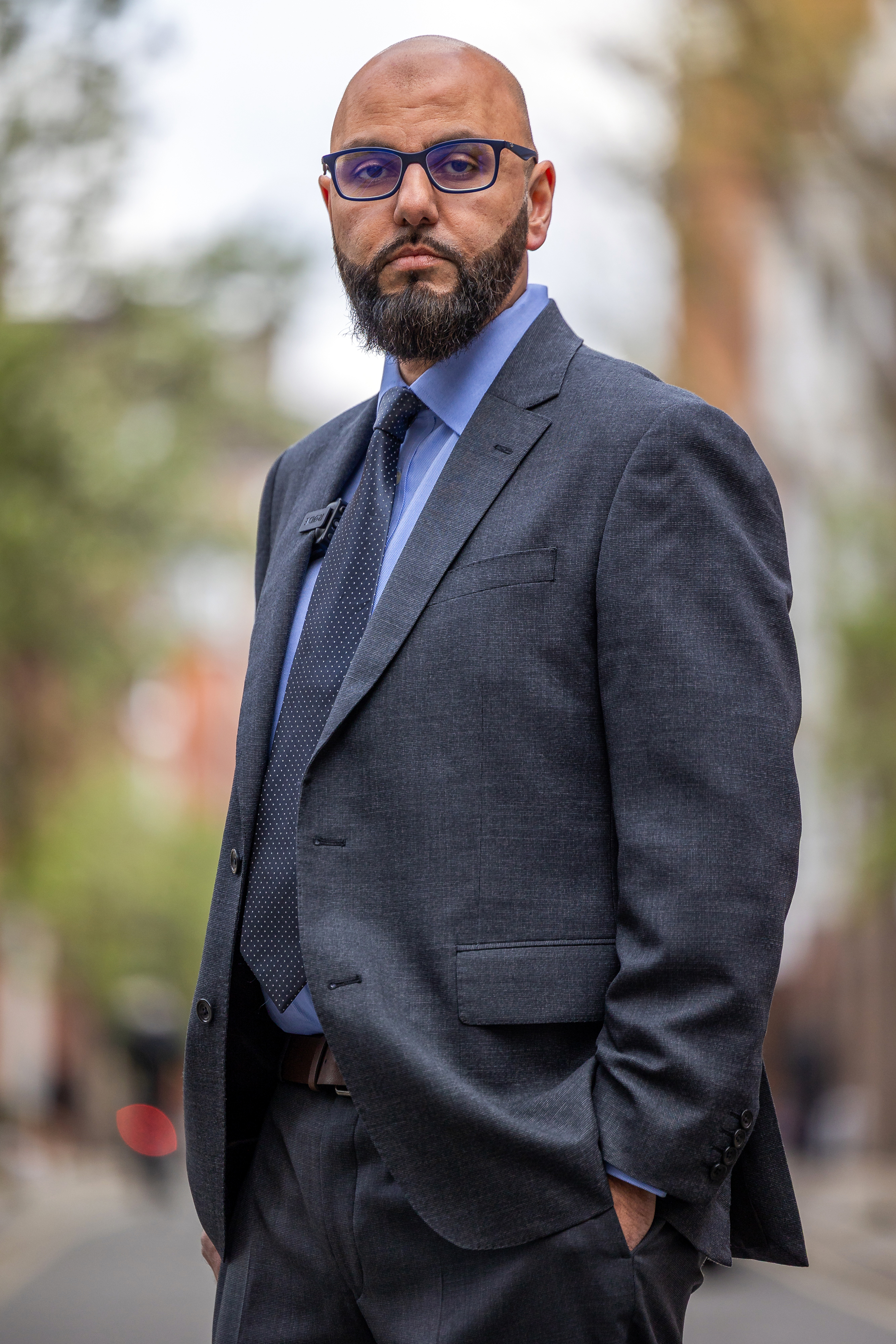
In this interview, national security lawyer Fahad Ansari speaks with JURIST News Associate Editorial Director, Alanah Vargas, about the transformation of the London-based law firm Riverway Law into Riverway to the Sea—a movement-embedded legal training and advocacy organization dedicated to confronting Zionism, and defending Palestinian liberation and anti-colonial resistance. He explains how the organization is reimagining the relationship between legal practice and activism, training lawyers and activists internationally, and pushing back against what he describes as the United Kingdom’s increasingly repressive counterterrorism framework, pointing to the recent designation of Palestine Action as a “terrorist” organization.
Riverway Law’s transition into Riverway to the Sea marks a powerful evolution in movement lawyering. Can you walk us through how this transformation came about and what it represents for the broader struggle for Palestinian liberation?
We’ve been having discussions for many months now, as everybody else has, in light of the live-streamed genocide that is keeping everybody up at night. We looked at our skills and our assets, and asked: how can we best utilize these to try and stop the genocide and ensure that it doesn’t happen ever again?
Because it’s one thing to get a so-called ceasefire; it’s another to ensure that, once and for all, Palestinians are free and not subject to the racist, fascist ideology of Zionism, imposed upon them by the apartheid state of Israel and its imperial allies.
When we looked around at the movement, at colleagues and comrades and what they were up to, it seemed very limited in its vision: call for a ceasefire, hold a march every week. I’m not saying these things don’t have utility, but they’re limited. They were doing nothing to actually stop the genocide, nothing to make a dent in the war machinery.
What did make a dent in the war machinery, literally, was the work of Palestine Action, who were recently proscribed as a banned terrorist group in Britain because of their involvement in smashing up Israeli weapons factories, thereby disrupting the flow of arms to the genocidal entity.
The analogy would be: someone is walking in with a gun to slaughter a group of children. A large group of people are protesting outside, holding placards, but the assailant walks right past them. Then others decide: we’re going to grab the gun. They take that risk and disarm the attacker—and the children survive in a way they wouldn’t have otherwise.
That’s the power of direct action. As lawyers, we asked ourselves: what are we doing? We’re always on the back foot—bringing actions, challenging the government’s decision to sell weapons to Israel, dragging it out for years. And in court, once “national security” is raised, judges invariably defer to the government.
My colleague Franck Magennis and I ran cases differently. We argued that any case involving Palestine or Israel requires understanding the background: apartheid, Zionist ideology, history. That context is crucial. We even had clients like a rabbinical student who refused to join the [Israeli Defense Forces] (IDF) because he believed Israel’s existence was sinful. Other clients refused to speak Hebrew, demanding Yiddish interpreters because they viewed Hebrew as the language of occupation.
Our vision became clear: this couldn’t just be a solicitor’s practice. We needed something new. Riverway to the Sea would be the education and training wing. We’d train lawyers in Britain and abroad to run these challenges, as well as activists and communities. We’d create space for screenings, book readings, podcasts—a cultural hub as much as a legal one.
Internationally, we envision an umbrella body. If a firm in Vienna or elsewhere shares our principles, they can affiliate, receive training, and coordinate challenges with us across jurisdictions. Already, after our application for the de-proscription of Hamas, we’ve had teams from Australia, Austria, the Netherlands, and Sweden reach out to coordinate similar challenges.
We’ve also taken on issues like the [International Holocaust Remembrance Alliance] (IHRA) definition of antisemitism, which conflates criticism of Israel with antisemitism. My colleague Franck argued in the High Court that Zionism is a fascist ideology. The client lost his case, but the judgment was groundbreaking: it said it is not antisemitic to call for the abolition of Israel, to call it a racist state, or to compare it to Nazi Germany. That’s critical.
So our vision is clear: we need a structure that connects legal work with activism, globally, with courage and without apology.
This model of a “movement-embedded legal organisation” transcends the traditional boundaries of legal practice. How do you envision this reconfiguration changing the relationship between lawyers and liberation movements on the ground?
Very often activists who get into difficulty will go to a lawyer. There are two scenarios. Beforehand: asking if doing something will break the law. Afterwards: asking for help getting out of trouble. Most lawyers in the first scenario adopt an overly cautious approach and say: don’t do it, you’ll break the law, you’ll be prosecuted. That advice paralyzes movements.
We take a different approach. We explain the law, the risks, and the possibility of a bad faith prosecution. But we leave the decision to the activist. We’re not here to deter them from following their conscience in the face of genocide. International law itself is broken. Laws in Israel are immoral. As Dr Martin Luther King Jr. famously stated, “One has a legal and a moral responsibility to obey just laws. Conversely, one has a moral responsibility to disobey unjust laws.” As with apartheid or slavery, laws must sometimes be broken.
So if activists decide to attack weapons factories, hang flags, or protest, we’ll stand by them. When they get into difficulty, we act on their instructions. We don’t impose false narratives, like telling asylum seekers to say they’re bisexual to get protection. We don’t deter clients who want to defend Hamas as the last line of defense against extermination. If they want to take that stand in court, we’ll help them articulate it. It is a basic pillar of a just legal system that everyone is entitled to legal advice.
We follow their lead while advising on risks. We don’t just run legal defenses; we contextualize them, educate juries, and ensure the truth is heard. It is the job of a lawyer to put their client’s case in the broadest terms possible so that their actions are put into the appropriate context.
Palestine Action has been designated by the UK government as a “terrorist” organization, part of a broader pattern of legal pressure on pro-Palestinian activism. How is Riverway to the Sea positioning itself to respond to this climate and support anti-colonial resistance?
Much of the repression we’re seeing now has roots in earlier counterterrorism legislation. In Britain, it began with Ireland. The Terrorism Act 2000 internationalized those measures, and for the first time, Palestinian resistance groups were criminalized.
Over time, the UK shifted to banning not only military wings of groups like Hamas, but eventually entire organizations, intentionally eliminating any potential for political dialogue. That’s unprecedented in British history—even with Sinn Féin and the [Irish Republican Army] (IRA), dialogue was always maintained as Sinn Féin was never proscribed .
Now, Palestine Action has been banned. Within 72 hours, 110 people were arrested as “terrorists” for holding placards saying “I oppose genocide. I support Palestine Action.” They sent busloads of police to arrest elderly people. By December last year, arrests for terrorist-related offenses were up 660 percent, the vast majority linked to people holding placards. This shows the authoritarian trajectory of Britain.
We’ve seen this pattern before: Muslims convicted of terrorism for possessing a London Underground map, or for writing poetry. Britain has long been a police state, but now repression is expanding beyond Muslims to the wider public. Protesters, students, even elderly activists are targeted.
Riverway to the Sea exists to push back—to challenge proscription, defend activists, and coordinate internationally so that repression in one country doesn’t silence movements everywhere.
Riverway to the Sea Director Franck Magennis described the new Centre as a place where “the law becomes a living weapon in the struggle for liberation.” What does that mean to you in terms of legal education, litigation, and organizing?
Legal education will target three groups: lawyers, activists, and communities.
For lawyers, it means training them in strategies for de-proscription challenges, regulatory cases, employment, asylum, and more. For activists, it means “know your rights” training—not to deter them, but to empower them to act despite risks. For communities, it means building political consciousness: film screenings, book readings, panel discussions, podcasts, cultural education.
It will be international and collaborative. Training in Germany, for example, must be different from training in Ireland. We’re developing partnerships across Europe, South Africa, and beyond. South African veterans of [Nelson] Mandela’s struggle have already endorsed us, recognizing parallels in how Britain once smeared their lawyers.
Ultimately, “law as a weapon” is about fighting injustice and means refusing to let it be used only against resistance. We reclaim it—in courts, in communities, and across borders.
Riverway and similar groups have been described in the media using terms like “radical” or “extreme,” in ways that seem to echo official state narratives. How do you engage with that kind of framing, and what responsibility do you think the media has in shaping how the public understands movements for liberation?
To be smeared by senior politicians and media is tough, but it’s also a badge of honor. If racist, Zionist politicians attack us, it means we’re effective.
Even when deciding on the name change, we chose “Riverway to the Sea” because it was provocative, visionary, and resonant with the movement. If detractors dislike it, that only confirms we’re on the right path.
We also recognize that persecution is part of solidarity. Palestinians live their entire lives in prison cells of various kinds. If we face some inconvenience or regulatory investigation, that’s the price of standing with them.
I have faced regulatory investigations over allegations that by taking on a de-proscription case, I brought the profession into disrepute and supported terrorism. Politicians like Robert Jenrick have smeared me, alleging I broke sanctions. None of it is true, but it chills other lawyers. Files have been demanded, witness statements scrutinized.
This is designed to isolate and deter us. But instead, it has mobilized solidarity. We’ve been invited to international conferences, legal groups abroad want to coordinate, and more lawyers are finding the courage to act.
So yes, the mainstream media parrots state narratives. But our response is to keep working, keep expanding, and keep speaking the truth.
You’ve moved away from the traditional solicitor-barrister hierarchy toward a unified, collective legal approach. How does this model better support movements facing repression, and what lessons does it offer legal practitioners working in other contexts of state violence?
In Britain, the legal profession is divided: solicitors prepare cases, barristers argue them in court. Traditionally, the interaction is minimal.
But we worked differently. Barristers like Franck worked with us in the office, side by side, preparing cases, strategizing with expert witnesses. We collaborated with academics and activists, all working together to create a powerful narrative. It created a collective energy that made our work stronger.
This model—dissolving rigid hierarchies, embedding lawyers together—is what movements under repression need. It ensures cases are run with full context, with political and legal arguments intertwined, and with solidarity at the core.
With partners across Europe, the “Middle East,” and the Global South, Riverway to the Sea is building an international legal front. What possibilities and challenges do you see in coordinating legal resistance across jurisdictions?
The challenge is jurisdictional differences. But with affiliates, each firm can remain independent while sharing training, strategies, and coordinated action.
For example, our success in challenging the IHRA definition in London can be replicated elsewhere by affiliated lawyers. Strategically, that would be devastating to those who weaponize the definition to silence criticism of Israel.
We’re already building partnerships in South Africa, Ireland, Germany, and beyond. Each place requires its own strategy, but collectively, we can weaken Zionism’s global hold.
In a time when the law is often weaponized against resistance, what does it mean to reclaim it in the service of liberation, from Britain to Palestine, from the courtroom to the street?
It means refusing to accept the state’s monopoly over law, whilst recognising the inherent constraints of the discipline. It means challenging bans, contesting false definitions, defending activists unapologetically, and embedding law within movements.
It means acknowledging that Zionism is weak, in a terminal crisis, its leaders indicted as war criminals, its state isolated as a pariah. We must capitalize on that weakness, push forward, and ensure the law serves justice and liberation rather than repression.
What message would you send to young lawyers, law students, or community organizers who want to use the law to promote anti-colonial and anti-apartheid values but are afraid of backlash or professional risk, or feeling apathetic in general about the rule of law’s role in advancing justice?
It’s time to take Zionism on. This is not the time to apologize or duck. Palestinians have shown us resilience—healthcare workers, journalists, people who risk their families’ lives every time they work. They are the real heroes.
As lawyers, we must stand at the forefront. Silence is complicity. If you see colleagues persecuted, don’t keep your head down. Show solidarity, stand up, and ensure repression doesn’t deter others. The role played by lawyers in the anti-apartheid movement and Mandela himself illustrates that oppressive and discriminatory laws can be overturned to create a more just and fair society.
This is the atrocity of our times. History will judge us. We must be counted.
