
 Features
At a moment when the meaning and vitality of the rule of law are hotly debated, we risk forgetting that the principles we now take for granted were not inevitable—they were fought for, often by individuals whose names have been forgotten. This series profiles the pioneers of rights: people who identified gaps in legal protection and fought to fill them. We begin with Elizabeth Packard because her story captures something essential: rule of law requires that the law protect everyone, including those with least power. These aren’t exercises in nostalgia—they’re reminders that rule of law has always been a project, not a given.
For much of the nineteenth century, a husband who tired of his wife’s opinions could solve the problem with a single signature on a commitment form.
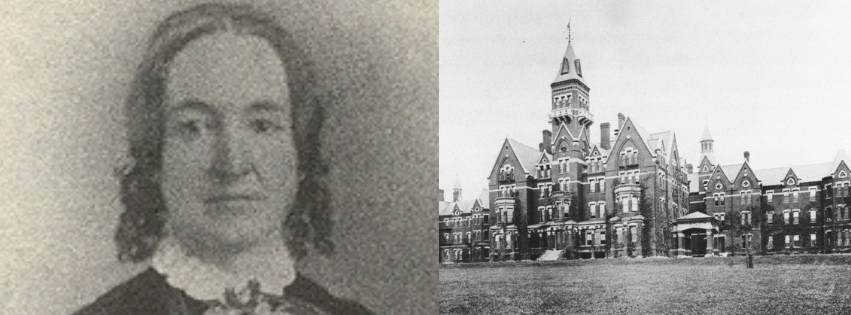
This was the experience of Elizabeth Packard, an Illinois woman who spent much of the early 1860s locked up in the Illinois State Hospital for the Insane. As with so many women before her, no doctor had examined her prior to her commitment. No judge had heard her case. She had no opportunity to defend herself, no lawyer to speak on her behalf. Her alleged insanity? She had questioned her husband’s rigid Calvinistic theology, attended a different church, and expressed views he found troubling.
Under Illinois law, her commitment was perfectly legal. The statute was explicit: a married woman could be committed to an asylum on her husband’s request alone, “without the evidence of insanity required in other cases.” In the eyes of the law, Packard had no more legal personhood than a child. A husband’s signature was sufficient to deprive his wife of liberty indefinitely.
Fortunately, unlike so many women before her, Packard was released three years after her commitment, having ultimately been declared sane. She would dedicate the rest of her life to fighting the system that had ensnared her.
The Case
On June 18, 1860, Elizabeth Packard, a 43-year-old mother of six from Manteno, Ill., was forcibly removed from her home and committed to the Illinois State Hospital for the Insane in Jacksonville by her husband, Rev. Theophilus Packard, a Presbyterian minister.
Under an 1851 Illinois statute, married women could be institutionalized “without the evidence of insanity required in other cases” based solely on a husband’s request and a superintendent’s judgment. Packard’s alleged insanity consisted entirely of theological disagreements with her husband—she had publicly rejected Calvinist doctrines of total depravity in a Bible class and expressed beliefs aligned with Unitarianism and Universalism.
Despite three years of confinement during which asylum staff found no evidence of mental illness, according to later court testimony, Packard remained imprisoned until the hospital’s board of trustees ordered her release in June 1863. Upon returning home, her husband immediately confined her to her house, prompting neighbors to seek a writ of habeas corpus. In January 1864, a Kankakee jury deliberated seven minutes before unanimously declaring her sane.
What Was Missing?
Before Elizabeth Packard’s fight, Illinois law (and state law across much of the US) denied married women myriad protections in commitment proceedings. They had:
No right to challenge detention; habeas corpus protections were unclear for married women under coverture.
No due process before commitment; no hearing, no presentation of evidence, and no legal representation were required.
No requirement of medical evidence; a husband’s word alone was sufficient for indefinite detention.
No recognition of separate legal identity. Married women could not sue, testify in their own defense, or make legal decisions.
No limits on a husband’s power. Coverture doctrine gave husbands near-absolute control over wives’ liberty and property.
Detention, Documentation, and a Developing Legal Theory
Elizabeth Packard entered the Jacksonville asylum in June 1860 as a 43-year-old mother of six, forcibly separated from her children. She would not emerge until June 1863. But she did not spend those three years passively accepting her fate.
From the beginning, Packard understood that she was facing a legal problem, not merely a medical one. She began documenting everything: the circumstances of her commitment, the conditions inside the asylum, the testimonies of doctors who found her sane, the letters her husband prevented her from sending. She kept detailed journals, secreting away papers that would later form the basis of her published accounts. She studied the other women around her and, as she later wrote, recognized a pattern: many had been committed for the same “offense” she had—disagreeing with their husbands on matters of religion, money, or household management.
The asylum’s own doctors presented Packard with her strongest evidence. Dr. Andrew McFarland, the superintendent, as Packard later documented in her published account, repeatedly noted in his records that she showed no signs of insanity. In testimony at her 1864 trial, he would acknowledge that her theological views, while unorthodox, did not constitute mental illness. But under Illinois law, medical opinion was irrelevant when a husband exercised his legal right to confine his wife.
Liberation and Legal Battle
In June 1863, asylum officials released Packard—not because the law required it, but because they could find no justification for continued detention. She returned home to find herself effectively a prisoner in her own house. According to witness testimony at her subsequent trial, Theophilus Packard nailed her windows shut and posted guards. He planned to commit her again or transport her to Massachusetts, where commitment laws were even more favorable to husbands.
But Elizabeth Packard had spent three years preparing for this moment. She managed to slip a note to a friend, who brought her case to the attention of lawyers willing to challenge the commitment statute. In January 1864, her attorneys filed a writ of habeas corpus—a legal mechanism traditionally used to challenge unlawful detention, but rarely employed by or on behalf of married women.
The resulting trial, Packard v. Packard, became a sensation. The courtroom overflowed with spectators, including many women who saw their own vulnerability reflected in Elizabeth’s case, as reported in contemporary newspaper accounts. In an extraordinary move, she testified in her own defense—highly unusual for a married woman at the time. She was articulate, composed, and devastatingly effective. She recounted the circumstances of her commitment, detailed the lack of any medical basis for her detention, and argued that her theological disagreements with her husband did not constitute insanity.
The jury deliberated for just seven minutes. They found that Elizabeth Packard was not insane and ordered her release. But the verdict, while personally vindicating, did nothing to change the law. The statute that had allowed her commitment in the first place remained on the books. Other women remained vulnerable.
From Personal Victory to Systemic Reform
Elizabeth Packard did not stop with her own freedom. She immediately began writing, publishing a series of books documenting her experience and arguing for legal reform. Her first book, Marital Power Exemplified in Mrs. Packard’s Trial, appeared in 1864. It laid out not just her personal story but a systematic legal argument: that commitment without due process violated fundamental principles of justice, and that married women deserved the same legal protections as other citizens.
She took her campaign to the Illinois legislature, lobbying for what would become the 1867 Personal Liberty Law. The statute was revolutionary: it required evidence of insanity, a jury trial, and the right to legal representation before anyone could be committed to an asylum. Crucially, it applied these protections to married women, establishing that a husband’s power over his wife was not absolute and could not override basic due process requirements.
But Packard’s ambitions extended beyond Illinois. She traveled to other states, met with legislators, organized women’s groups, and published her writings widely. As described in Linda V. Carlisle’s 2010 biography Elizabeth Packard: A Noble Fight, she faced opposition from the medical establishment, which resented lay interference in commitment decisions, and from clergy who viewed her challenge to marital authority as a threat to social order. Some women, particularly those who accepted prevailing views on wifely submission, opposed her efforts as well.
Despite this resistance, her campaign succeeded remarkably. By the 1890s, approximately thirty states had passed personal liberty laws requiring some form of due process before psychiatric commitment. The specifics varied—some required jury trials, others mandated independent medical examinations, still others established commitment review boards—but all represented a fundamental shift in the legal landscape. The state could no longer deprive someone of liberty based solely on a family member’s say-so, at least not indefinitely and not without some procedural safeguards.
Packard’s Legal Legacy
Elizabeth Packard’s campaign transformed American commitment law and contributed to the broader dismantling of coverture, the legal doctrine that subsumed a married woman’s identity into her husband’s.
The immediate reforms were substantial. Illinois’s 1867 Personal Liberty Law became a model for other states. These laws established several crucial principles that remain at the heart of due process for the mentally ill:
- Evidence requirement: Medical or other evidence of mental illness was required before commitment
- Right to hearing: The person facing commitment had the right to be heard
- Legal representation: The right to an attorney in commitment proceedings
- Independent examination: Doctors not connected to the family had to examine the individual
- Jury trial: In many states, the right to a jury determination
But the impact extended beyond commitment law specifically. Packard’s case was cited in subsequent challenges to coverture itself. Her argument—that married women needed independent legal protections because they were vulnerable to abuse of power by their husbands—strengthened the case for married women’s property rights, their right to sue and be sued, and eventually their political rights. The reasoning that underpinned her commitment law reforms applied equally to other areas where the law treated married women as non-persons.
The legal legacy also lived on institutionally. Asylum admission procedures changed nationwide. What had been informal, family-driven commitments became more formalized legal processes with documentation requirements, waiting periods, and opportunities for challenge. The shift was gradual and incomplete, but the trajectory was clear: psychiatric detention was increasingly recognized as a liberty deprivation that required legal justification, not merely medical or familial assertion.
Legal Timeline
- 1851: Illinois commitment law allows husband to commit wife “without the evidence of insanity required in other cases”
- 1860: Elizabeth Packard committed to Jacksonville asylum on her husband’s signature
- 1864: Packard v. Packard habeas corpus trial; jury finds her sane after seven-minute deliberation
- 1867: Illinois enacts Personal Liberty Law requiring due process for all commitments
- 1872-1890: Many states pass similar commitment reform laws
- 1975: O’Connor v. Donaldson establishes constitutional limits on involuntary commitment, building on due process foundation Packard helped establish
The Rule of Law Principle
Elizabeth Packard’s fight established a principle that now seems self-evident but was revolutionary for her time: the government cannot deprive anyone of liberty without due process, regardless of the person’s mental state, gender, or relationship to those seeking commitment.
Due process, at its core, means that before the state takes away your freedom, you have the right to know the charges or reasons, to be heard, to present evidence in your defense, and to have an impartial decision-maker evaluate the case. These protections apply universally. They don’t evaporate because someone is deemed mentally ill. They don’t disappear because a woman is married. They don’t become optional because a family member initiates the deprivation of liberty rather than the state itself.
Packard’s case also established that legal personhood precedes all other rights. If you lack standing to challenge your own detention, if your voice cannot be heard in your own defense, then no other legal protection matters. The law must recognize you as a person capable of asserting rights before any discussion of what those rights are can be meaningful. This was particularly important for married women under coverture, who existed in a legal twilight zone—neither fully citizens with independent rights nor completely without legal protection.
Finally, her campaign demonstrated that private power can deprive liberty as effectively as state power. When the law delegates to husbands the authority to confine their wives, the formal distinction between private and governmental action becomes meaningless. The rule of law requires that any deprivation of liberty—whether carried out by a sheriff or a husband, a judge or a doctor—be subject to legal process and judicial review.
Where This Matters Today
The principle Elizabeth Packard fought for—that liberty cannot be taken without due process, even from those deemed mentally ill—remains contested in American law.
Civil commitment statutes in every state allow for involuntary psychiatric detention, and recent legal challenges have raised questions about whether current procedures meet due process standards. Florida’s Baker Act, which permits 72-hour involuntary holds based on a single examining clinician’s determination, has faced criticism for insufficient procedural protections. In 2023, disability rights advocates challenged California’s CARE Court system, which allows family members and first responders to petition for court-ordered treatment, arguing the procedures lack adequate safeguards for those facing commitment. These debates echo precisely the concerns Packard raised: when can liberty be restricted based on mental health status, and what process is due before that restriction occurs?
The “troubled teen” industry presents perhaps the most direct parallel to Packard’s situation. To this day, parents can commit minors to private residential treatment facilities in many states with minimal or no judicial oversight—the same lack of due process Packard experienced. Recent investigations have documented widespread abuse in these facilities, and legal reforms have been slow. Utah, which hosts many such facilities, only began implementing stronger oversight requirements in 2021 after decades of documented problems.
Guardianship and conservatorship law has received increased attention following high-profile cases like Free Britney, which highlighted how adults can lose fundamental rights—including the right to make medical, financial, and personal decisions—through conservatorship proceedings that sometimes lack robust adversarial process. The principle Packard established—that before someone loses legal autonomy, they must have a meaningful opportunity to be heard—should apply with equal force to guardianship proceedings, yet gaps in representation and inadequate hearings remain common.
Domestic violence protection intersects with these issues as well. Some jurisdictions have explored using civil commitment statutes to detain individuals deemed dangerous to intimate partners, raising questions about when family relationships can justify restrictions on liberty and what procedures must precede such restrictions. The tension Packard identified—between protecting vulnerable individuals and preserving due process—persists.
Finally, immigration detention and due process presents a contemporary crisis that directly echoes Packard’s experience. As of 2025, U.S. Immigration and Customs Enforcement (ICE) detains tens of thousands of individuals—sometimes for months or years—with minimal procedural safeguards. Through policy changes and expanded “mandatory detention” under the Laken Riley Act, ICE can now arrest and detain people practically indiscriminately, declaring that anyone who originally entered the US without permission cannot even ask for release on bond, regardless of how long they have lived in the country. When immigration judges do grant bond, ICE routinely appeals, triggering an automatic stay that keeps people detained during the appeal process. For most detained individuals, the only path to release is filing a habeas corpus petition in federal court—the same mechanism Packard used in 1864—but approximately 80% lack legal representation to navigate this complex process.
These contemporary debates are not historical curiosities. They involve fundamental questions about when and how the state can deprive people of liberty, who can initiate such deprivations, and what safeguards must exist. Elizabeth Packard’s answer—that due process is universal and non-negotiable—remains as relevant and contested today as it was in 1867.
Closing Reflections
Elizabeth Packard died in 1897 in Chicago, at the age of 80, having spent the second half of her life as a legal reformer, author, and advocate. She wrote six books documenting her experience and arguing for legal change. She never regained custody of her younger children. Theophilus Packard took them with him and largely prevented contact. Her personal victory was incomplete in ways that mattered deeply; she had won her freedom but lost her family.
But the legal infrastructure she built outlasted her personal suffering. The due process protections she fought for became embedded in American law. When we debate civil commitment standards today, when disability rights advocates challenge inadequate procedures, when courts weigh the limits of state power over individuals deemed mentally ill, we are standing on legal foundations Elizabeth Packard helped construct.
When we talk about rule of law being in crisis, we might remember that for Packard and her contemporaries, there was no crisis—there was simply an absence. Married women had no due process rights in commitment proceedings because the law did not recognize them as persons entitled to such rights. Packard and others built the protections we now fear losing. The question for our moment isn’t whether rule of law is dead, but whether we’ll defend what they constructed—or let it erode through indifference, inadequate funding for legal representation, or expedient exceptions for categories of people deemed dangerous or different.
Further Reading
Elizabeth Packard, The Prisoners’ Hidden Life, or Insane Asylums Unveiled (1868) — Packard’s firsthand account of asylum conditions and commitment abuses
Elizabeth Packard, Marital Power Exemplified in Mrs. Packard’s Trial (1870) — Her published trial transcript and legislative testimony
Linda V. Carlisle, Elizabeth Packard: A Noble Fight (2010) — Comprehensive scholarly biography
Phyllis Chesler, Women and Madness (2005) — Historical analysis of psychiatric institutionalization of women
