
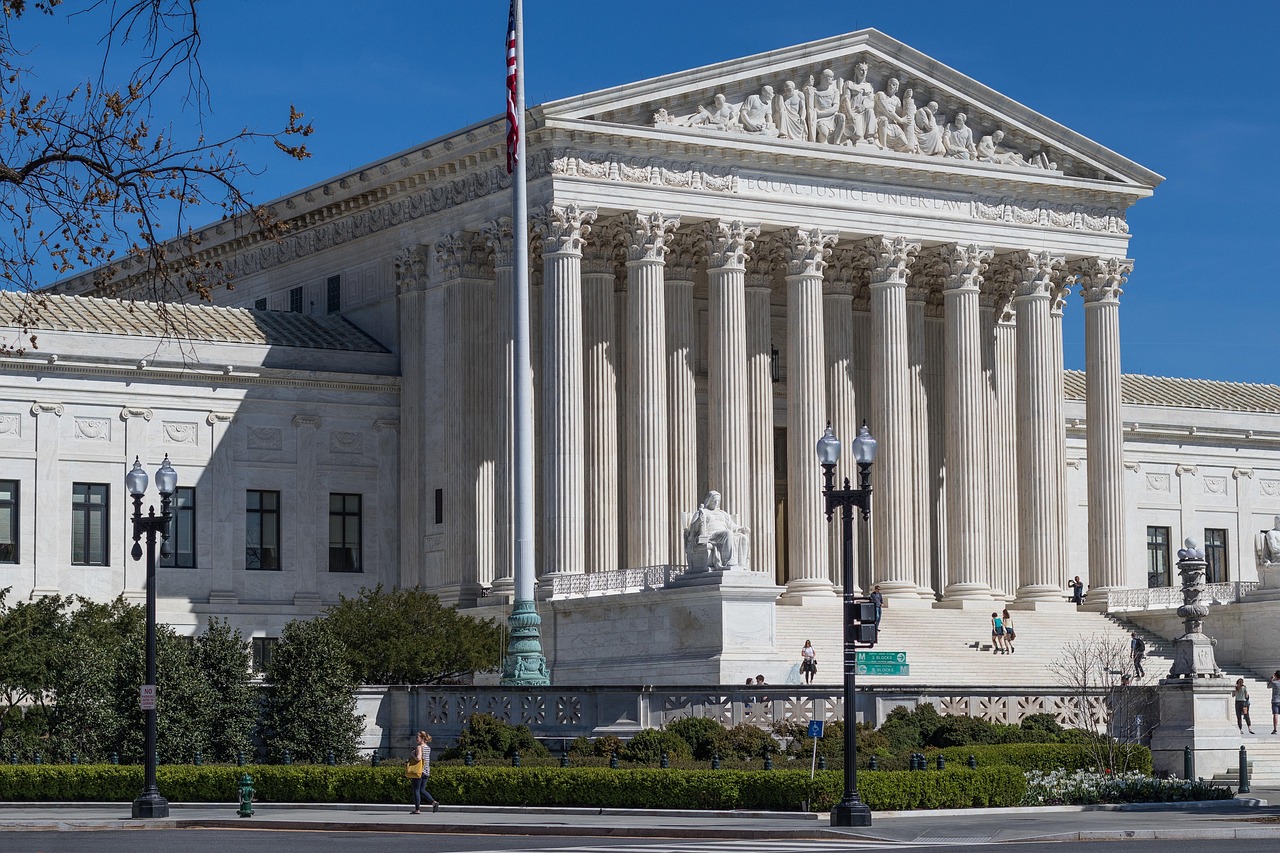
The US Supreme Court will hear oral arguments on Tuesday, January 13, 2026, in two cases about whether states may restrict participation on girls’/women’s school sports teams to students classified as female based on biological sex at birth. The two cases are Little v. Hecox (No. 24-38) from the Ninth Circuit, and West Virginia v. B.P.J. (No. 24-43) from the Fourth Circuit.
Although the cases originate from distinct statutory frameworks and procedural contexts, both present overlapping questions regarding (1) the interpretation of Title IX in the context of school athletics (West Virginia only), and (2) the constitutional limits imposed by the Equal Protection Clause on sex-based eligibility criteria for girls’ and women’s sports teams (both cases).
What are the laws at issue?
Idaho enacted the “Fairness in Women’s Sports Act” in 2020. The law limits participation on women’s teams in public schools and colleges to students the statute deems female, and it includes enforcement mechanisms that (as the Ninth Circuit described) subject participants in girls’/women’s athletics, rather than boys’/men’s athletics, to sex-verification procedures.
West Virginia enacted the “Save Women’s Sports Act” in 2021. It similarly restricts participation on girls’/women’s teams in public secondary schools and colleges to students classified as female based on biological sex at birth.
Who is challenging the laws and why?
In Little v. Hecox, a transgender woman (Lindsay Hecox) challenged Idaho’s law after seeking to participate in women’s athletics at Boise State University, arguing the law violates the Equal Protection Clause.
In West Virginia v. B.P.J., a transgender girl (identified by initials) challenges West Virginia’s law, asserting violations of both Title IX and the Equal Protection Clause.
What is the procedural background?
In Little v. Hecox (Idaho), the district court granted a preliminary injunction preventing enforcement of the Idaho law against specific plaintiffs. The Ninth Circuit upheld the injunction for Hecox but vacated it for other plaintiffs, determining that the Act’s “text, structure, findings, and effect” indicate a categorical exclusion of transgender women and girls, and that its verification procedures impose burdens on participants in girls’ and women’s athletics.
A significant preliminary issue is mootness. The Supreme Court docket shows that Hecox submitted a suggestion of mootness and requested dismissal of the case. The Court deferred its decision and indicated it would address the mootness question following oral argument.
In West Virginia v. B.P.J., the Fourth Circuit reversed the district court’s decision. The Fourth Circuit held that West Virginia’s categorical exclusion violates Title IX as applied to B.P.J. and that B.P.J. was excluded from participation “on the basis of sex” within the meaning of Title IX. The court found that Title IX does not incorporate an “important governmental interest” justification test once discrimination is shown.
The Supreme Court granted certiorari for both cases on July 3, 2025.
What specific legal issues is the Supreme Court being asked to decide?
In Little v. Hecox (Idaho), the question presented is whether a state law seeking to protect girls’/women’s sports by limiting participation to “women and girls based on sex” violates the Equal Protection Clause. Separately, the Court may need to decide whether the case is moot and, if so, what to do with the Ninth Circuit decision (vacatur is commonly litigated in this posture).
In West Virginia v. B.P.J., two questions are presented: (1) whether Title IX prevents a state from designating girls’ and boys’ sports teams based on biological sex determined at birth, and (2) whether the Equal Protection Clause prevents a state from offering separate boys’ and girls’ sports teams based on biological sex determined at birth.
What legal framework will drive the argument?
Title IX states that “[n]o person … shall, on the basis of sex, be excluded from participation in … any education program or activity receiving Federal financial assistance.” The established athletics regulation allows for separate teams for each sex under certain conditions, such as when selection is based on competitive skill. Notably, federal regulatory policy has been unstable. The Department of Education withdrew its proposed athletics-specific rulemaking in late 2024, and ongoing litigation regarding other Title IX regulatory changes continues to shape the regulatory environment.
The Equal Protection doctrine will also play a role in these cases. If the Supreme Court considers the challenged rules as sex-based classifications, the standard applied is intermediate scrutiny, requiring the state to provide an “important government interest” and to demonstrate that the means are “substantially related” to important governmental objectives. Another consideration is whether the Court views the laws as discriminating based on transgender status and what level of heightened scrutiny, if any, is appropriate. In United States v. Skrmetti (2025), the Court applied rational-basis review to a Tennessee law concerning medical treatments for minors and did not resolve whether transgender individuals constitute a suspect or quasi-suspect class.
What is the challengers’ position?
The challengers in the West Virginia case anchor their case on Title IX. The challengers’ primary statutory argument is that excluding a transgender girl from a girls’ team constitutes exclusion “on the basis of sex,” drawing on Bostock’s but-for causation logic: the student receives adverse treatment for characteristics or actions that would be treated differently if the student were of another sex. The Fourth Circuit analyzed whether B.P.J. experienced worse treatment than a similarly situated comparator and resulting harm, concluding that the Act functions “on the basis of sex” and that the Title IX analysis concludes once discrimination is demonstrated.
In both cases, the challengers cite the Equal Protection doctrine to contend that categorical bans are not narrowly tailored to serve legitimate interests in athletic fairness or safety, especially when considered in light of individual student circumstances. They further argue that certain enforcement mechanisms, particularly in Idaho, impose burdens on participants in girls’ and women’s athletics through verification procedures, which they assert constitutes sex-based discrimination.
What is the states’ position?
In West Virginia, the state argues that Title IX and its athletics regulation historically permit sex-separated teams and that “sex” in this context refers to biological sex, making a biological-sex eligibility rule consistent with the statute and regulation’s design to expand athletic opportunities for girls. The dissent in the Fourth Circuit similarly argued that Title IX’s allowance for sex-separated teams should not be read to require commingling in competitive sports.
In both cases, the states rebut the challengers’ view of Equal Protection arguing that sex-separated sports are constitutionally valid because they advance important objectives, such as fairness and safety in girls’ athletics, and that biological differences are pertinent in competitive sports. Idaho further contends that the Ninth Circuit incorrectly characterized the Act as an impermissible categorical exclusion rather than a lawful sex-based eligibility rule.
Where does the federal government fit?
The Solicitor General, representing the Trump administration, is participating in oral argument in both cases as amicus curiae, supporting the states’ authority to enforce the contested eligibility rules. The administration has also advanced related executive-branch policies, including an executive order addressing federal funding implications for schools’ athletics policies.
What to watch at oral argument
The Court is likely to begin with threshold and framing issues. In Little v. Hecox, mootness may be determinative. If the Court finds the dispute is no longer active, it may concentrate on whether to vacate the Ninth Circuit’s decision and what standard should apply to cases of perceived strategic mootness.
In West Virginia v. B.P.J., the Justices are expected to focus on three main issues. The first concerns the relationship between statutory text and regulatory structure. Specifically, how to interpret “on the basis of sex” in Title IX in conjunction with an athletics regulation that allows for separate teams. The second issue is the extent to which Bostock’s reasoning applies beyond Title VII employment law to competitive athletics, where sex classifications may be considered essential to program design rather than inherently discriminatory. The third issue involves the post-Skrmetti constitutional context: whether the Court can resolve the case narrowly, such as on Title IX grounds, without issuing broad rulings regarding the level of scrutiny for transgender classifications under Equal Protection.
What impact could these cases have?
A decision in favor of the challengers in West Virginia v. B.P.J. could establish a constitutional or federal mandate, via Title IX, requiring states and federally funded schools to permit transgender girls to participate on girls’ teams in at least some circumstances. Such a ruling would likely result in immediate litigation regarding the scope and limitations of any principle articulated by the Court.
A ruling in favor of the states could affirm the validity of biological-sex eligibility rules for girls’ and women’s teams under Title IX and the Equal Protection Clause, depending on the scope of the Court’s reasoning. This outcome would likely reduce litigation risk for schools in states with comparable statutes, while shifting future disputes toward as-applied challenges, administrative enforcement, and questions regarding the implementation of eligibility rules without engaging in impermissible sex stereotyping or imposing unequal burdens.
