
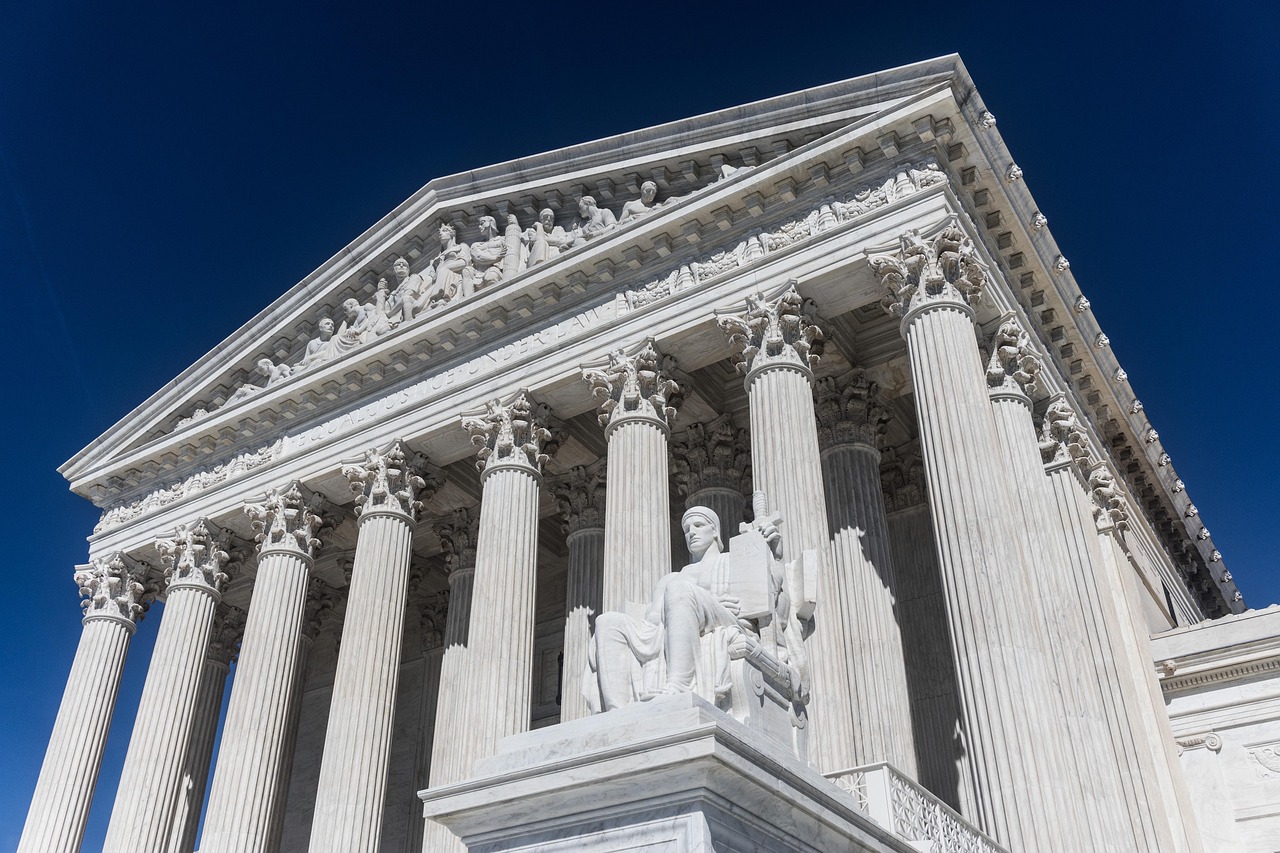
The US Supreme Court will hear oral arguments in Louisiana v. Callais on Wednesday, October 15, a case testing how far states may consider race when redrawing congressional districts to comply with the Voting Rights Act (VRA). In 2024, Louisiana enacted a new map creating a second majority-Black district. A three-judge federal court struck it down as an unconstitutional racial gerrymander, finding that the legislature relied too heavily on race in drawing district lines. The Supreme Court allowed that map to be used for the 2024 elections but later restored the case for full argument. The justices will now decide the central issue on whether deliberately creating an additional majority-Black district to satisfy the VRA is consistent with or prohibited by the Fourteenth and Fifteenth Amendments.
What is the state law at issue here?
The challenged law is Louisiana’s 2024 congressional redistricting statute, Senate Bill 8 (S.B. 8). It replaced the 2022 map, with one majority-Black district out of six, by creating a second majority-Black district, an elongated “District 6” that the district court described as stretching roughly 250 miles while splitting multiple metro areas.
Who is challenging the law and why?
A group of voters who identify as non–African American filed an Equal Protection challenge, arguing that S.B. 8 unlawfully divided voters based on race. They claim that race, rather than traditional districting principles, was the main factor in drawing the map, creating what they describe as a Shaw-type racial gerrymander that cannot survive strict scrutiny.
What is the procedural background of the case?
In 2022, a separate group of Black voters won a preliminary injunction in Robinson v. Ardoin, after a district court found that Louisiana’s single majority-Black district likely violated Section 2 of the Voting Rights Act. The Fifth Circuit later lifted that injunction, citing timing and fairness concerns, but noted that the ruling had been only preliminary.
In January 2024, anticipating an adverse merits outcome in Robinson, Louisiana enacted S.B. 8 with two majority-Black districts. In April 2024, a three-judge federal court blocked S.B. 8, finding that it was a racial gerrymander. The Supreme Court put that order on hold the following month, allowing the map to be used for the 2024 elections. The Court first heard arguments in March 2025, focusing on whether the lower court was correct in concluding that Louisiana’s creation of a second majority-Black district amounted to an unconstitutional racial gerrymander.
On June 27, 2025, the justices opened the case for reargument and directed the parties to address a broader issue: whether intentionally creating a second majority-Black district to comply with the Voting Rights Act violates the Fourteenth or Fifteenth Amendments. Justice Clarence Thomas dissented from that decision, writing that there is an “intractable conflict” between Section 2 of the Voting Rights Act and the Equal Protection Clause of the Fourteenth Amendment. To the extent that the Court’s interpretation of the VRA conflicts with the Constitution, he wrote, “the Constitution controls.”
What specific legal issue is the Supreme Court being asked to decide?
The Court directed supplemental briefing on whether a state’s intentional creation of a second majority-minority district violates the Equal Protection Clause or the Fifteenth Amendment. Embedded within that question are classic Shaw/Miller inquiries: did race “predominate” in drawing the lines, and if so, did the State carry its “strong basis in evidence” burden to show the VRA required that race-conscious choice for that district as narrowly tailored relief.
What is Louisiana’s position?
Louisiana, joined on appeal by the Robinson intervenors, argues that the Legislature was effectively required by court rulings to create a second majority-Black district. After the Robinson courts found that the 2022 map likely violated Section 2 of the Voting Rights Act, lawmakers say they acted to comply with those decisions. According to the state, that provided both a “good reason” and a compelling interest for the new map, which they claim was also shaped by political considerations, such as protecting certain incumbents.
In supplemental briefing for reargument, Louisiana goes further, contending that race-based redistricting is itself unconstitutional even when pursued to comply with Section 2, invoking the Court’s recent equal-protection jurisprudence to urge a more “color-blind” rule.
What is the appellees’ position?
The Callais appellees defend the injunction by emphasizing direct admissions in the legislative record that two majority-Black districts were the non-negotiable target, alongside circumstantial evidence (shape, splits) that race drove line-drawing. They argue that Louisiana did not conduct any district-specific Section 2 analysis before passing S.B. 8, nor did it present any Gingles evidence showing that the new District 6 would allow Black voters to elect their preferred candidates. Under the Gingles framework, a plaintiff must show that the minority group is large and geographically compact enough to form a majority in a single district, that it tends to vote cohesively for the same candidates, and that the majority votes as a bloc in a way that typically defeats those candidates.
They argue that under Cooper v. Harris and Wisconsin Legislature v. Wisconsin Elections Commission (WEC), a state cannot rely on general fears of lawsuits or on another court’s preliminary findings to justify using race when drawing districts. In those cases, the Supreme Court made clear that a state must have its own clear and specific evidence, based on the Gingles factors, showing that considering race was necessary and carefully limited to comply with the Voting Rights Act. They also stress that even a proven Section 2 need in one part of the state could not justify this particular configuration if it is not compact and consistent with traditional criteria.
What could happen at oral argument?
The justices could focus narrowly on whether Louisiana’s record shows race predominance and a failure of strict scrutiny, or pivot to the broader constitutional question the Court posed for reargument: how far states may consider race to avoid Section 2 liability and whether that consideration itself offends the Fourteenth or Fifteenth Amendments. Given the Court’s recent reaffirmation of the traditional Gingles framework in Allen v. Milligan, watch for probing on whether that framework can be reconciled with the State’s newly “color-blind” theory.
What to watch in argument?
Expect detailed questioning of Louisiana about whether it conducted any district-level Gingles or performance analysis before enacting S.B. 8. Recent Supreme Court cases require each state to rely on its own factual evidence, not on general assumptions about potential lawsuits. The appellees can expect questions about whether the three-judge court correctly distinguished the use of race from politics, and whether it is possible to craft a remedy that respects both Equal Protection and Section 2 without effectively imposing a racial quota. Chief Justice Roberts and Justice Kavanaugh, who were both in the Milligan majority, are likely to play key roles. Roberts has defended the traditional Section 2 framework, while Kavanaugh has expressed concern about allowing race-based remedies to continue indefinitely.
How can this case impact you?
A narrow decision upholding the lower court would mainly affect how states document and justify the use of race in redistricting. It would require states to provide clear, district-specific evidence before considering race in drawing lines. A broader ruling in Louisiana’s favor, however, could significantly limit or reshape Section 2 of the Voting Rights Act, reducing the number of districts where minority voters can consistently elect their preferred candidates. By contrast, rejecting Louisiana’s argument would preserve current Section 2 protections and maintain the existing Shaw strict scrutiny framework. Whatever the outcome, the ruling will influence how congressional maps are drawn nationwide and how communities, especially those with racially polarized voting, convert population strength into political representation.
