
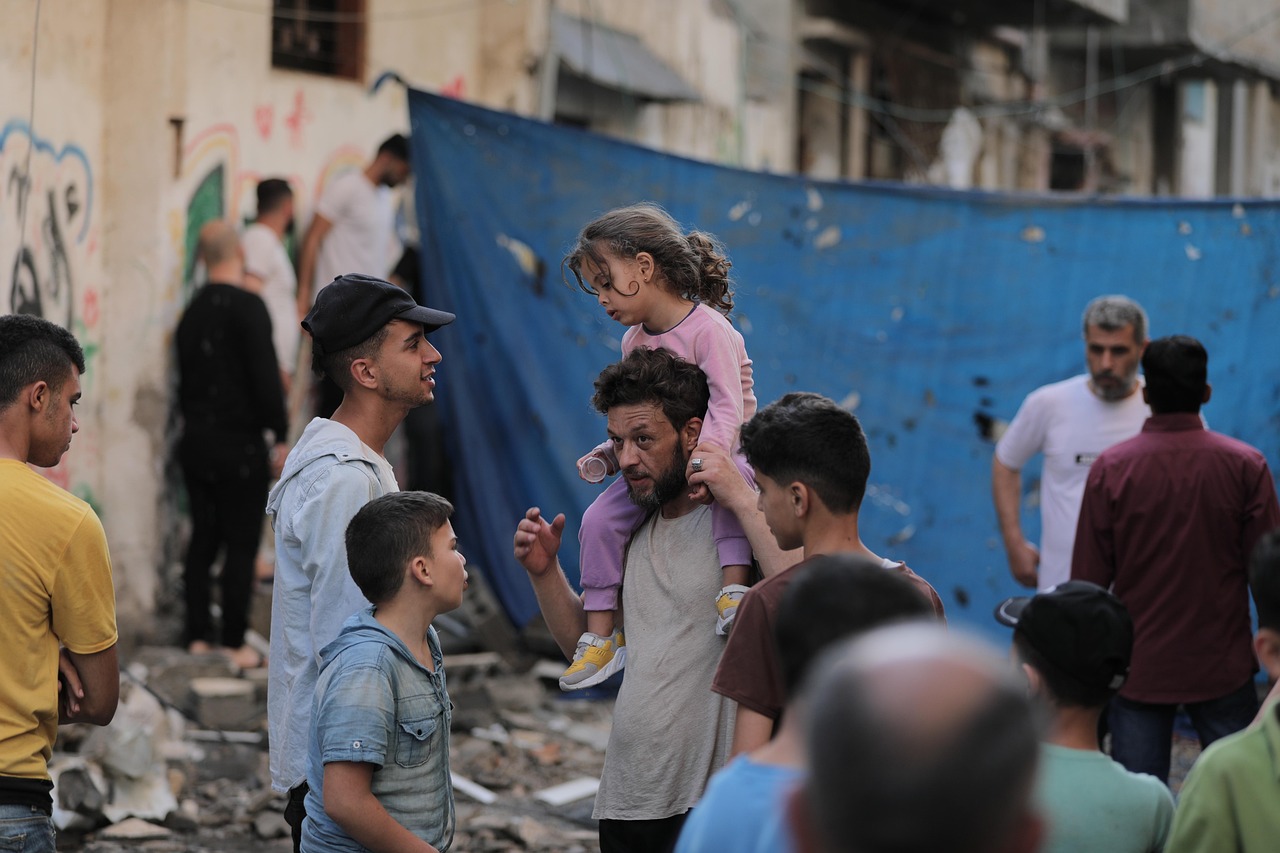
As Israeli forces launched a major ground offensive in Gaza City on Tuesday, a United Nations investigative commission concluded that Israel has committed genocide against Palestinians in Gaza. The commission’s determination carries no immediate legal enforcement power, but creates significant obligations for countries around the world under international law.
The Independent International Commission of Inquiry on the Occupied Palestinian Territory, including East Jerusalem, and Israel (Commission) found that Israeli forces committed acts aimed at destroying Palestinians as a group, including mass killings, causing serious harm, and deliberately creating conditions meant to bring about their physical destruction.
The commission also concluded that Israeli officials, including President Isaac Herzog and Prime Minister Benjamin Netanyahu, publicly incited genocide.
What does the commission’s finding mean, and how does it factor into the growing chorus of calls to end what many nations, institutions, and individuals have come to see as Israel’s genocide of the Palestinians of Gaza?
Not a Court Ruling, But Legally Significant
The Commission’s determination is not a binding legal ruling.
Only certain institutions can make legally binding genocide findings: the International Court of Justice for state responsibility, the International Criminal Court for individual criminal responsibility, or domestic courts with proper jurisdiction—either because the alleged crimes occurred on their territory, the accused is present in their jurisdiction, or they are exercising universal jurisdiction over genocide as a crime against all humanity.
The Commission is not a court of law; it is an investigative body that was established in 2021 by the UN Human Rights Council to probe all alleged violations of international humanitarian law in Palestine and Israel. Since its establishment, its mandate has expanded to include acts of settler violence and the legal consequences of states’ sales of arms to Israel.
The report’s legal value is thus in providing detailed evidence that courts and prosecutors can rely on. In doing so, it triggers heightened legal duties for all nations under the Genocide Convention, which established that preventing and punishing genocide is an obligation owed to the entire international community, not just to individual countries.
Universal Obligations for All Countries
Under international law, all countries have certain duties regarding genocide prevention, regardless of whether they signed the Genocide Convention. This is because the prohibition against genocide is considered a jus cogens norm—a peremptory principle of international law that binds all states and cannot be derogated from by treaty or agreement. These universal obligations include the duty to prevent genocide where states have the capacity to influence the situation, avoid providing assistance that could enable genocide, investigate and prosecute genocide committed by their nationals, and cooperate with international investigations.
The most immediate practical implication involves arms transfers. Countries are legally prohibited from transferring weapons or military equipment to Israel if there are reasonable grounds to believe the weapons could be used in genocidal acts. Several European nations have already suspended arms sales to Israel, citing concerns about violations of international law.
The commission’s report makes it harder for countries to claim they were unaware of genocide risks. The detailed 72-page analysis provides extensive documentation of alleged genocidal acts and intent.
Enhanced Duties for Treaty Members
The 186 countries that have ratified the Genocide Convention face additional binding obligations. These include exercising universal jurisdiction to prosecute suspected genocidaires found on their territory, extraditing or prosecuting individuals suspected of genocide, supporting international proceedings, and considering sanctions or other measures to pressure compliance.
The 125 states parties to the Rome Statute must cooperate with ICC investigations and execute any arrest warrants related to genocide charges. The ICC is already investigating the situation in Palestine and could potentially add genocide charges to existing arrest warrant applications.
Strengthening the ICJ Case
The commission’s report could bolster South Africa’s ongoing genocide case against Israel at the International Court of Justice. The court has already issued several sets of provisional measures ordering Israel to prevent genocidal acts, allow humanitarian aid, and halt military operations in Rafah.
Countries have obligations to ensure Israel complies with these court orders and avoid actions that would undermine the proceedings. The commission recommended that countries continue to intervene in the ICJ case to support genocide prevention efforts.
The ICJ case represents the most significant legal challenge to Israel’s conduct, as the court’s eventual ruling on whether genocide occurred would be binding under international law. A final ruling could be years away, but the provisional measures are immediately binding.
What Countries Are Not Required to Do
International law is typically more theoretical than practical, allowing states a great deal of deference in precisely how they deal with states suspected of committing genocide. Countries are not required by international law to sever diplomatic relations with Israel, impose comprehensive economic sanctions, or use military force to stop alleged genocide. This deference aside, states are not entitled to simply ignore their prevention duties. And what international law lacks in terms of positive directives can be compensated for by reputational costs and political pressure from the international community more broadly.
While the commission’s findings create strong political and legal pressure for action, the specific measures countries take will depend on their own legal systems and diplomatic considerations.
The Least You Need to Know:
While the commission’s finding does not automatically create new legal obligations, it establishes clear notice that countries cannot justify inaction on genocide prevention.
