
 Features
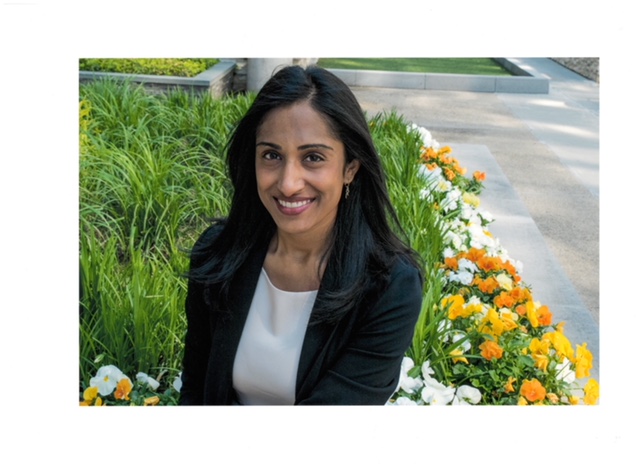
From defending detainees held at the US naval base in Guantánamo Bay, Cuba—many of whom were subjected to secret detention and torture by US Central Intelligence Agency (CIA) officials—to confronting American politicians over drone strikes that killed civilians in Pakistan, Alka Pradhan has built her career challenging the legal framework created after former US President George W. Bush declared the “War on Terror” in response to the September 11, 2001 (9/11) attacks. As defense lawyer for Ammar al Baluchi in the high-profile military trial related to the September 11 attacks, she has worked to reveal how post-9/11 policies weakened legal protections, allowed abuses to go unpunished, and violated international law. In this interview, Alka Pradhan speaks to JURIST Associate Editorial Director Alanah Vargas about why Guantánamo remains a timely and important issue, how national security posturing distorts justice, and what future generations might criticize about America’s response to 9/11.
You’ve spent years representing detainees at the US Guantánamo Bay detention camp, including Ammar al Baluchi in United States v. Khalid Sheikh Mohammed. What initially drew you to this high-stakes human rights work?
I spent law school and graduate school learning as much as I could about the litigation of high crimes—war crimes, crimes against humanity, and genocide. After 2001, I became really interested in the intersection of human rights and the law of war; where they complement each other, and where there are big gaps. The place with the biggest need at the time was here at home in the United States, litigating the crimes committed by our government post-9/11. I had never thought that I would be litigating against my own government, but if we are ever to be global leaders again, we have to live up to our own standards first.
The US Central Intelligence Agency (CIA) has played a central role in post-9/11 detention, rendition, and interrogation programs. From a legal perspective, what mechanisms currently exist—or could be developed—to hold intelligence agencies accountable, both within the US system and under international law?
The primary mechanism to shield the CIA from accountability has been the sweeping use of the State Secrets Privilege (State Secrets) by each administration to throw out any cases brought by CIA victims. It is simply not credible that all of the details around the torture program are State Secrets two decades later, and certainly not when so much information has been released. The government could simply stop invoking the privilege and allow the lawsuits to go forward. If the US government believes that the torture program is defensible, then they should attempt to defend it in court, in public.
Under international law, one of the reasons that the International Criminal Court (ICC) has been so maligned by the US in recent years is because of their investigations that included CIA and military crimes abroad. Instead of agreeing to properly investigate ourselves, the US instead sanctioned the ICC. This sort of forceful rejection of international accountability undermines the entire international system.
Many Americans believe Guantánamo is closed or irrelevant. What do you wish the public better understood about its ongoing legal and moral implications?
I wish that more Americans understood how Guantánamo, the injustices perpetrated there, and our apathy towards it, was an early indicator of our vulnerability to fascism. Each president since 9/11 has expanded executive power so that it’s barely recognizable under the Constitution anymore, and that can be traced directly to Guantánamo and the crimes still occurring there. So the fact that people think Guantánamo is “history” or was somehow necessary, shows how much more education we need on these topics.
How do you navigate tensions between national security narratives, human rights, and the rule of law, especially when your clients are portrayed as “the worst of the worst”?
Security is very different from national security theater, and so much of what the US government does is theater, rather than security. The phrase “worst of the worst” was devastating because few Americans have ever bothered to read beyond it and question who is actually at Guantánamo and why they are being held. Guantánamo was not invented for the “worst of the worst”—rather, the phrase was invented as post-hoc justification for Guantánamo. And I guarantee that if the men held there were white western Europeans, Guantánamo would not exist. Much national security theater is rooted in racism.
So I try to cut through the propaganda and educate people on the real people at Guantánamo, most of whom were never charged (and could never have been), and how the few that are charged were tortured so badly that fair trials are no longer possible. No matter what the political stripes, most people can agree that the lack of justice for 9/11—because of our own actions—is a travesty.
Your legal strategy often challenges evidence obtained through torture. How are these arguments received differently in US military commissions versus international legal forums?
I believe it would surprise people to know that torture-acquired evidence is still very much used and promoted by prosecutors around the world, and that courts accept it or look for ways to include it in order to secure convictions. That is true of the American prosecutors at the Guantánamo military commissions, and it is unfortunately sometimes true of prosecutors at the international courts and tribunals. As a believer in international criminal law, I was shocked that the military judge at Guantánamo ruled to suppress my client’s torture-acquired statements on the basis of overwhelming evidence of torture, but international judges refused to do so in a different, but equally compelling case.
The answer is to strengthen education around the impact of torture on every aspect of the investigative and judicial process. Courts cannot be credible if their decisions are built on torture. This is why I assisted with the drafting of the Mendez Principles and promote their use by attorneys, investigators, and judges around the world.
Beyond Guantánamo cases, you’ve litigated before international courts representing victims of drone strikes and other alleged abuses. Could you share a case that stands out and what it revealed about accountability in global counterterrorism operations?
I often think about my clients from Pakistan, the children from Waziristan whose grandmother was murdered by a US drone. They traveled here to DC, to try and get an apology or recognition that their grandmother was wrongfully killed. We organized an event for them in Congress; two lawmakers showed up. We asked the Obama White House for an apology, none ever came. My client’s trip was a test of our humanity—whether we recognize that affording people dignity contributes more to our security than random murder and hiding from consequences. And we failed that test. We proved that “global counterterrorism operations” are often premised on our refusal to admit mistakes, which makes us all less safe.
You’ve worked with organizations like ECCHR to hold Western governments accountable for their alleged complicity in torture and surveillance. What legal or political breakthroughs have you seen, and what barriers remain?
I’ve seen very few political breakthroughs on torture and surveillance. In fact, with the current trends of citizenship-stripping and Western governments’ endorsement of crimes in Palestine and other parts of the Middle East and Africa, impunity seems to be spreading.
The courts have been a source of some light. We’ve seen domestic courts in the UK, regional courts like the ECHR and IACHR, holding state parties accountable for their crimes, and we can use those rulings to build jurisprudence that will hopefully outlast this generational moment.
What role do international human rights norms and bodies play in your work? How effective are they at holding powerful states accountable?
Human rights and the enforcement bodies are enormously important in my work. They are rarely effective in holding states accountable in a traditional sense—prosecutions will rarely follow a Special Rapporteur’s report, or sanction from the UN Human Rights Committee. But there are many forms of accountability, and recognition is one of them. For my clients, seeing the crime and perpetrators named, and their harm recognized by international experts, is very valuable.
In addition to litigation, you do public education and advocacy. How important is storytelling in building empathy for clients who may be marginalized or overlooked by the state?
Storytelling—literally talking about how clients arrived at their present circumstances, who their families are, what they love and dislike—is critical to my cases. It is the only thing that can combat government propaganda like the arbitrary “worst of the worst” label. Ironically, the “storytelling” I do is just really just putting out facts to ensure that the public understands that all of these people are human, with the human characteristics that we all have.
Having worked across US and international legal systems, what are some key differences you’ve noticed in how justice is conceptualized or pursued?
To be honest, the conceptualization of justice seems similar throughout: the promotion of a greater good against the particular villain in the dock. Too often, justice is framed as a single prosecution or trial, which seems unproductive to me—even if such trials are sometimes a necessary part of the solution. Rarely do I see a framing that recognizes the tragedy on all sides that must occur in order for a person or people to be prosecuted for a high crime, or discussion of the holistic change that has to happen to truly prevent crimes like torture, terrorism, war crimes, or crimes against humanity.
How do you think future generations will judge the legal and moral decisions made during the “War on Terror”?
The biggest tragedy in my mind is that the decisions made post 9/11 could have been corrected in real time. We knew almost immediately that Guantánamo held people who should never have been detained. We knew early on that men were being tortured at the black sites. President Obama campaigned on restoring transparency and curbing executive power in 2007, and then invoked State Secrets more than President Bush had, and grabbed executive power with both hands. Conditions were perfect for further exploitation by whoever came next. We saw the problems, we named the problems and their solutions, and then we collectively looked away and went to brunch as politicians made them worse. And so while I think future generations might understand the initial decisions made as a product of panic and existential fear, they will condemn our laziness in safeguarding democracy, as I do.
What advice do you have for young lawyers or law students interested in international human rights or accountability litigation but who feel overwhelmed by the scale of global injustice?
I feel overwhelmed at the scale of global injustice all the time, every day. I would say to young lawyers first, that it is absolutely normal to feel disillusioned. For international lawyers, and particularly litigators, we all want those big cases in historic courtrooms, that are precedent-setting. That is good work, and those cases will stretch your abilities to the max. But there is no international human rights without the practice of human rights at home, for individuals and groups in our own countries. Never underestimate the importance of the single client and their family, who look to you for hope—or solidarity at the very least—when the entire system is against them. Win or lose, they will never forget the feeling of having someone in their corner. And as a lawyer, no big splashy win (as great as those are) will ever match the accomplishment of making that difference to someone who needs it.
