
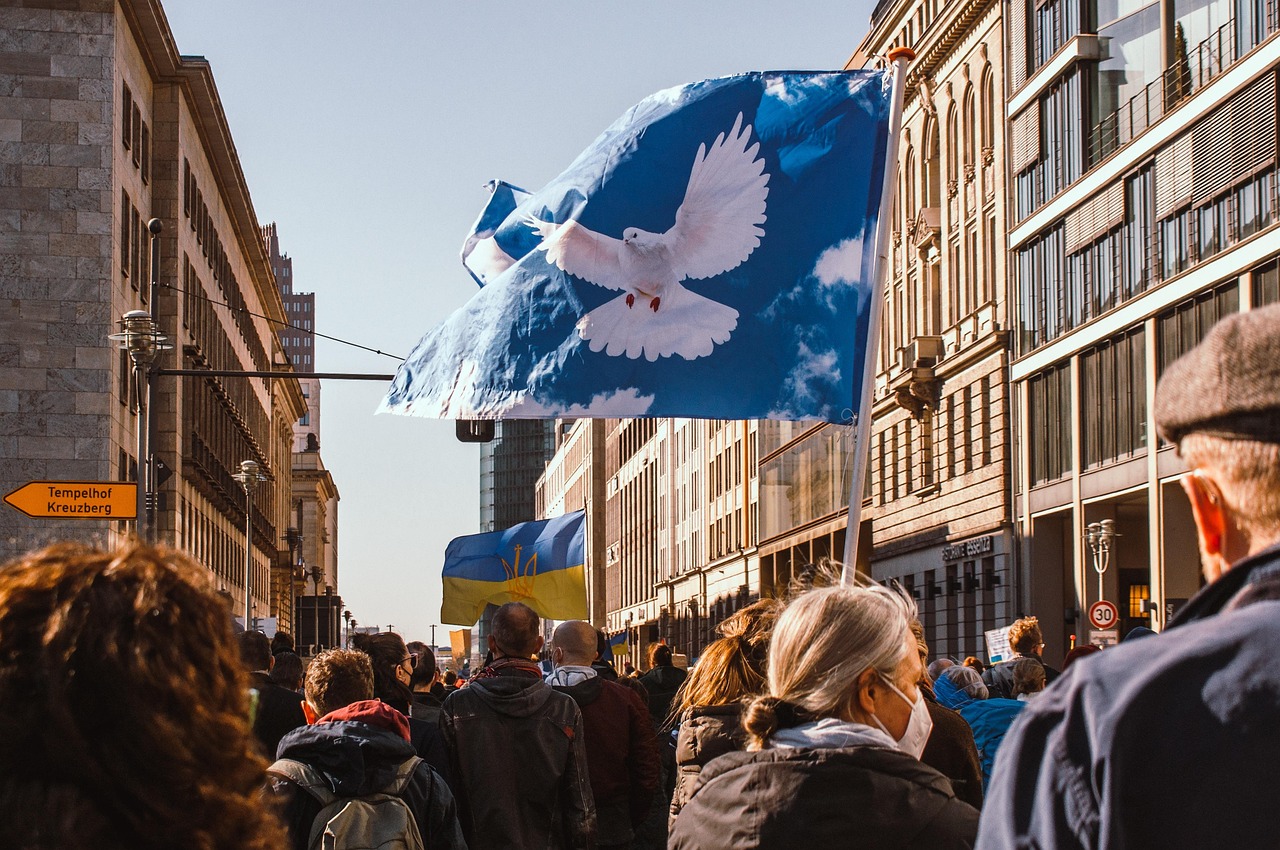
The war in Ukraine has entered a phase defined not by movement but by immovable political realities. Russia will not relinquish the Donbas or Crimea, territories it now treats as integral to its domestic narrative and strategic posture. Ukraine cannot accept any settlement that legitimizes territorial seizure by force without violating its constitution, undermining its sovereignty, and betraying its citizens. These are not bargaining positions—they are existential commitments. As a result, the conflict sits at a structural impasse, and traditional diplomacy has repeatedly failed to generate momentum toward peace.
In this environment, the international community must shift from seeking a premature political settlement to constructing mechanisms that manage the conflict responsibly, reduce risks, and preserve humanitarian space. A modest, neutral and durable structure—an International Office of Deconfliction (IOD)—offers a pragmatic way to stabilize the present without prejudging the future.
The IOD is not a substitute for the United Nations, nor an alternative peace process. This concept is a realistic alternative given the current stalemate for a functional platform composed of neutral UN member states, designed to provide a politically insulated space where parties to the conflict and interested international actors can meet, communicate, and address any and all issues that require coordination even in the absence of trust.
Mission and Mandate
The IOD’s mission is deliberately narrow: to facilitate communication, reduce risks of escalation, and support humanitarian and technical coordination between parties to the conflict in Ukraine and other parties. It does not negotiate borders, adjudicate sovereignty, or impose political outcomes. Simply put, it is a neutral space that is available with no strings attached.
The IOD would maintain secure, reliable communication channels between parties to the conflict while providing a neutral venue for discussing any and all issues requiring coordination. It would support humanitarian arrangements—prisoner exchanges, the return or evacuation of civilians, access for humanitarian organizations, and the protection of critical infrastructure. The office would also facilitate technical working groups addressing nuclear safety, cyber incidents, cross-border environmental risks, and deconfliction of military activities near sensitive sites. Additionally, it would produce periodic, non-political reports on operational issues and humanitarian concerns, and serve as a repository for incident clarification, reducing miscalculation and unintended escalation.
The mandate is intentionally modest. It does not attempt to solve the conflict. It may some day facilitate some movement in the direction of a ceasefire and perhaps a follow-on peace.
Why Modesty Matters
Grand diplomatic designs have repeatedly collapsed under the weight of incompatible political objectives. A modest mechanism succeeds precisely because it does not require either side to concede its core claims or anything else. The IOD’s neutrality and limited scope make it politically tolerable for both Kyiv and Moscow, while still providing meaningful benefits. In theory, the IOD could be created without the consent of Russia or Ukraine. It is simply there when they are ready. Note other member states can use it for whatever manner they wish.
Modesty also creates durability. Unlike high‑stakes negotiations that rise and fall with political cycles, a functional mechanism can operate steadily even when major powers shift priorities or adopt inconsistent approaches—as seen in the Trump administration’s oscillating efforts to force a rapid peace agreement by June 2026. The IOD is designed to outlast such volatility.
Possible Participant States and Rationale
The IOD must be composed of states that are perceived as neutral by both Russia and Ukraine, credible within the UN system, and capable of contributing technical expertise and diplomatic stability.
Several nations fit this profile. Switzerland offers longstanding neutrality, a strong humanitarian tradition, and a reputation as a trusted facilitator. Austria, though an EU member, remains militarily neutral and has experience hosting sensitive negotiations. Ireland maintains a neutral foreign policy and a strong peacekeeping record. Singapore, non-aligned and highly respected, brings exceptional administrative and technical capacity. The United Arab Emirates has become increasingly active in mediation and maintains working relations with all parties. India’s strategic autonomy allows it to sustain dialogue with both Russia and the West. Brazil carries Global South credibility and maintains balanced relations, while South Africa brings a non-aligned posture and active engagement in multilateral diplomacy.
Neutral states matter for several reasons: they provide political cover for both sides to participate without appearing to concede, they reduce the perception of great-power manipulation, they bring technical rather than political expertise to the table, and they can host discussions without the symbolic weight of NATO or CSTO involvement.
Participation could be flexible, allowing additional states or organizations such as the ICRC or OSCE to join specific working groups.
Organizational Structure
The IOD would operate through four interconnected components.
A Governing Council, composed of core neutral states, would approve the IOD’s annual work plan, oversee budget and staffing, and ensure neutrality and transparency.
An Executive Secretariat staffed by non-political professionals would handle daily operations, maintain secure communications, coordinate working groups, and produce reports. Staff would include experts in humanitarian law, cybersecurity, nuclear safety, conflict resolution, and logistics.
Ukraine and Russia could, if they choose, each assign liaison officers to the IOD. These would not be negotiators but functional representatives whose role is to clarify incidents, relay information, and participate in technical discussions. This structure avoids political negotiations while enabling operational cooperation.
Finally, technical working groups—standing or ad hoc—would address humanitarian access, civilian protection, nuclear facility safety, cyber and information security incidents, environmental hazards, and infrastructure deconfliction. These groups would include international experts and representatives from both parties.
Operating Principles
The IOD would adhere to five core principles. Neutrality requires that it take no position on sovereignty, borders, or political outcomes. Transparency, through regular public reporting, builds trust and deters misuse. Inclusivity means participation is open to any state or organization that accepts the IOD’s mandate. Non-binding outcomes ensure the IOD facilitates communication without imposing decisions. And durability means the structure is designed to function regardless of political cycles, leadership changes, or shifting geopolitical priorities.
Strategic Value
The IOD would provide a stable diplomatic anchor in a volatile environment and a buffer against miscalculation, especially around nuclear facilities and critical infrastructure. It would serve as a humanitarian lifeline for civilians trapped in contested areas and a mechanism for incremental trust-building without requiring political concessions. Perhaps most importantly, it would preserve the possibility of future peace without forcing premature negotiations.
In a conflict defined by what cannot be resolved today, the IOD focuses on creating a venue to discuss anything.
Conclusion
The war in Ukraine is unlikely to yield a political settlement any time soon. We are probably years away from peace. The territorial impasse is too deep, the stakes too existential, and the geopolitical environment too unstable. Yet the absence of peace does not justify the absence of structure. A modest, neutral, and durable International Office of Deconfliction offers a realistic venue to perhaps manage the conflict, reduce risks, and protect civilians while preserving diplomatic space for the future as well as anything else the parties or interested member states may want to address.
It is not a peace process. It is a stabilizing mechanism, a space—one that acknowledges the limits of the moment while preparing for the possibilities of tomorrow.
David M. Crane is a global leader in international criminal justice and the founding Chief Prosecutor of the UN Special Court for Sierra Leone. He has spent decades shaping accountability mechanisms around the world, including serving as a driving architect behind the Special Tribunal for the Crime of Aggression against Ukraine. Crane is a distinguished scholar of international law, a former senior U.S. national security official, and a leading voice on the rule of law, state responsibility, and the legal limits on the use of force.
