
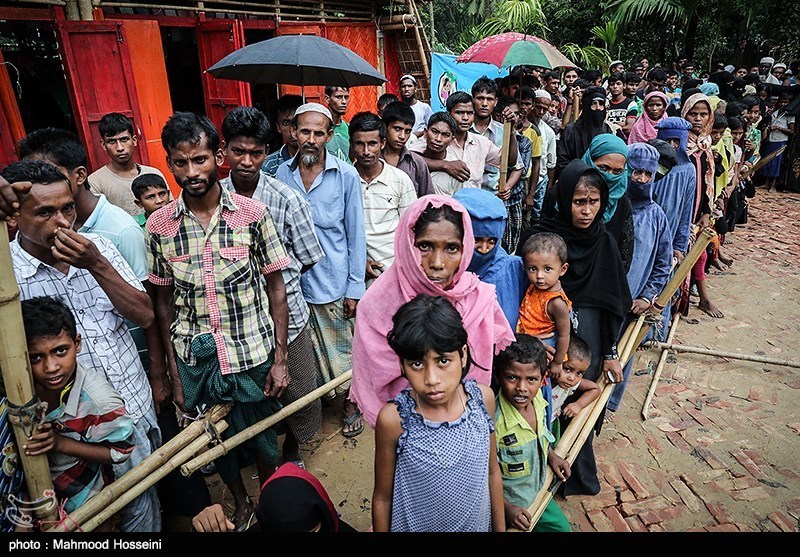
The ongoing Rohingya crisis in Myanmar is a significant humanitarian and legal challenge now before the International Court of Justice. The Gambia’s accusations of genocide have placed Myanmar’s conduct under close legal scrutiny, with the merits proceedings examining questions of state responsibility and accountability under international law.
What is the origin of the current dispute?
Myanmar is among the several countries that have signed and ratified the Convention on the Prevention and Punishment of the Crime of Genocide (Genocide Convention) and has been a part of the United Nations (UN) since 1948. The country has witnessed a prolonged internal struggle between the minority groups, the state security forces, and the political authorities. Rakhine State, which is located in the western part of Myanmar, has often been the site of communal strife, displacement of people, and security operations. The Rohingya, who are primarily a Muslim community living in the northern part of Rakhine State, have been in a legal battle over their status under Myanmar law, especially after the implementation of the 1982 Citizenship Law, which laid down citizenship criteria based on ancestry and ethnic classification.
In the years 2016 and 2017, the attacks on Myanmar security posts were carried out first in October and then in August by the armed group calling itself the Arakan Rohingya Salvation Army. The Myanmar army claimed that it went on to conduct security operations to ensure order in these areas right after these attacks. Consequently, a substantial number of people moved out of the affected areas with many Rohingya fleeing to Bangladesh. Bangladesh has been providing shelter for a large number of Rohingya refugees in camps mostly located in the Cox’s Bazar area for several years now. The situation in Rakhine State was part of a period of political change in Myanmar and it happened just before the military coup in February 2021.
How has the dispute been received internationally?
The situation in Rakhine State has attracted attention from international media and human rights watchdogs, hence the vast reporting and documentation. The UN has carried out investigations through its various bodies, one of which is the UN Human Rights Council’s (UNHRC) mechanism, and eventually drew up reports that evaluated claims of breaches of international human rights law and international humanitarian law. These reports disclosed the claims of murder, sexual violence, destruction of villages and displacement of people which all were considered to have a direct or indirect impact on the Rohingya community. Some of the UN bodies indicated that the information gathered raised issues under international criminal law, including possible breaches of the Genocide Convention.
The Myanmar government disputed the findings and conclusions of those reports claiming that they were drawn from incomplete data and the security situation was not taken into account properly. Myanmar argued that the military operations were done in reaction to assaults on the state institutions and that any illegal behavior of individual personnel should be dealt with by domestic mechanisms.
How did the case reach the International Court of Justice?
On 11 November 2019, the Gambia turned to the International Court of Justice with the complaint against Myanmar alleging significant violations of the Genocide Convention regarding the handling of the Rohingya population. The Gambia did not make a claim of the direct injury to itself, however, it relied on the principle that all states parties share obligations under the Genocide Convention collectively, so the case was filed on the basis of the erga omnes partes nature of genocide prevention obligations.
In addition to its application, the Gambia sought the indication of provisional measures. In January 2020, the ICJ ordered Myanmar to take all measures within its power to prevent genocide, preserve related evidence, and report on compliance at regular intervals.. Myanmar was part of the court process. However, it objected to the proceedings by putting forward the argument that the ICJ had no jurisdiction over the case and that the Gambia did not have the right to take the matter to court. The ICJ rejected the objections in February 2022, reaffirming its jurisdiction and allowing the case to move on to the merits stage.
What is the legal framework governing the case?
The ICJ is dealing with the case of the Genocide Convention’s interpretation and application. Genocide under Article II of the Convention is defined as certain acts done with intent to destroy a national, ethnic, racial, or religious group, in whole or in part. Therefore, the proof of genocide involves both prohibited actions and specific intent. The court’s jurisdiction is limited to the question of state responsibility under international law and it does not include individual criminal liability determinations.
States may also be found to have failed to comply with their obligations to prevent genocide or to punish its perpetrators. The court, in such matters, applies its own standards of evidence while analyzing the facts and using the materials supplied by the parties. The proceedings are governed by the ICJ Statute and Rules of Court, as well as previous cases dealing with genocide claims, including the well-known case of Bosnia and Herzegovina v Serbia and Montenegro.
What developments have occurred in the merit proceedings?
The ICJ is now evaluating the case based on the written submissions and oral arguments of both sides. The Court will then deliberate and issue a judgment regarding the matter of whether or not Myanmar has committed a violation under the Genocide Convention and, if so, what such a violation entails in terms of legal consequences.
In the course of the hearings on the merits, Myanmar has denied the claim that its actions amount to genocide as per international law. Myanmar’s case points out that military actions in Rakhine State were a reaction to the security threat posed by armed attacks and not aimed at destroying a particular ethnic group. Myanmar has pointed out the very high legal standards that have to be met to prove genocide and that one of the criteria, i.e., specific intent, has not been satisfied.
Moreover, Myanmar claims that the humanitarian consequences that come with the security operations, such as the displacement of people, do not imply the existence of genocidal intent. It has also questioned the reliance on reports from third parties and disputed the conclusions drawn from the conduct patterns. The defense has further pointed out the necessity of looking at the evidence in light of the standards of proof and attribution that are applicable to state responsibility and which are already established.
What are the potential implications of the ICJ’s proceedings and any future ruling?
The ruling, like all ICJ judgments, will be obligatory for the parties involved. The court is not able to enforce its judgments, and states’ compliance is a matter of their obligations under the UN Charter. Nevertheless, due to the case’s impact on the perception of the collective treaty obligations, and the proving of the claims related to the mass harm and displacement, it is being closely watched by the states, the international organizations, and the legal experts. Ultimately, the case and recent proceedings signify an important step in international jurisprudence concerning genocide prevention, possible measures concerning punishment and the scope of ICJ’s involvement in such cases.
The authors, Arnav Laroia and Ria Garg, are both law students at the West Bengal National University of Juridical Sciences. Arnav is also JURIST’s South Asia Chief of Staff.

