
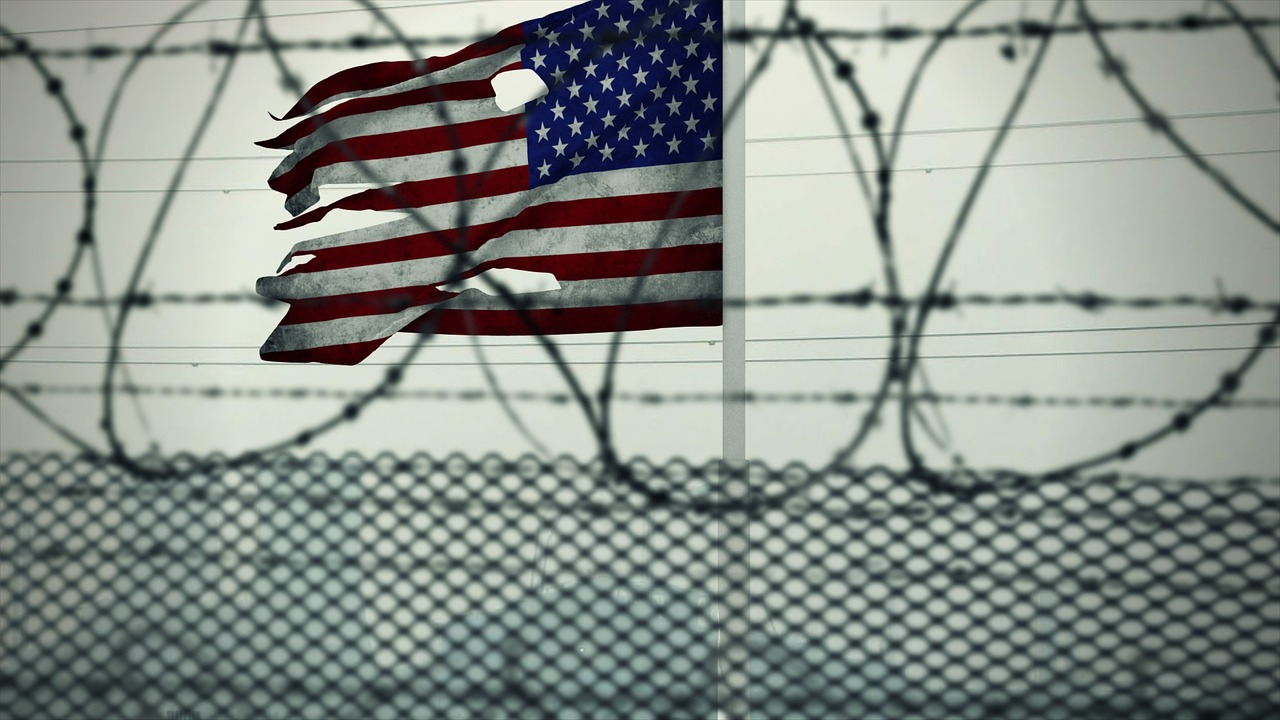
In the aftermath of the devastating attacks on September 11, 2001, President George W. Bush established the Guantanamo Bay detention facility to incarcerate and punish those responsible for the deaths of more than 3,000 Americans.
At least 780 detainees were held in Guantanamo, several of whom were subject to extreme punishment measures including—but certainly not limited to—waterboarding by US military authorities. Such practices were recognized pursuant to both domestic and international law as torture, and therefore any evidence produced was potentially inadmissible for prosecutorial and trial purposes.
A considerable majority of the detainees were released during the administrations of Bush and Barack Obama who signed an Executive Order to permanently shut down the prison. However, that never happened even though President Joe Biden also endorsed the closure of Guantanamo.
In the closing weeks of his administration, Biden was able to repatriate 11 Yemenis to Oman, where they would remain for the foreseeable future. That left 15 detainees, several of whom had been cleared for release but needed approval from US authorities that another country or their own home country was prepared to accept them.
President Biden also left four men, the presumed architects of 9/11, who could not be put on trial because of lack of evidence to effectively try them. They are Khalid Sheikh Mohammed, Walid Bin Attash, Mustafa al-Hawsawi and Ammar al-Baluchi. With the exception of al-Baluchi, all agreed to a plea deal of life imprisonment which included the requirement that the three respondents “must undergo a lengthy and public sentencing hearing in which the victim families would be able to address them directly.” In exchange the government would not pursue the death penalty (Pre-Trial Agreement Order at 7).
The convening authority on behalf of the US accepted this offer (In re Mohammad No CMCR 24-001, 2024). Lloyd Austin, Biden’s Secretary of Defense, withdrew the pre-trial plea agreement arguing that the responsibility for such a decision to enter into a plea deal rested with him as the “superior convening authority” under the Military Commissions Act (MCA).
The military judge ruled that the Secretary lacked the authority to withdraw from the agreement because the respondents already began to perform promises in the pre-trial agreement. The government filed a writ of mandamus and prohibition with the Court of Military Commission Review (CMCR). Although the Court agreed with the Secretary that he possessed the authority to withdraw from the agreement, it agreed with the respondents that since they began to perform when they refrained from cross examining FBI witnesses at a hearing.
The D.C. Circuit Court of Appeals ruled in July (In Re: United States of America on Petition of Mandamus and Prohibition USCA #25-1009, 2025) in a 2-1 decision, that this was a rare case where the government has demonstrated a clear and indisputable right to relief in their case as the Military Judge erred in his determination that the Respondents had begun performance of promises contained in the pre-trial agreement; The Secretary has the power to superintend the disposition of charges here as the convening authority (Section 10, U.S.C. 1948b (a9483917). The Secretary therefore can and did legally withdraw his authority to the convening authority. Judges Patricia Millett and Naomi Rao wrote that Secretary Austin determined that the families of the victims as well as the American public deserved the opportunity to see Military Commission trials carried out, and that they weren’t going to second guess his authority in this instance.
As a result of this decision the Trump administration will have to determine how they wish to go forward. Are they prepared to resume a capital death penalty case against three “enemy combatants” who have been detained at Guantanamo for almost twenty years? Given the fact that we are now going back to the pre-trial phase major issues of legal concern remain, most notably, as I stated earlier, whether statements as evidence made after they were tortured can be admissible for trial purposes.
In the first week of his second term President Trump issued an Executive Order directing the Secretary of Defense and Secretary of Homeland Security to expand the Migrant Operations Center at Guantanamo Bay to fill capacity. His objective was to expand the use of the Center to “provide additional space for high-priority criminal aliens unlawfully present in the United States (Miller, JURIST, January 30, 2025). There were potentially over 9,000 undocumented immigrants being vetted to be transferred to the prison. The Center has the capacity to accommodate up to 30,000 detainees.
Of significance is a class action lawsuit which has been filed in Washington Federal District Court, Luna Gutierrez v. Noem which challenges the government for detaining non- citizens at immigration facilities outside the United States. The Plaintiffs, it is argued, have been denied access to in-person legal counsel and they have been made subject to punitive conditions of confinement. They also claim that the government’s use of Guantanamo for immigration detention is arbitrary and capricious, lacks any legitimate purpose, and imposes such detention conditions on the detainees that it violates their constitutional rights.
The Plaintiffs claim that there is no precedence for the federal government moving non-citizens detainees in the United States on civil immigration charges to be moved to Guantanamo or any other facility outside the United States and had no legitimate reason to do so. The Plaintiffs also claim that their due process rights in the Fifth Amendment are being denied because they are being made subject to more restrictions and abusive conditions than they would face in US prisons and immigration detention facilities in the United States.
Lastly, the Plaintiffs claim that they were being denied the right to challenge the legality of their transfer and subsequent detention to Guantanamo under their right to habeas corpus [(See US Constitution Article 1, §9, Clause 2, the Suspension Clause); 28 U.S.C. §41)]. The case is pending before US District Judge Sparkle Leah Sooknanan. The case was provided an extension to the end of August 2025 for both Plaintiffs and Defendants to submit a reply.
In early July Secretary Noem of Homeland Security announced that dozens of illegal immigrants from 26 countries and six different continents, a number with serious criminal convictions, were shipped and held at Guantanamo. The detainees were from Africa, Asia, the Caribbean and Europe. DHS officials shared that the criminal records of the detainees included convictions for sexual offenses against children; assault with a deadly weapon; kidnapping; drug smuggling; and robbery. All of these individuals faced final deportation orders. The total number of immigration detainees including high-risk (58) and low-risk (14) were 72. (Montoya G), V2, July 2025)
The government staff supporting the immigration detainees include more than 530 Department of Defense service members, 130 DHS personnel, and the base has held over 650 immigration detainees since February, far below the 30,000 number referenced by President Trump in his Executive Order.
Where do we currently stand with respect to Guantanamo as an instrument for President Trump’s immigration detention policy?
Federal juries are expected at some point in the near future to rule on the legality of offshore detention. Such decisions could change the rules once again. Advocacy groups are attempting to push Congress to end the use of Guantanamo for such purposes and are seeking support for alternatives which are most unlikely given partisan political divisions in both houses of Congress.
The Trump administration is pressing ahead with its policies despite criticism from other countries. The use of solitary confinement at Guantanamo Bay is at the center of both heated legal and political debates. The outcome of these cases will shape the future for immigration enforcement and the rights of non-citizens as well as the significance for Guantanamo in domestic and international law.
References
- Camillo Montoya-Galvez, “Trump Administration Using Guantanamo to detain foreigners from 26 countries, including criminal detainees,” CBS News, July 8, 2025.
- In re Mohamad No CMCR 24-001, 2024.
- In re United States of America On Petition of Writ of Mandamus and Prohibition, USCA #25-1009, 2025.
- Luna Gutierrez et al v. Noem et al Case # (1:25-CV-01766), District Court for the District of Columbia.
- Paige Miller, “Trump signs executive order authorizing Guantanamo Bay Migrant Operations Center to Full Capability,” JURIST, January 30, 2025.
Leonard Cutler is a Professor of Public Law at Siena University in New York.
