
 Commentary
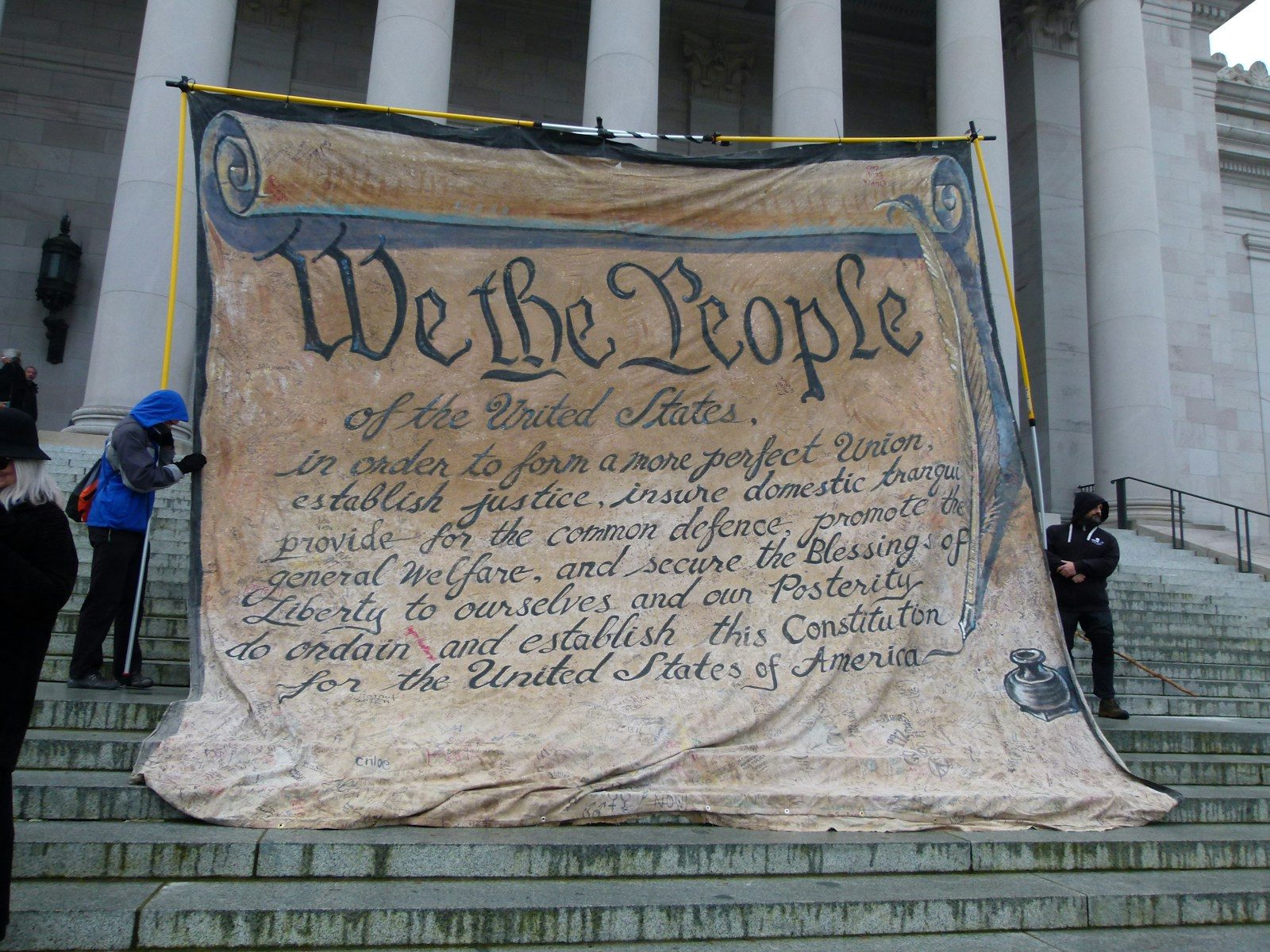
The United States Constitution is the oldest written national charter still in force anywhere in the world, and the men who drafted it in 1787 worked in a predemocratic era, for a country whose leaders did not yet trust ordinary people to govern themselves. Some of what they produced is admirable. Other parts of it hand a partisan minority the power to govern the majority, and under the current administration those same parts are letting a president expand his authority well past the limits the framers feared. Steven Levitsky and Daniel Ziblatt, the political scientists whose 2018 book How Democracies Die became a bestseller after Trump’s first election, argue in their 2023 follow-up, Tyranny of the Minority, that a charter from that era today lets partisan minorities routinely thwart majorities, and sometimes govern them outright.
Some of what the framers built deserves the reverence it receives. The Constitution created an independent judiciary, guaranteed a set of individual liberties in the Bill of Rights, separated the power to write law from the power to enforce it, and required that power change hands peacefully after an election. Levitsky and Ziblatt themselves credit several of these features as real safeguards against tyranny, and so should anyone who values them. A charter that a bare and temporary majority could rewrite at will would protect no one for very long.
The trouble lies in the rules the same document set for deciding who governs. The Senate gives every state two seats regardless of population, so the 588,753 people of Wyoming elect the same two senators as the 39.4 million people of California. Levitsky and Ziblatt document that at no point in this century have the Republicans who have frequently controlled the Senate represented a majority of the country’s people.
The Electoral College can award the presidency to the candidate who lost the popular vote, as it did in 2000 and again in 2016. Since 1992, a Republican presidential nominee has won the national popular vote only twice, in 2004 and in 2024. The filibuster, a Senate rule rather than a constitutional provision, lets 41 senators, who together can speak for a small fraction of the population, block a bill the other 59 support, and federal judges serve for life once the Senate confirms them. Levitsky and Ziblatt reach a blunt conclusion: in America, majorities do not really rule.
Those rules do more than obstruct the majority. They have also given President Donald Trump the means to enlarge his own office. Call it aggrandizement when a president gains a power that neither Congress nor a constitutional amendment gave him, because a court hands it to him or because he takes it and no one stops him. The Senate that overrepresents small states confirmed the six justices who now form the Supreme Court’s majority, and three of the six were nominated by a president who had lost the popular vote by nearly 3 million.
On June 29, that majority decided Trump v. Slaughter. By a margin of 6-3, the Court held that the president may fire the leaders of independent agencies such as the Federal Trade Commission at will, overturning a precedent that had stood for 91 years and endorsing the theory that the president alone controls the entire executive branch. Justice Sonia Sotomayor, in a dissent joined by Justices Elena Kagan and Ketanji Brown Jackson, wrote that the Court “gives the President a power unknown even to the English Crown against which the Founders revolted.”
Two years earlier the same six justices held in Trump v. United States that a president is absolutely immune from criminal prosecution for acts within his core constitutional powers and at least presumptively immune for his other official acts, a protection the Constitution’s text nowhere provides. Shalev Gad Roisman, writing on the Harvard Law Review Blog in April 2025, put the result in one sentence: the second Trump administration “has exercised executive power in ways unparalleled in modern history.”
The same Court has ruled against the administration when a statute or the text of the Constitution stood in the way, striking down its tariffs and, in an interim order, refusing to let it deploy the federalized Illinois National Guard over the governor’s objection. Where the question is the president’s control of the executive branch itself, this majority has expanded it every time.
While the president’s authority grows, the administration keeps violating the rights the Constitution promises ordinary citizens, and the courts keep having to intervene. Consider the First Amendment. A review by Reuters published Aug. 4 found that federal judges had ruled against the administration in 75 separate First Amendment cases since January 2025, for actions the courts held had violated the freedom to speak, to publish, to worship, and to protest.
After the conservative activist Charlie Kirk was shot and killed on September 10, 2025, administration officials threatened to punish people who criticized him, and employers across the country, including school districts and a police department, fired at least 155 people for what they posted about his death. Department of Homeland Security agents compiled surveillance records on legal observers who had done nothing but watch immigration enforcement in public.
The Fourth Amendment fares no better. Its guarantee against unreasonable searches was written for a world of physical entry, and the government now buys Americans’ location and communications data from private brokers, avoiding the warrant the amendment was meant to require.
The courts have largely declined to enforce two more of these provisions. The Ninth Amendment states that the rights listed in the Constitution are not the only ones the people keep, yet judges have almost never relied on it to protect a right the text does not name somewhere else. The Tenth Amendment reserves to the states and to the people every power the Constitution does not grant the federal government, and for most of the last century the Supreme Court treated it as a truism carrying little independent force, though since the 1990s it has relied on the amendment’s principles to bar Congress from commandeering state governments and officials. A charter is only as strong as the willingness of its judges to enforce it, and on these two provisions that willingness has been largely missing for generations.
None of this is permanent. The framers built a method for amending their work, and they expected later generations to use that method. Other wealthy democracies have modernized the very institutions the United States has refused to change. Most of them, from Germany to New Zealand, have eliminated elite upper chambers and lifetime tenure for judges, as Levitsky and Ziblatt document in Tyranny of the Minority. Four changes would bring the United States into that company. Three of them are statutes Congress can pass in a single session. The fourth requires a constitutional amendment.
The Constitution gives voters no way to remove a president, a senator, a representative, or a federal judge between elections. The only routes are impeachment and, for members of Congress, expulsion by a two-thirds vote of their own chamber. Impeachment requires a majority of the House of Representatives and then a two-thirds vote in the Senate, a threshold so high that the Senate has tried three presidents and acquitted all three.
Nineteen states and the District of Columbia already let their own voters recall a governor or a state legislator who has forfeited their confidence, and those states have survived the practice. A federal recall would extend that ordinary power to the national electorate, so that an officeholder who betrays the public trust can be called to account before the next scheduled election rather than years afterward. This is the reform that needs an amendment. The Supreme Court held in US Term Limits v. Thornton that states cannot add to the qualifications the Constitution sets for members of Congress; by the same logic, a state cannot cut a federal term short, so only the Constitution itself can create the power.
In 2015, Oregon became the first state to make voter registration the government’s job. The state now registers eligible voters automatically when they deal with its motor vehicles agency, unless a person opts out, and 24 states along with the District of Columbia have since adopted some form of the policy.
Oregon has added more than 800,000 people to its rolls this way. The Brennan Center for Justice, a nonpartisan law and policy institute at New York University, which calls automatic registration the modern standard, notes that it also cuts the errors that come with paper forms and lowers costs for election offices. A national version would place every eligible citizen on the rolls without first requiring them to find and clear a separate bureaucracy.
The shape of the House of Representatives is not fixed by the Constitution either. Nothing in the text requires the winner-take-all, single-member districts Americans are used to; that requirement comes from the Uniform Congressional District Act, a 1967 statute Congress can repeal whenever it chooses.
Winner-take-all means the largest bloc of voters in a district takes the seat and everyone else gets no representation at all, which is how Republicans can win 30 to 40 percent of the vote in Massachusetts and hold none of the state’s nine House seats. Proportional representation corrects this by electing several members from each larger district and awarding the seats in proportion to the votes each group receives. The Fair Representation Act, which Rep. Don Beyer, a Virginia Democrat, reintroduced in the House in 2025, would do exactly that through ranked choice voting in multi-member districts drawn by independent commissions, so a party or a community that wins a quarter of the vote wins roughly a quarter of the seats.
A vote is only worth casting if the count can be trusted. Every jurisdiction should mark its votes on paper the voter can read and check, count that paper on equipment tested before and after each election, and then confirm the machine totals by hand-checking a public sample of the ballots. Voter-marked paper together with a mandatory audit that anyone can watch gives an ordinary citizen a way to confirm for themselves that the reported result matches the ballots in the box.
The framers wrote a constitution for their own century and expected it to be revised in later ones. The people the current rules keep in power are the ones who block any change to those rules. A partisan minority now governs a majority that keeps voting against it, and a president enlarges his own office with a compliant Court’s approval. Two of the amendments written to protect ordinary people against exactly this go unenforced while it happens. The remedies are ordinary features of democracies that once modeled themselves on the United States. This generation can enact these reforms, or it can leave the Constitution’s finest promises undefended against the people now in power.
Christopher Armitage is the founder and publisher of The Existentialist Republic.
