
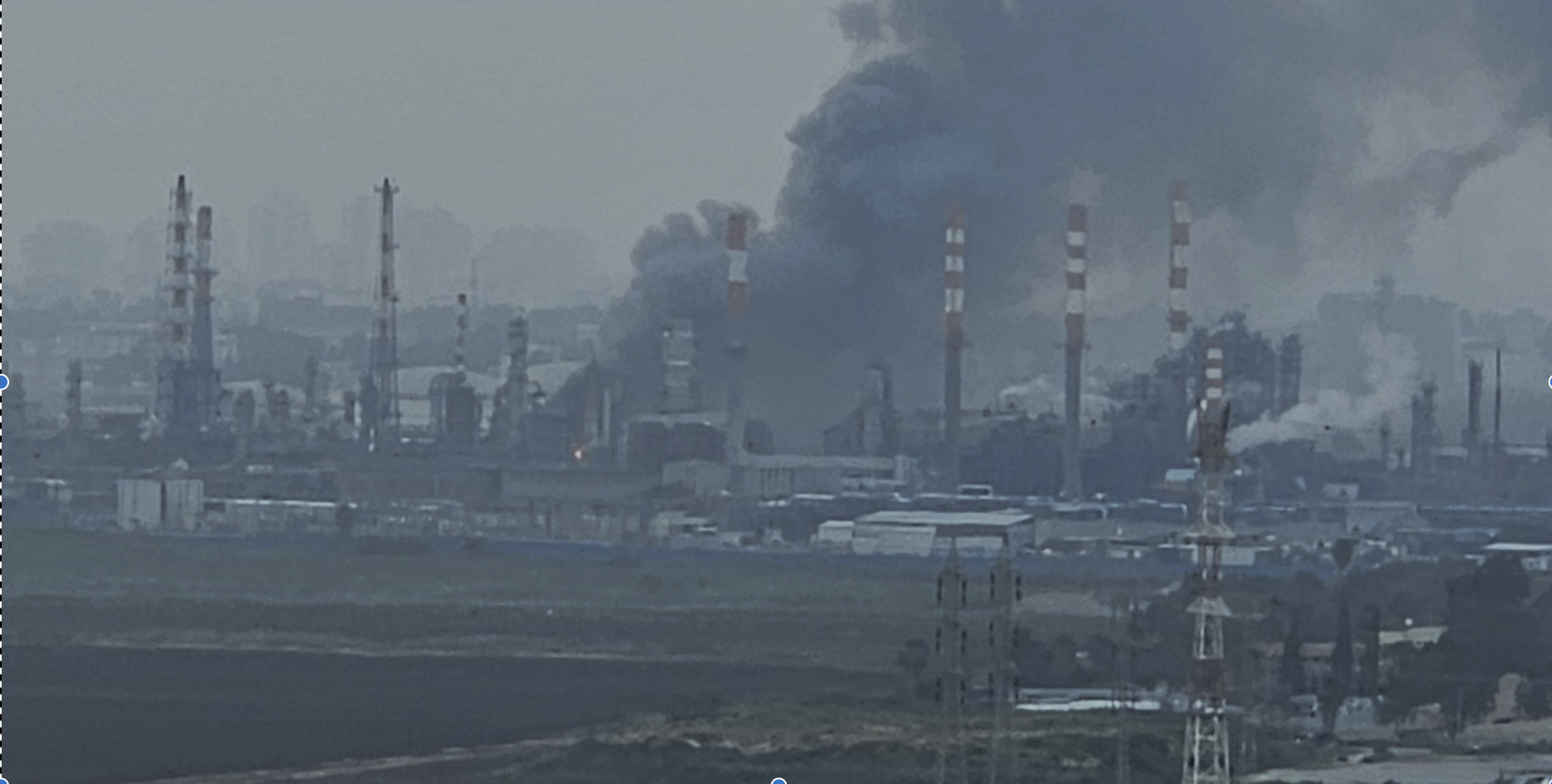
Smoke fills the air, making it thick and palpable. The pollution creates an acrid stench that burns and is impossible to escape. Strikes on oil depots and energy plants cause black rain to fall from the sky, depleting the soil of the vital nutrients necessary to grow food and turning drinkable water sources acidic.
This is the reality that the conflict between the US, Israel and Iran has brought to individuals in Iran, where parties have wielded the environment as an axe against the human rights of innocent bystanders. But it’s also a reality we’ve seen before. From the US’s intentional deployment of herbicides in the Vietnam War, to the deliberate burning of hundreds of oil wells in Kuwait, to targeted destruction of energy and water infrastructure in Ukraine, international law has repeatedly failed to protect environmentally vulnerable regions from the immense pollution created by unlawful militaristic conduct.
Throughout the US-Iran conflict, energy and water infrastructure have become central targets and bargaining chips for the parties to inflict damage upon one another. In July, President Donald Donald Trump indicated in a post on social media that US troops would bomb one bridge or power plant, including those located in the capital city of Tehran, any time a ship in the Strait of Hormuz was shot at. But why are these parties permitted to target water, energy, and agricultural infrastructure, exacerbating a humanitarian crisis, when there are laws in place intended to safeguard natural and human environments from this conduct?
The question is not do these protections exist, but why don’t these protections sufficiently prevent the environment from turning into a sharply wielded weapon.
International protections for the environment exist within international humanitarian law (IHL), or the law that regulates the conduct of parties during armed conflict. The environment is an established prima facie civilian object, meaning that it has legal status and falls under the protections of the IHL principles of distinction, precaution, and proportionality, which protect civilians and civilian property. Heavily influenced by the aforementioned use of Agent Orange during the Vietnam War, additional environmental protections were established through two treaties: Additional Protocol I (AP I) to the Geneva Conventions and Convention of Environmental Modification (ENMOD). These treaties, in theory, prevent tactics that cause long-term environmental damage, or damage that will be felt in the region for decades to come.
However, the established protections are far too restrictive, making it near impossible for environmental damage to rise to the level of a punishable offense.
The conflicting standards and restrictive wording within ENMOD and AP I make it near impossible for engaging in environmentally damaging conduct during wartime to rise to the stringent level required to be considered a crime. Article 55(1) of AP I states that “care shall be taken in warfare to protect the natural environment against widespread, long-term, and severe damage…intended or may be expected to cause such damage to the natural environment and thereby to prejudice the health or survival of the population.” The International Committee of the Red Cross (ICRC) treats this standard as customary law that binds even states that have not ratified AP I, such as the United States, Israel, and Iran. The United States rejects that view, and the ICRC’s own study describes it as a “persistent objector.” ENMOD sets a lower bar (‘widespread, long-lasting or severe’), but it covers only the hostile use of environmental modification techniques, meaning the deliberate manipulation of natural processes. It does not cover attacks that damage the environment. Nor is ENMOD widely considered customary law, so only 78 States are subject to its less stringent standard, the United States among them, but not Iran or Israel. Regardless, ENMOD is still regarded as an unenforceable and strict requirement.
In practice, the rigor of these standards is highly restrictive, unclear, and fails to encompass damage that does not reach an extreme level of severity. The meaning of the terms contained within the standards are widely disputed, but it’s generally considered that “widespread” means several hundred square kilometers (ENMOD’s reading) and “long-term” means decades (AP I’s reading). This fails to encompass damage that is harmful, but has not yet risen to an extreme level, such as the strikes on energy infrastructure in Tehran. The phrasing of these standards, in addition to causing confusion, is subjective and leaves room for interpretation. The language “intended or may be expected to cause such damage” almost acts as a cop-out, enabling parties to feign ignorance and claim that their actions could not foreseeably rise to the level of such severe damage. One of the few situations in which the level of environmental damage is likely to meet the requirements of AP I is the use of nuclear weapons. However, no ban on their use binds every state (the 2021 Treaty on the Prohibition of Nuclear Weapons binds only its parties), and the International Court of Justice (ICJ) has not ruled out their legality in extreme situations of self-defense.
In addition to the high standard laid out in the articles of AP I, the articles of IHL contain the inadequately enforced principles of distinction, precaution and proportionality. These principles require, broadly, that during war, parties take care not to attack the environment when it is not a military objective, not to cause incidental damage to the environment that would be excessive in relation to the concrete military advantage, and to minimize damage to civilian objects. Similarly to the previously mentioned facets of IHL, these principles fall victim to subjective phrasing that leaves room to interpret what conduct is “too excessive” in proportion to militaristic gain and leaves discourse over what is considered a valid military objective, meaning it is a difficult guideline to enforce.
Even if environmental damage rises to the level of a punishable offense, weak enforcement mechanisms permit environmental harm by letting these offenses go unsanctioned.
Issues also arise with the lack of adequate enforcement measures for causing environmental destruction. Discretion is given largely to States themselves to teach the rules laid out in IHL to their armed forces in order to prevent violations, and they must issue punishments if the violations inevitably occur. However, how can we expect the individuals in charge to relay the rules and punish their subordinates if they are the ones encouraging the conduct in the first place, as seen in Trump’s recent threats to launch an extensive and harsh bombing campaign against Iran’s energy grid?
In the case of a “grave breach” of IHL, guidance states that every state party to the Geneva Conventions, not just those fighting, must search for alleged offenders and bring them before its own courts; however, there are no effective mechanisms in place to ensure that this is being done. Additionally, because the enforcement mechanisms are at the party’s discretion and operate only after the damage has been scaled and assessed, the system does not work effectively in situations of immediacy, or prevent parties from continuing patterns of destructive conduct within the same conflict.
Even the International Criminal Court (ICC), whose founding treaty makes it a war crime to launch an attack knowing it will cause “widespread, long-term and severe damage to the natural environment” that is “clearly excessive” relative to the military advantage, has never brought a charge under that provision. The sheer amount of international crimes means that the ICC has to be selective about which cases to prosecute, and even ones that are selected take several years to prosecute. In addition, the ICC’s effectiveness in holding perpetrators accountable is currently being challenged by the Trump administration, potentially shaping the way the ICC selects cases and who they prosecute. The administration has attacked the court on jurisdictional grounds, arguing that it has no authority over states that have not ratified the Rome Statute, the ICC’s founding treaty, and casting the court as a “threat to American sovereignty.”
However, this is not to say that progress is not being made. In June 2021, an expert panel of environmental and criminal lawyers proposed a legal definition of “ecocide,” a term biologist Arthur Galston coined in 1970. Ecocide is recognized as a crime in several countries, the US, Israel, and Iran not among them, with even more facilitating open discussions in adding this to their legal code. As opposed to the restrictive standard language in AP I, ecocide prevents “severe and either widespread or long-term damage,” creating liability for large scale destruction such as chemical disasters, mass deforestation, and severe water or land contamination. Currently, ecocide is not considered a crime at the ICC, but many nations are advocating for it to be considered its own crime, which would require the Rome Statute to be amended.
Regardless of areas of potential future progress, the environmental safeguards in IHL are continuously violated and likely will continue to be, unless action is taken to clarify the definition of an environmental crime and hold perpetrators accountable. As seen with the environmental destruction and disruption caused by the US-Iran conflict, current law is enabling this conduct.
Abigail Austin is a law student in her third year at Vermont Law and Graduate School. She is also a JURIST staff writer.

