
 Commentary
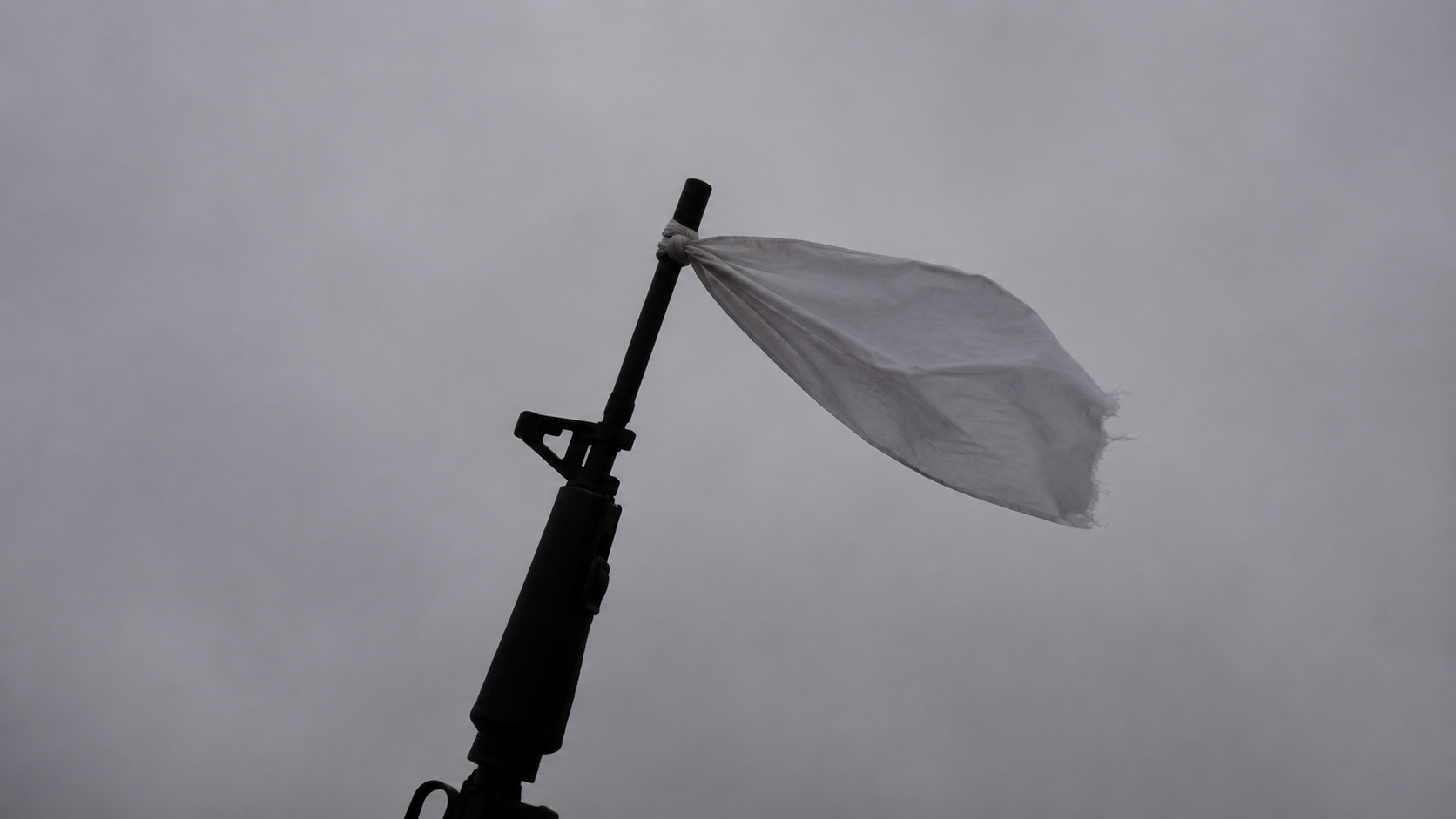
The black flag—history’s stark symbol of no quarter—is rising again on the battlefields of the 21st century. It is not raised openly, as in the age of pirates or medieval siege warfare. Instead, it appears in battlefield orders, intercepted communications, and the grim aftermath of combat where surrendering soldiers and unarmed civilians are found executed. These are the dirty little wars of our century: conflicts where the laws of armed conflict are treated not as binding obligations but as inconveniences to be ignored.
At the center of this resurgence stands a simple, chilling reality: some commanders are declaring that no prisoners will be taken. In modern international law, such a declaration is not merely immoral—it is a war crime.
The drift is not confined to Moscow. Announcing Operation Epic Fury at a March 2 Pentagon briefing, US Secretary of Defense Pete Hegseth said the campaign was being run with “maximum authorities” and “no stupid rules of engagement,” dismissed “so-called international institutions,” and told the force: “We are not defenders anymore. We are warriors, trained to kill the enemy and break their will.” Rules of engagement are not the laws of armed conflict—ROE are policy constraints a government imposes on itself, usually stricter than law demands. But the rhetorical target is restraint as such, and what the top of the chain signals is what subordinate commanders take as permission. Statements of that kind expose commanders, and the civilian leadership above them, to the same command-responsibility questions we ask of Russian generals.
The Legal Line That Cannot Be Crossed
Under the Third Geneva Convention, the moment a combatant surrenders—whether by raising hands, dropping weapons, or otherwise indicating an intent to cease fighting—they acquire a protected status. They must be treated humanely, removed from the battlefield, provided medical care, held safely until conflict’s end, and repatriated to their home country.
These obligations are not optional. They are the bedrock of civilized warfare, forged from the ashes of the 20th century’s worst atrocities.
To declare “no quarter”—to order that no prisoners be taken—is to deliberately strip surrendering soldiers of these protections. It is to authorize killing outside combat. It is, by definition, a war crime.
Russia’s War in Ukraine: A Case Study in Lawlessness
In the Russia-Ukraine conflict, we have seen repeated instances of Russian commanders issuing or tolerating no-quarter orders. Ukrainian soldiers attempting to surrender have been shot. Civilians fleeing combat zones have been targeted. Videos, forensic evidence, and battlefield reporting all point to a systemic disregard for the Geneva Conventions. This is not an aberration. It is part of a historic pattern.
From the Eastern Front in World War II to Afghanistan, Chechnya, Syria, and now Ukraine, Soviet and later Russian forces have often treated the laws of war as flexible suggestions rather than binding rules. The wanton killing of surrendering combatants and noncombatant civilians is not a new phenomenon—it is a recurring feature of Russian military culture.
When a commander declares that no prisoners will be taken, he is not merely violating international law. He is signaling to his troops that brutality is acceptable, even desirable. He is raising the black flag.
The Moral Collapse of the Profession of Arms
Professional armed forces are defined not only by discipline and capability but by adherence to law. The willingness to accept surrender, protect prisoners, and spare civilians is what separates soldiers from murderers.
When commanders reject these principles, they degrade their own forces into barbaric hordes, not professional militaries. They cheapen the profession of arms and undermine the very norms that allow warfare to remain within the bounds of humanity.
The dirty little wars of the 21st century—from Ukraine to Syria to various asymmetric conflicts—are marked by this erosion of restraint. The black flag rises not because the world has grown more violent, but because some actors have decided that law no longer applies to them.
Why This Must Be Confronted Now
The international community cannot afford to treat these violations as isolated incidents. They are part of a broader trend toward impunity, where commanders believe they can act without consequence.
Declaring no quarter is a war crime. Executing surrendering soldiers is a war crime. Killing civilians is a war crime. These truths must be stated plainly and repeatedly.
The statutes of existing accountability mechanisms empower them to investigate and prosecute those who issue or carry out such orders. Command responsibility is clear: leaders who authorize or tolerate no-quarter practices must face justice.
The Black Flag Must Fall
The laws of armed conflict were created to preserve a shred of humanity in the midst of war. They are not antiquated ideals; they are essential guardrails. When they are ignored, conflict descends into savagery.
The black flag has risen once again. It is our responsibility—as lawyers, policymakers, soldiers, and citizens—to lower it.
David M. Crane is a global leader in international criminal justice and the founding Chief Prosecutor of the UN Special Court for Sierra Leone. He has spent decades shaping accountability mechanisms around the world, including serving as a driving architect behind the Special Tribunal for the Crime of Aggression against Ukraine. Crane is a distinguished scholar of international law, a former senior US national security official, and a leading voice on the rule of law, state responsibility, and the legal limits on the use of force.
