
 Commentary
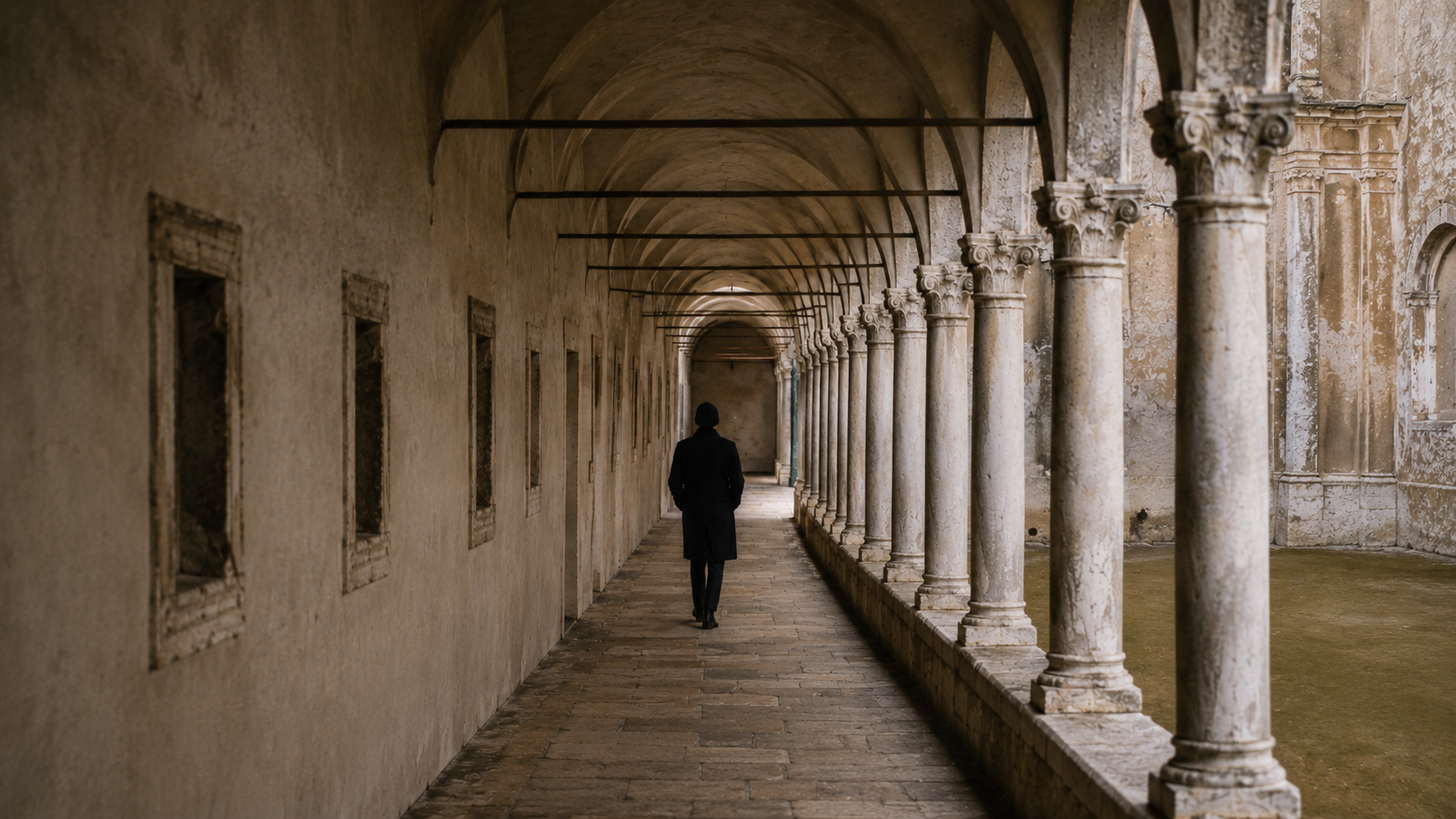
I was born into a family where law was not merely a profession; it was the ordinary language of everyday life. Around our dinner table, conversations rarely drifted far from litigation. Someone was always recounting a difficult case, a stubborn judge, an ingenious defense, an unexpected verdict, or a client whose fate had become inseparable from the fate of the lawyer defending them. Law appeared there as a succession of files, hearings, statutes and victories won—or lost—inside courtrooms. Yet, strangely enough, I was almost always the quiet one. It was not because I found law uninteresting. Quite the opposite. I remained silent because I could not find the law everyone else seemed to be discussing. I had the unsettling feeling that the most important legal questions were unfolding somewhere else. Long before I understood what kind of jurist I wanted to become, I already knew where I wanted to search. I wanted to find my legal cases not only in courtrooms, but in taxis crossing crowded streets, in cafés where strangers argued over politics, in forgotten bookstores where old chronicles gathered dust, in village squares, in ruined caravanserais, in crowded bazaars, beside rivers that had changed their course, and even among the abandoned neighborhoods that cities prefer to forget. I wanted to discover law not after it had been transformed into litigation, but while it was still living anonymously among ordinary people. Courts preserve legal disputes; life produces them. It gradually became clear to me that if law wishes to understand itself, it cannot begin from the courtroom alone. It must first learn to walk.
Perhaps this is why I have never been entirely comfortable with the modern image of the lawyer. The lawyer dressed in a dark suit, carrying statutes beneath one arm and precedents beneath the other, confidently moving from office to courtroom, represents only one possible imagination of legal life. There is nothing inherently wrong with this image. Yet it has become overwhelmingly dominant. It quietly suggests that law exists primarily where legal institutions already recognize it. I have never believed this. The law I have spent my life searching for lives elsewhere. It appears unexpectedly in historical anecdotes, in collective memory, in architecture, in poetry, in forgotten customs, in religious rituals, in family stories, and sometimes even in silence. Before law is codified, it is narrated. Before it is enforced, it is remembered. If I have a professional ambition, it is not simply to become a better lawyer. It is to become what I would call a wandering jurist. Not a jurist who wanders because he is lost, but one who wanders because movement itself is a method of legal inquiry. The wandering jurist refuses to believe that legal concepts emerge exclusively from legislation or judicial decisions. Instead, he walks through history searching for fragments that have not yet exhausted their legal possibilities. His archive is larger than any library because it includes the streets, marketplaces, cemeteries, shrines, abandoned buildings, oral traditions, historical chronicles, children’s stories, and forgotten metaphors through which societies once understood justice. Every society leaves behind legal fossils. The task of the jurist is not merely to catalogue them but to discover whether they still breathe. This is not antiquarianism, nor is it nostalgia. The wandering jurist does not search the past because he believes the past was better. He searches because the present is never fully intelligible on its own. Every legal controversy carries within it older conversations that have merely changed their vocabulary. The challenge is therefore not to escape history, but to recognize that history survives inside legal language long after we imagine ourselves to have become modern. To study law is, in this sense, to practice a particular form of historical wandering.
Only much later did I realize that this instinct had already been practiced before—not within modern jurisprudence, but within one of the most remarkable traditions of Persian political thought. When Niẓām al-Mulk wrote the Siyāsat-Nāmeh, he did not attempt to educate rulers by presenting an abstract theory of government. He taught through stories. Kings, ministers, prophets, forgotten officials, and ordinary people all became participants in a historical conversation through which political judgment could be cultivated. Memory was not decoration; it was method. The past was not sacred because it was old, but because it remained capable of generating political wisdom in the present. This book begins with the conviction that contemporary law has forgotten this method. Legal scholarship has become extraordinarily sophisticated in its analytical techniques while becoming increasingly detached from the historical imagination that once animated legal thought. We produce more concepts than ever before, yet we have become hesitant storytellers. We cite precedents, but rarely histories. We interpret doctrines, but seldom wander through the worlds that first made those doctrines imaginable. The result is a peculiar kind of institutional forgetting. Law continues to speak, but it has begun to forget the language through which it first learned to tell its own stories. This book proposes that another path remains possible. I call this path Legalnomy (Ḥuqūq-Nāmeh).
It is not a new branch of law. It is not a literary genre. It is not comparative law, legal history, or legal philosophy in their conventional forms, although it draws from all of them. Legalnomy is a methodology of legal reconstruction. It begins from a simple intuition: that the future of law depends not only upon creating new concepts, but also upon wandering patiently through old ones until they begin to speak again. The jurist, therefore, should not resemble an engineer assembling doctrines according to predetermined blueprints. He should resemble a child sitting on the floor with a scattered box of Lego bricks, discovering forms that no instruction manual could have anticipated. Tradition is not a prison of fixed meanings. It is a collection of unfinished possibilities. The pages that follow are an invitation to wander.
Why Law Needs Wanderers
If the first obligation of the wandering jurist is to leave the courtroom, the second is to learn how to walk without a map. Modern legal education has trained generations of lawyers to believe that legal reasoning proceeds by moving from rule to application, from precedent to judgment, from statute to interpretation. Such training is indispensable. Societies require certainty, and courts cannot function without disciplined methods of reasoning. Yet certainty is only one mode of legal thought. Before a rule can be interpreted, it must first become imaginable. Before a doctrine enters a code, it exists only as an intuition searching for a language. The history of law is therefore not merely the history of institutions; it is the history of imaginations that gradually hardened into concepts. Every legal principle we now regard as self-evident was once an experiment in thinking differently about the world. The wandering jurist begins precisely where institutional law reaches its limits. He does not reject doctrine; he postpones it. His first question is never, What does the law already say? His first question is, Why did this question become possible at this particular historical moment? Such a question immediately changes the terrain of legal inquiry. The jurist is no longer confined to codes and judicial reports. He begins to move across languages, myths, chronicles, poems, architecture, rituals, and collective memories. He becomes less interested in the finished monument of law than in the forgotten workshops where legal imagination was once constructed. Wandering, then, is not the opposite of method. It is method before system.
Modern philosophy offers an unexpected companion for this journey. Hans-Georg Gadamer reminded us that understanding never occurs outside history; every act of interpretation is shaped by what he called historically effected consciousness. We do not stand before the past as neutral observers. We approach it already formed by traditions we did not choose and by experiences we could never entirely control. Paul Ricoeur extended this insight by showing that narrative is not simply a literary device but one of the fundamental structures through which human beings organize time itself. We understand our lives because we narrate them. A society understands its law for precisely the same reason. Law survives in statutes, but it becomes intelligible through stories. This insight has radical consequences for jurisprudence. If legal concepts derive their meaning from historical narratives, then the work of the jurist cannot be exhausted by textual interpretation alone. He must also become a reader of historical experience. Yet reading history does not mean collecting facts as though the past were an archive waiting to be catalogued. History never presents itself as a complete landscape. It appears only in fragments. Some memories survive because they are repeated; others disappear because no one asks them new questions. The wandering jurist therefore approaches history not as an archaeologist searching for complete civilizations beneath the sand, but as a collector gathering scattered fragments whose significance has not yet been exhausted. Here Walter Benjamin becomes indispensable. His figure of the collector—and even more profoundly, the flâneur wandering through the city—suggests a way of thinking that modern jurisprudence has almost entirely forgotten. The flâneur does not move through the city with a predetermined destination. He allows the city to interrupt him. He notices what others have ceased to notice. He finds meaning in neglected passages, abandoned buildings, forgotten objects, and accidental encounters. Legal thought, I believe, requires precisely this disposition. The jurist must learn to become a flâneur of legal history. He must wander through civilizations in search of concepts that have become so familiar they have turned invisible. Such wandering is often misunderstood as intellectual aimlessness. It is nothing of the sort. The wandering jurist is guided by a question rather than a destination. He does not know where the answer lies, but he knows what kind of disturbance has compelled him to search. It is always the present that calls him into the past. We do not revisit forgotten concepts because we suddenly become nostalgic for earlier centuries. We revisit them because contemporary crises expose absences within our existing legal vocabulary. Internet shutdowns send us back to lā ḍarar wa lā ḍirār. Ecological collapse may send us toward forgotten doctrines concerning stewardship and the commons. Artificial intelligence may require us to rediscover entirely different legal imaginations. The present does not merely inherit the past; it continually selects which past deserves to become visible again.
This means that historical selection is never arbitrary, yet it is never complete. Every generation reconstructs a different genealogy because every generation inherits different problems. There exists no final history of law, only successive histories produced by changing legal anxieties. We often imagine that we freely choose which parts of tradition deserve attention. The opposite is closer to the truth. Historical events quietly educate our preferences before we become conscious of having preferences at all. The questions we ask of history are themselves historical products. What appears today as an urgent legal principle may have remained almost invisible a century ago, not because earlier jurists were incapable of seeing it, but because history had not yet taught them where to look. For this reason, Legalnomy (Ḥuqūq-Nāmeh) rejects two temptations that have long dominated legal thought. The first is antiquarianism—the belief that the authority of tradition lies simply in its age. The second is presentism—the belief that the past possesses no authority unless it can immediately be translated into contemporary categories. Both misunderstand the nature of historical consciousness. Tradition is neither a museum nor a prison. It is a field of unfinished conversations. Every return to history is therefore necessarily creative. We never recover the past exactly as it was, because we encounter it through questions that belong to our own time. Yet this creativity is not an act of invention ex nihilo. It is a dialogue with voices that continue to resist our interpretations even as they enable them. This is why I insist that the wandering jurist must also become playful. Not playful in the sense of treating law carelessly, but playful in the deeper philosophical sense of recognizing that concepts reveal possibilities only when they are allowed to enter new relationships. A child building with Lego bricks does not destroy the pieces by refusing the instruction manual. On the contrary, the child discovers forms that the manual itself could never anticipate. Legal traditions function in much the same way. They provide the pieces, but never the final architecture. The responsibility of the jurist is therefore not to preserve concepts in their original arrangement, nor to discard them in pursuit of novelty. His task is to recombine them with intellectual courage and historical discipline until forgotten possibilities become visible once again.
This, I believe, is the point at which jurisprudence becomes genuinely postmodern—not because it celebrates fragmentation or mocks the achievements of earlier legal thought, but because it understands tradition as something that remains permanently unfinished. The postmodern jurist does not laugh at the past. He plays with it. He rearranges it. He asks it questions it has never before been asked. And in doing so, he discovers that legal innovation rarely begins by inventing an entirely new language. More often, it begins when an old language unexpectedly learns how to speak about a new world.
Revolution According to Niẓām al-Mulk: From Siyāsat-Nāmeh to Legalnomy
There is a reason why this project begins not with a constitution, not with a legal code, and not even with a jurist, but with a vizier. Long before legal theory became preoccupied with constitutions, rights, and judicial review, Niẓām al-Mulk Ṭūsī had already proposed something far more fundamental: a way of thinking politically through history. The enduring importance of the Siyāsat-Nāmeh does not lie in the administrative details it records—many of which belong irrevocably to the 11th century—but in the intellectual method through which it teaches political judgment. It is a book that refuses to separate theory from narrative. It distrusts abstract political philosophy when detached from lived experience. Instead, it reconstructs political wisdom by telling stories. Kings become arguments. Ministers become principles. Forgotten episodes become constitutional lessons. History ceases to be a chronicle of completed events and becomes an active instrument for thinking about the present. Modern readers often misunderstand the Siyāsat-Nāmeh because they approach it expecting either philosophy or legislation. It is neither. It is not a philosophical treatise in the manner of al-Fārābī, nor is it a legal manual comparable to the works of jurists. It belongs to an entirely different intellectual genre—a genre in which storytelling performs the work that abstract concepts would later perform in political theory. The stories are not ornamental. They are methodological. Niẓām al-Mulk does not narrate history because he wishes to preserve memory for its own sake. He narrates because political judgment emerges only when the present enters into conversation with the accumulated experience of the past.
This methodological insight is perhaps the most neglected contribution of the Persian political tradition. The Siyāsat-Nāmeh does not merely teach rulers what to do; it teaches them how to think. Its educational strategy is remarkably simple yet philosophically profound. Rather than beginning with universal principles and applying them to particular cases, it begins with particular stories and allows principles to emerge gradually from historical reflection. Wisdom is discovered retrospectively. Judgment is cultivated narratively. Politics is learned not by escaping history but by wandering through it. It is precisely here that one encounters Niẓām al-Mulk’s remarkable understanding of revolution. Modern political vocabulary has almost entirely monopolized this word. Since the 18th century, revolution has generally signified rupture: the violent interruption of an existing order, the destruction of inherited institutions, and the creation of an unprecedented political beginning. Whether in France, Russia, or countless later revolutions, legitimacy has often been grounded in discontinuity. The old world must disappear so that the new one may emerge. Niẓām al-Mulk imagines something fundamentally different. In one of the most striking passages of the Siyāsat-Nāmeh, he defines revolution in terms that initially appear almost paradoxical:
“Revolution consists in restoring every practice, institution, and custom that has fallen away from its proper foundation back to its own order.” (Siyāsat-Nāmeh)
This single sentence deserves to be read as a philosophy of political change rather than merely an administrative recommendation. Revolution, in this understanding, is not the celebration of novelty. Nor is it blind restoration. It is the difficult work of recognizing when institutions have drifted away from the principles that once gave them coherence and then returning them—not to the past as a historical moment, but to the normative foundations that made them meaningful in the first place. What must be restored is not chronology but order. Elsewhere, Niẓām al-Mulk develops the same idea with greater precision:
“All affairs must be returned to their proper order; every person must be recognized according to the measure of his station, so that both religious and worldly matters may remain in harmony. Every individual should be entrusted only with that responsibility for which he is fit. Whatever departs from this order should never receive the ruler’s approval. Rather, all affairs must continually be weighed on the scales of justice and corrected through the discipline of governance.” (Siyāsat-Nāmeh)
Notice what is remarkable about these passages. They are not nostalgic. Niẓām al-Mulk is not asking his readers to recreate a vanished empire. He is asking them to recover the internal logic that once made political life intelligible. Order, in this sense, is never static. It requires constant reinterpretation because institutions continuously drift away from their own foundations. Revolution therefore becomes a perpetual intellectual responsibility rather than a singular historical event. It is here that my own project begins. I borrow neither Niẓām al-Mulk’s political conclusions nor the institutional world in which he lived. I borrow his method. The Siyāsat-Nāmeh taught rulers by reconstructing political memory. Legalnomy (Ḥuqūq-Nāmeh) seeks to teach jurists by reconstructing legal memory. If the Siyāsat-Nāmeh asked how political order might recover its forgotten foundations, Legalnomy asks an analogous question: How can legal concepts recover possibilities that have disappeared beneath centuries of habitual interpretation? The object changes—from kingship to law—but the method remains astonishingly similar. Both refuse to believe that the future can be imagined without first wandering through the past. This is why I deliberately speak of legal reconstruction rather than legal reform. Reform often assumes that innovation requires departure. Reconstruction assumes something more demanding: that genuine innovation frequently begins by discovering unrealized possibilities already embedded within a tradition. Such possibilities remain invisible not because they never existed, but because history had not yet produced the circumstances capable of revealing them. A legal concept, like an ancient building, contains rooms that successive generations may never have entered.
Here the relationship between history and legal imagination changes profoundly. The past ceases to function as authority in the conventional sense. It no longer commands obedience simply because it is old. Nor does it become irrelevant simply because it belongs to another century. Instead, the past becomes a workshop of conceptual possibilities. The jurist enters this workshop not as a curator preserving artifacts behind glass, but as an architect searching for forgotten materials with which entirely new structures may be built. This is why Legalnomy is neither conservative nor revolutionary in the ordinary political sense. It is conservative only insofar as it refuses to abandon historical memory. It is revolutionary only insofar as it refuses to leave that memory untouched. Every return to tradition is simultaneously an act of fidelity and transformation. To reconstruct is to preserve by changing and to change by remembering. There is no contradiction between these two movements. They are, in fact, inseparable.
The true lesson of Niẓām al-Mulk, then, is not that societies should return to the 11th century. Such a reading would betray the very method of the Siyāsat-Nāmeh. His deeper lesson is that every civilization possesses intellectual resources that remain dormant until historical necessity awakens them. The task of political judgment was to awaken them for governance. The task of jurisprudence today is to awaken them for law. This is the revolution Legalnomy seeks. Not a revolution against history. Not even a revolution toward history. But a revolution through history—a patient, self-conscious, and endlessly unfinished practice of returning legal concepts to the questions that first made them alive, so that they may once again speak to questions their creators could never have imagined.
What Is Legalnomy? Law as Historical Storytelling
Every new method begins by refusing an old question. For centuries, jurisprudence has repeatedly asked: What is law? The answers have been numerous. Law has been understood as sovereign command, as moral reason, as social practice, as institutional fact, as discourse, as interpretation, as power, as rights, and as procedure. Each answer has illuminated an important dimension of legal life. Yet almost all of them have shared one assumption: they begin their inquiry only after law has already become visible. They encounter law in constitutions, statutes, judicial opinions, administrative regulations, or legal institutions. Even when they disagree about the nature of law, they rarely question where legal concepts themselves come from. They explain how concepts operate, but far less often how concepts are born. Legalnomy (Ḥuqūq-Nāmeh) begins precisely where these traditions usually stop. It does not begin with institutions. It begins with memory. It asks a different question altogether: How do legal traditions discover new concepts without ceasing to remain themselves? This is neither a question of legal history nor merely one of legal philosophy. It is a question about the conditions under which legal imagination becomes possible.
For this reason, Legalnomy should not be understood as a new branch of jurisprudence. It is a methodology of legal reconstruction through historical storytelling. It proposes that every legal tradition possesses an archive that is considerably larger than its official legal sources. This archive includes chronicles, epics, poetry, folklore, theological debates, political advice literature, architecture, rituals, proverbs, commercial practices, myths, and countless ordinary experiences that never found their way into legal doctrine yet quietly shaped the civilization’s understanding of justice. Law has never been produced by jurists alone. Civilizations think legally long before lawyers begin writing about law. Modern jurisprudence has often separated legal reasoning from narrative. Narrative became literature; law became analysis. One told stories, the other interpreted rules. Legalnomy refuses this division because it misunderstands how legal consciousness actually develops. Human beings do not first acquire abstract legal concepts and then attach stories to them. The process is almost always the reverse. We first encounter justice through situations, conflicts, betrayals, promises, injuries, reconciliations, and memories. Only later do these experiences become doctrines. A legal concept is therefore nothing more than a story that has gradually forgotten it was once a story.
This explains why storytelling occupies such a central place within Legalnomy. Stories are not ornaments added to legal arguments in order to make them more attractive. They are epistemological instruments. They enable us to imagine situations we have never personally experienced. They invite identification. They cultivate judgment rather than merely transmitting information. Through narrative, we do not simply learn what happened; we begin to inhabit another person’s moral universe. A legal principle becomes intelligible precisely because a story allows us to feel the human problem that first demanded its creation. The distance between the past and the present is shortened not by chronology but by imagination. This is also why stories possess a unique legal power that analytical concepts often lack. A doctrine may define harm. A story allows us to experience it. A statute may prohibit injustice. A narrative enables us to recognize it before it has been named. The greatest legal traditions have always understood this intuitively. Whether one reads Roman legal anecdotes, Qur’anic narratives, biblical parables, Persian mirrors for princes, or common-law cases, one discovers that law repeatedly teaches itself through remembered situations before it formulates itself as abstract principle. Narrative is not external to legal reasoning. It is one of its oldest forms. Legalnomy therefore asks the jurist to cultivate an unusual discipline: to become a collector of legal stories. Not because every story contains a legal rule, but because every civilization stores its legal imagination within the stories it continues to tell. Some stories preserve doctrines. Others preserve anxieties. Others preserve unresolved questions that institutions later forgot how to ask. The jurist must learn to distinguish among them. He must wander through the narrative life of a civilization searching not for historical certainty but for conceptual possibility.
At this point, a misunderstanding must be avoided. Legalnomy is not an invitation to romanticize tradition. It does not assume that every inherited concept deserves preservation, nor that historical continuity is inherently virtuous. Stories themselves can legitimize domination, exclusion, violence, and prejudice. Historical memory is morally ambiguous. To reconstruct law through storytelling therefore requires critical judgment as much as historical sensitivity. The jurist is not a collector of relics. He is an editor of memory. He must constantly decide which stories continue to illuminate justice and which stories have become obstacles to it. This selective character of memory is not a weakness of Legalnomy; it is one of its fundamental insights. No civilization remembers everything. Forgetting is as constitutive of history as remembering. More importantly, what we remember is never independent of the historical moment in which we remember it. Every generation rewrites the significance of its past because every generation inherits different crises. It is not simply that we choose our histories. History quietly chooses us first. The problems of the present determine which forgotten concepts begin calling us back. A society experiencing mass surveillance will rediscover different traditions than one confronting environmental collapse. A civilization struggling with digital governance will ask its legal archive questions that earlier centuries never imagined. Thus the archive itself remains unchanged, yet the pathways through it are constantly rewritten by historical experience.
Legalnomy embraces this instability rather than fearing it. It accepts that there can never be a final interpretation of tradition because tradition itself is an unfinished conversation. Every act of legal reconstruction is therefore provisional. Every concept remains open to future reinterpretation because future events will inevitably generate questions we cannot presently foresee. This does not weaken law; it keeps law alive. A tradition that can no longer reinterpret itself has already ceased to be a living tradition. This is why Legalnomy insists that jurisprudence must become comfortable with intellectual play. Here, the word play should be understood in its deepest hermeneutical sense. Play is not the opposite of seriousness. It is the condition under which meaning remains capable of renewal. Gadamer famously observed that understanding itself possesses the structure of play: participants enter a movement greater than themselves, one in which meaning emerges through interaction rather than control. Legal concepts behave in much the same way. Their significance does not reside permanently inside their original formulations. It emerges through successive encounters with new historical situations. To play with a concept is not to trivialize it. It is to test the range of its possible meanings without abandoning the discipline of the tradition from which it arose.
For this reason, I often return to the image of a child building with Lego bricks. The child does not destroy the pieces by refusing to follow the instruction booklet. Nor does the child arbitrarily assemble them without constraint. The pieces themselves impose possibilities and limits. Yet within those limits, imagination flourishes. Legal traditions operate similarly. Their concepts are inherited pieces. The responsibility of the jurist is not merely to preserve their original arrangement, nor recklessly to discard them, but to discover configurations that previous generations neither required nor imagined. Genuine legal creativity rarely consists in inventing entirely new materials. More often, it consists in allowing old materials to enter into relationships they have never previously occupied. Legalnomy, then, is neither a school of legal history nor another theory of interpretation. It is an invitation to inhabit one’s own legal tradition with historical self-consciousness, methodological curiosity, and narrative imagination. It asks the jurist to walk patiently through forgotten worlds, not in search of certainty, but in search of conversations that remain unfinished. For the future of law has never belonged exclusively to those who write new rules. More often, it belongs to those who learn how to hear old stories speak in new voices.
Playing with History: The Postmodern Jurist and the Ethics of Reconstruction
Every methodology eventually reveals the image of the human being it presupposes. Classical jurisprudence imagined the jurist as an interpreter. Legal positivism imagined him as an analyst of valid norms. Natural law often imagined him as a discoverer of moral reason. Critical legal studies transformed him into a critic of power. Legalnomy imagines someone different. It imagines the jurist as a player. The word deserves immediate clarification, for legal scholarship has become suspicious of playfulness. Law, we are often told, is too serious for play. It governs life, liberty, property, punishment, and political order. Nothing could seem more inappropriate than introducing the language of play into jurisprudence. Yet this objection misunderstands both play and law. The opposite of play is not seriousness; the opposite of play is rigidity. Seriousness can coexist with play, just as creativity can coexist with discipline. Indeed, some of the most enduring legal concepts have survived precisely because generations of jurists continued to reinterpret them rather than preserving them untouched. A tradition that cannot be played with soon becomes a tradition that can no longer be inhabited.
Modern legal thought frequently presents us with an unfortunate choice. We are invited either to preserve tradition exactly as it has been handed down or to abandon it altogether in pursuit of innovation. The first position mistakes repetition for fidelity. The second mistakes rupture for creativity. Legalnomy refuses both alternatives. It begins from the conviction that traditions survive neither by remaining unchanged nor by being discarded, but by becoming available for new forms of intellectual play. To play with tradition is not to mock it. It is to trust that it contains possibilities not even its original authors could have foreseen. This is why I have never been persuaded by forms of postmodernism that define themselves primarily through suspicion toward inherited ideas. Deconstruction, when understood merely as demolition, leaves behind an intellectual landscape filled with ruins but remarkably few places in which one can continue to live. Yet there exists another possibility — one closer to hermeneutics than to nihilism. The task is not to destroy inherited concepts but to release them from the historical arrangements that have temporarily confined them. A legal concept should not be treated as a monument whose meaning was fixed at the moment of its creation. It should be approached as a living participant in an unfinished conversation. Its future meanings are neither arbitrary nor predetermined. They emerge through encounters with historical circumstances that its creators could never have anticipated.
This is the sense in which I describe Legalnomy as a postmodern methodology. It is postmodern not because it rejects foundations, but because it refuses to believe that foundations speak with only one voice. Every legal tradition contains internal pluralities, forgotten pathways, neglected vocabularies, abandoned metaphors, and unrealized possibilities. The jurist’s responsibility is to wander among these possibilities with both imagination and restraint. He neither worships tradition nor rebels against it. He converses with it. Such conversation inevitably requires selection. No one encounters the whole of history. The dream of total historical consciousness belongs to no human being. Every historian, every philosopher, every jurist approaches the past through fragments. We inherit only portions of civilizations, and even those portions appear differently depending upon the questions we ask. This limitation should not be lamented; it should be acknowledged as one of the fundamental conditions of historical existence. Human beings never possess history in its entirety. We inhabit only perspectives shaped by time. But if our encounters with history are necessarily partial, what determines the fragments toward which we are drawn? Is it merely personal preference? Is historical reconstruction nothing more than subjective taste disguised as scholarship?
I do not believe so. Our selections are certainly not neutral, but neither are they arbitrary. They are educated by history itself. The events through which we live quietly reorganize our historical imagination before we become aware that such reorganization has taken place. Political crises, technological transformations, ecological disasters, revolutions, wars, pandemics, and ordinary experiences of injustice all reshape the questions we carry into the archive. We often imagine ourselves choosing our intellectual ancestors. More accurately, contemporary history teaches us which ancestors have suddenly become capable of answering questions that yesterday did not even exist. This is why the jurist’s return to tradition is never simply a return. It is always a rediscovery. The concept encountered today is never identical to the concept encountered a century earlier because the present has already transformed the conditions of interpretation. When I return to the Islamic legal maxim lā ḍarar wa lā ḍirār in order to think about internet shutdowns, I do not pretend that medieval jurists secretly anticipated digital infrastructures. Such an argument would be historically absurd. Rather, the digital age has revealed dimensions of the principle that previous generations had no historical reason to explore. The concept remained the same; history altered the questions addressed to it. Reconstruction therefore becomes possible precisely because historical experience continually renews the dialogue between inherited language and contemporary reality.
At this point, I often think of a child sitting on the floor surrounded by scattered Lego bricks. Adults frequently assume that creativity begins when the child ignores the pieces and invents entirely new materials. The child knows otherwise. Creativity begins with the same pieces arranged differently. The instruction booklet proposes one possible architecture. Imagination discovers another. Neither architecture betrays the bricks from which it is built. The difference lies not in the material but in the relationships established among the material. Legal traditions resemble those scattered bricks. Every civilization inherits concepts, metaphors, narratives, institutions, rituals, and legal principles accumulated across centuries. The jurist’s task is not simply to preserve their original arrangement as though history itself had already reached completion. Nor is his task to scatter them further in celebration of fragmentation. His responsibility is to rearrange inherited elements until they become capable of responding to problems that earlier generations could never have imagined. Every act of legal reconstruction is therefore simultaneously an act of historical fidelity and imaginative courage. For this reason, Legalnomy resists the temptation to identify itself with any single civilization, religion, or legal system, even though every reconstruction necessarily begins somewhere. I begin from the Persian and Islamic legal traditions because they constitute the historical language through which I first learned to think. Another jurist may begin elsewhere—with Roman law, Confucian philosophy, Indigenous legal traditions, Jewish jurisprudence, or the common law. The point is not that one archive is superior to another. The point is that genuine universality is never achieved by pretending to stand nowhere. We reach the universal only by thinking deeply from somewhere. Historical situatedness is not an obstacle to dialogue; it is the very condition that makes dialogue meaningful.
This is perhaps the deepest lesson I have learned from wandering through history. The jurist does not become more universal by forgetting his own tradition. He becomes more universal by inhabiting it so thoughtfully that its concepts become capable of speaking to strangers. A legal idea that cannot survive translation into another historical experience was probably never as profound as it first appeared. Conversely, a concept that continues to illuminate problems beyond the world in which it was born reveals something genuinely enduring about the human condition. The postmodern jurist, then, is neither a guardian of immutable truths nor a celebrant of perpetual instability. He is a patient craftsman of historical conversations. He knows that every legal tradition is unfinished, every archive incomplete, every reconstruction provisional, and every concept destined to encounter futures for which it was never originally designed. His task is therefore not to end the conversation by declaring a definitive meaning, but to keep the conversation alive by ensuring that inherited ideas continue to find new historical voices. To play with history, in this sense, is not to escape responsibility. It is to accept the highest responsibility a jurist can assume: the responsibility of ensuring that law never ceases to imagine itself anew.
Law Must Become Story Again
Every book eventually returns to the question from which it secretly began. Mine began with a child who remained silent while lawyers discussed cases around the dinner table. It ends with a conviction that has accompanied me ever since: the greatest legal questions are rarely born inside the institutions that later claim authority over them. They emerge quietly, almost anonymously, in the ordinary life of a society. By the time a dispute reaches a courtroom, the story has already been unfolding for years. The law arrives late. The story arrives first. This simple observation has profound consequences for jurisprudence. If law wishes to understand the world it governs, it cannot remain satisfied with interpreting texts alone. It must recover the worlds from which those texts emerged. Every constitution is preceded by collective memory. Every legal doctrine is preceded by a social imagination. Every principle is preceded by a story that first made that principle necessary. Modern jurisprudence has mastered the interpretation of legal language, yet it has gradually forgotten how to interpret the historical experiences from which that language was born. In doing so, law has become increasingly sophisticated in its methods while becoming increasingly uncertain about its own imagination. Legalnomy (Ḥuqūq-Nāmeh) is an attempt to recover that imagination. It does not ask jurists to abandon doctrine. It asks them to deepen it. It does not ask historians to become lawyers or lawyers to become novelists. It asks both to recognize that legal thought has always lived in the space between history and narrative. Law does not merely regulate stories; it is itself one of the oldest forms of storytelling. Every legal order tells a civilization who it believes it has been, who it imagines itself to be, and who it hopes one day to become. The vocabulary may be technical, but beneath every doctrine lies a narrative about justice, authority, injury, responsibility, memory, and hope.
This is why I have insisted throughout these pages that the jurist must become a wanderer. Wandering is not geographical. It is intellectual. It is the refusal to believe that legal meaning resides permanently within any single institution, discipline, archive, or tradition. The wandering jurist crosses boundaries because legal life itself crosses boundaries. He moves from jurisprudence to literature, from theology to architecture, from political theory to folklore, from constitutional law to oral memory, not because he wishes to dissolve disciplinary distinctions but because reality never respected those distinctions in the first place. Civilizations do not think in departments. They think through cultures. Law, if it wishes to understand culture, must learn to wander across it. Yet wandering alone is not enough. One may wander endlessly without ever discovering anything. What transforms wandering into a methodology is the practice of reconstruction. Every encounter with the past asks the same question: What forgotten possibility still lives here? This is the question that guided Niẓām al-Mulk as he reconstructed political wisdom through stories. It is the question that guides Legalnomy as it reconstructs legal concepts through historical narratives. Neither project seeks to repeat history. Both seek to awaken it. The past is valuable not because it commands obedience, but because it continues to contain unrealized futures.
Perhaps this is also why I have preferred the language of play to the language of certainty. Legal systems understandably seek stability; civilizations, however, survive through creativity. A legal order incapable of imagining itself differently eventually mistakes repetition for permanence. The jurist who refuses to play with inherited concepts gradually becomes their custodian rather than their interpreter. But a custodian preserves only what already exists. A jurist must do something more demanding. He must preserve a tradition by allowing it to continue creating meanings that its founders could never have foreseen. This, I believe, is the deepest form of fidelity. Fidelity is not imitation. It is continuation. One does not honor a tradition by freezing it in the historical circumstances of its birth. One honors it by permitting it to confront historical circumstances that its founders never encountered. A civilization proves the vitality of its legal imagination not when it endlessly repeats inherited formulas, but when those formulas unexpectedly illuminate problems belonging to entirely different centuries. Tradition survives because it moves. Memory survives because it changes. Law survives because it learns to tell new stories without forgetting the language in which it first learned to speak.
For this reason, Legalnomy should never be mistaken for a methodology confined to the Persian or Islamic intellectual traditions, even though those traditions provide the point from which I begin. Every civilization possesses its own forgotten archives, its own neglected concepts, its own stories waiting to be asked new questions. The method proposed here therefore belongs to no single legal culture. It invites every jurist to return to the historical languages that formed them — not in search of identity alone, but in search of conceptual possibilities capable of addressing the unfinished problems of the present. One begins locally in order to think globally. Universality is never achieved by erasing one’s historical location; it is achieved when one’s own historical vocabulary becomes capable of entering conversations with others. This is why Legalnomy ultimately extends beyond jurisprudence. It proposes a different image of intellectual life itself. We have become accustomed to imagining scholarship as specialization, expertise, and disciplinary precision. All of these remain indispensable. Yet there is another intellectual virtue that modern academia has too often neglected: curiosity without predetermined destinations. The willingness to enter an archive without already knowing what one hopes to find. The courage to allow an old story to interrupt a familiar concept. The patience to accept that genuine ideas are rarely manufactured according to methodological blueprints. They are discovered while wandering.
If there is a single proposition that unites everything I have argued, it is this: law should not aspire merely to administer society; it should aspire to understand the civilization that makes society possible. Administration requires rules. Understanding requires stories. Rules tell us what ought to be done. Stories remind us why those rules first became necessary. A legal tradition that loses its stories may preserve its institutions for a time, but sooner or later it will forget the imagination that once gave those institutions life. The future of jurisprudence, therefore, will not be secured by producing ever more sophisticated theories detached from historical experience. Nor will it be secured by romantic returns to the past. It will be secured by jurists willing to wander patiently between memory and possibility, between tradition and innovation, between history and imagination, carrying stories from one world into another until forgotten concepts begin to speak again. Perhaps, then, the question is not whether law should become more historical, more philosophical, or more interdisciplinary. Perhaps the simpler question is whether law is prepared to become narrative once again. For courts decide disputes. Legislatures enact statutes. Governments exercise power. But civilizations endure because they continue telling stories about justice. And every enduring legal tradition begins, not with a code, but with a story waiting for someone to hear it again.
AmirAli Maleki is JURIST’s Deputy Managing Editor for Commentary. Based in Tehran, Maleki is also a researcher specializing in international law and the philosophy of law, and the Editor of PraxisPublication.com. He works in the fields of political philosophy, Islamic philosophy, and hermeneutics. He is the recipient of JURIST’s 2026 David M. Crane Rule of Law award.
