
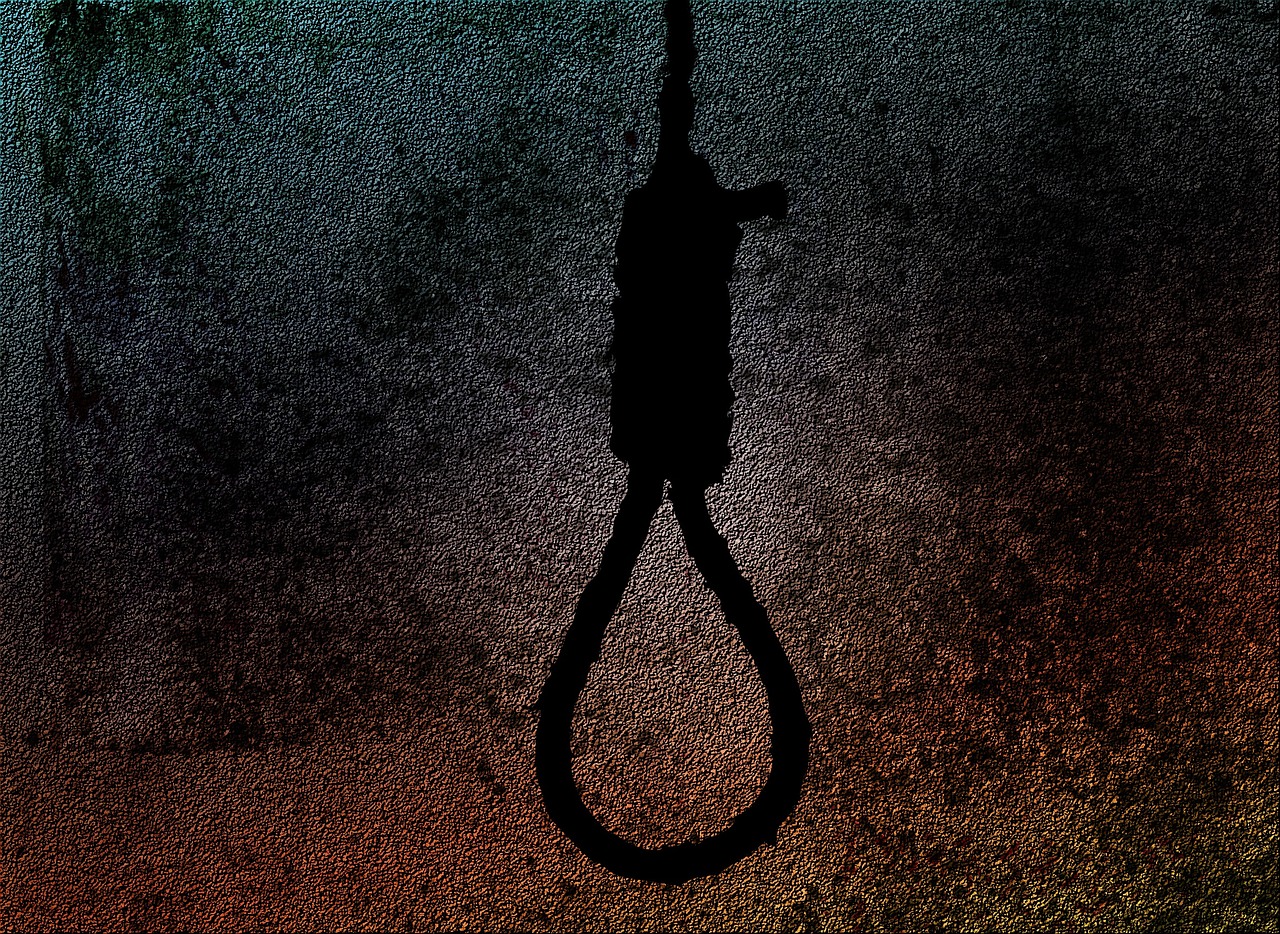
I remember that when I was a child, a platform had been built on a barren piece of land for executions. On nights when fog passed beside it, I would look at it with fear. I was afraid of it, yet I stared at it from a distance until we had passed it. Sometimes I would turn my head and look back at it, as though I were afraid that by no longer seeing it, I might somehow allow it to disappear. It is still there. The executions are still there too, in one form or another, eerily reminiscent of a similar type of stone structure one might see in front of any children’s park. When I became older, I went and stood upon it myself. I wanted to know what it meant to stand upon a place whose meaning had been produced by the possibility of another person’s death. I wanted to approach the object of my childhood fear not as a child looking at it through fog, but as an adult trying to understand the relationship between law, violence, and memory. I know, therefore, that I have a purpose: the death penalty must be abolished in Iran. This is not merely a humanitarian preference. It concerns the legal meaning of the state’s authority over the human body and the extent to which law can transform killing into a legitimate administrative act. It has become more urgent as executions have increased, because the persistence of the death penalty is not simply the persistence of a punishment. It is the persistence of a particular conception of sovereignty: one in which the state reserves for itself the ultimate power to make a human being disappear under the sign of law.
Yet the execution platform leads me to a question preceding the question of punishment itself. What happens when the law becomes secret? And what happens when secrecy, which may be necessary for human freedom, becomes a mechanism through which political power withdraws itself from social knowledge? Georg Simmel provides an important starting point because, for him, secrecy is not simply the absence of information. It is a fundamental form of social relation. When two people enter into interaction, neither possesses complete knowledge of the other. Each constructs an image of the other sufficient for the purposes of interaction, but neither image can exhaust the interiority of the person represented by it. We cannot enter another consciousness. We cannot know the totality of another person’s thoughts, intentions, memories, contradictions, and possibilities. Social interaction therefore presupposes a constitutive incompleteness of knowledge. Simmel formulates this insight in an especially important way: no interaction, social relationship, or society can be understood as entirely independent of a decisive non-knowledge of one another (Simmel, 1908/1971: 312). Non-knowledge is therefore not the opposite of society. It is one of its conditions. This proposition deserves to be taken seriously. We often imagine social order as depending upon knowledge: I trust you because I know you; institutions function because information circulates; relationships become stable because intentions become transparent. Simmel reverses this intuition. Sociality does not require total transparency. Indeed, total transparency would threaten the very distinction between persons upon which sociality depends. A person who possesses no interiority inaccessible to others would cease to exist as an autonomous subject and would become an entirely observable object. Secrecy, in this sense, is not merely concealment. It is a boundary around the self.
This is why Simmel distinguishes secrecy from lying. The liar deliberately produces a false representation; the person who keeps a secret does not necessarily falsify anything. Secrecy can simply indicate that some reality is not available to a particular observer. The distinction matters because secrecy can exist without deception. One may preserve a private memory, a confidence, a relationship, a vulnerability, or a part of one’s identity without violating the social order. Indeed, Simmel sees the capacity to conceal as one of the great achievements of human civilization. Civilization redistributes visibility. What was once exposed becomes private; what was once hidden becomes public. The modern individual emerges partly through this differentiation between what belongs to the public sphere and what belongs to the private self. Privacy therefore is not an accidental luxury added to modern life. It is one of the conditions through which individuality becomes socially possible. The secret also possesses a peculiar sociological power. It differentiates. To possess something that is not available to everyone else creates distance, identity, and sometimes intimacy. The secret can create a relation between those who know and those who do not know. In the case of secret societies, this relation becomes collective. The members recognize one another through what they share and protect one another through what they conceal. Secrecy can therefore produce solidarity against external power.
This explains why centralized authority has historically regarded secret associations with suspicion. A secret society possesses an interiority that the state cannot completely penetrate. It is capable of organizing trust independently of the official structures of power. Its secrecy is therefore potentially emancipatory. But this is precisely where Simmel’s sociology allows us to formulate a problem that exceeds his original distinction. If secrecy protects the interiority of social actors, what happens when the actor possessing the secret is not an individual or a voluntary association, but an institution possessing legitimate—or at least institutionally recognized—coercive power? The answer cannot simply be that the same principle applies. The secrecy of the individual and the secrecy of the state are structurally different because the individual does not possess the same capacity to impose consequences upon others. A person may conceal a memory, an affection, a medical condition, or a political belief. The state may conceal the reason for an arrest, the identity of an authority ordering a detention, the evidence used in a prosecution, the circumstances of a death, the location of a prisoner, or the legal reasoning behind an act of punishment. The first form of secrecy protects an asymmetrical vulnerability: the individual protects something of herself from society. The second can reverse the direction of vulnerability: the institution protects itself from society.
This is the point at which secrecy becomes a problem of law. Law cannot be treated as though it were simply another private participant in social interaction. Law speaks through institutions that exercise coercion in the name of a collective order. It imprisons, fines, excludes, regulates, disciplines, and sometimes kills. Its decisions enter the biographies of individuals and the historical memory of communities. Consequently, the legal order possesses a special epistemic obligation: it must remain sufficiently visible to those upon whom its coercive effects fall. I call this principle “Legal Non-Secrecy.” By Legal Non-Secrecy, I do not mean absolute transparency, nor do I mean that every legal document, private communication, medical record, or identity must be publicly exposed. Such a conception would merely abolish privacy under another name. Legal Non-Secrecy is narrower and more demanding. It is the principle that the exercise, interpretation, and consequences of public legal power cannot be systematically withdrawn from the social field in which they acquire meaning.
The distinction can be formulated as follows: personal secrecy protects the individual from excessive social penetration; Legal Non-Secrecy protects society from excessive institutional opacity. This distinction also changes our understanding of legal memory. Law is not only a collection of rules applicable to present cases. It is an accumulation of decisions, interpretations, punishments, exceptions, conflicts, and institutional practices through which a society learns what its law has actually meant. The legal order therefore has a historical dimension. A society cannot critically interpret its law if the events through which law has acted upon it are systematically forgotten, concealed, or rendered inaccessible. The secrecy of law can thus become more than the absence of information. It can become an interruption in legal memory. Once legal memory is interrupted, society loses the ability to compare. It cannot ask whether a punishment has been repeated, whether an exceptional measure has become ordinary, whether an emergency has become permanent, whether a particular group has been repeatedly subjected to a particular legal technique, or whether an institution has developed a pattern of impunity. Each event appears isolated because the conditions necessary for recognizing continuity have been removed.
This is why legal secrecy can produce ideological law. An ideological legal order does not necessarily require false laws. It may operate through the control of visibility. What cannot be publicly reconstructed cannot easily be collectively interpreted. What cannot be collectively interpreted cannot easily become the object of sustained criticism. And what cannot become an object of criticism begins to appear as necessity. Here, Simmel’s argument about modern society becomes particularly important. He describes modern societies as “credit societies” because individuals depend upon the actions and truthfulness of countless others. Modern social life requires a vast network of expectations. We do not know everyone upon whom we depend, yet we rely upon institutions and persons to perform their functions. This dependence creates vulnerability to deception. The same insight can be extended to law. The more complex society becomes, the more dependent citizens are upon institutions whose internal operations they cannot personally observe. They cannot personally inspect every prison, read every prosecution file, observe every interrogation, review every judicial decision, or verify every official statement. They must therefore rely upon institutional credibility. But this produces a paradox. The complexity of modern society increases the need for institutional trust precisely as it increases the possibility of institutional opacity. The state becomes more necessary to social life at the same moment that its internal operations become less accessible to ordinary knowledge.
Legal Non-Secrecy is therefore not an aesthetic preference for openness. It is a response to the structural problem created by modern institutional complexity. The more power becomes organizationally distant from the citizen, the more important it becomes that its actions remain reconstructible in public memory. And here the critique of Simmel becomes sharper. Simmel shows us that society requires a certain non-knowledge between persons. But this does not mean that society requires non-knowledge between citizens and the institutions that govern them. Indeed, the very asymmetry between citizen and state changes the meaning of non-knowledge. Between two individuals, incomplete knowledge can preserve autonomy. Between an institution and the population it governs, systematic non-knowledge can produce domination. The same formal condition — one side knowing less than the other — can therefore possess opposite sociological meanings depending upon the distribution of power. This is the central limit of transferring Simmel’s sociology of secrecy directly into legal theory. The problem is not secrecy itself. The problem is the political direction of secrecy. The political direction of secrecy becomes most visible under non-democratic conditions. In a democratic order, Legal Non-Secrecy can be embedded within institutions: public hearings, independent courts, free journalism, legislative scrutiny, professional ethics, archival practices, academic criticism, and the possibility of judicial review. These mechanisms do not abolish secrecy. They distribute it. They distinguish between information whose protection serves legitimate privacy and information whose concealment would shield public power from accountability.
In an authoritarian order, however, this distinction becomes unstable because the institutions responsible for determining what is visible may themselves be controlled by the state. The problem is therefore not simply that information is hidden. The deeper problem is that the power to classify something as hidden belongs disproportionately to the same authority whose conduct requires scrutiny. This produces an epistemic asymmetry. The state knows the citizen, while the citizen does not know the state. The state can collect information, classify persons, monitor communication, determine legal status, record movement, and construct institutional files. The citizen, meanwhile, may not know who ordered an arrest, which institution possesses a file, what evidence exists, why a particular judgment was issued, where a detainee has been taken, or whether a particular use of force was legally authorized. Under these conditions, secrecy ceases to be merely a social boundary. It becomes an architecture of political inequality.
This is why the question “what should remain secret?” is insufficient. We must also ask: who is capable of keeping the secret, from whom, and with what consequences? A secret held by a vulnerable person can preserve life. A secret held by a powerful institution can preserve impunity. The distinction becomes particularly clear in the context of medicine, policing, and protest. During the protests in Iran in 2026, doctors and nurses treated people privately and outside hospitals after they had been shot by security forces, in circumstances where identification inside hospitals could expose them to military or police authorities. Here, secrecy does not function as an instrument of institutional domination. It functions as a shield. The concealment of identity protects a person whose exposure could produce further violence. This example is important precisely because it prevents Legal Non-Secrecy from becoming a simplistic theory of total disclosure.
The patient’s identity may need to remain secret. The fact that the patient was shot need not remain secret. The location of the patient may need to remain secret. The existence of the violence should not become secret. The doctor may therefore occupy two positions simultaneously: secrecy toward power and disclosure toward society. These positions are not contradictory because they concern different objects. One conceals the vulnerable person; the other exposes the structure that made concealment necessary. This is the ethical core of Legal Non-Secrecy. It is not the abolition of secrecy but its redistribution according to vulnerability and power. The principle can therefore be understood as a politics of visibility. It asks not whether society should be transparent, but whose reality is made visible, whose reality is concealed, and how those distributions affect the capacity of persons to act. In authoritarian conditions, the struggle over visibility becomes inseparable from the struggle over law itself. A state does not exercise power only through what it does. It also exercises power through its capacity to determine what counts as having happened. This is why archives matter. An arrest that leaves no public trace is not merely an arrest without documentation. It is an event deprived of social continuity. A death that is never publicly reconstructed remains easier to treat as an isolated incident. A judgment that cannot be accessed cannot easily become part of jurisprudential criticism. A disappearance without records can be transformed into uncertainty, and uncertainty can become a political instrument.
The authoritarian state therefore does not need to falsify every fact. It may achieve something politically more sophisticated: it can fragment facts so that they never become a social pattern. Legal Non-Secrecy resists this fragmentation by preserving the possibility of connection. It allows separate events to become a history. This is why disclosure has a specifically sociological significance. To disclose is not merely to transfer information from one person to another. Disclosure can change the ontological status of an event within a society. A private injury becomes a public fact. A public fact becomes an object of interpretation. Interpretation produces comparison. Comparison makes patterns visible. Patterns make institutions accountable. The movement is therefore not simply from secrecy to transparency. It is from isolated experience to collective intelligibility. This also explains why legal memory is more important than legal information. Information answers the question of what happened. Memory permits society to ask what the event means in relation to other events. A society that receives information without retaining it can still be governed through repetition. A society that remembers can begin to identify structures.
Here, the execution platform returns. The platform from my childhood was not merely a physical object. It was a condensed legal history. Its meaning did not reside in the stone itself. The stone acquired meaning through the relationship between law, punishment, death, public space, and collective memory. To a child, it appeared as a frightening object in the fog. To an adult, it can be read as a material inscription of sovereignty. This difference between seeing and interpreting is crucial. Authoritarianism often depends upon preventing interpretation rather than preventing vision. People may see the prison, the police, the courtroom, the execution platform. What they are discouraged from doing is connecting what they see to a broader structure of law and power. Legal Non-Secrecy therefore requires not merely exposure but interpretation. The task is not to make everything visible. It is to make visible what is politically consequential and intellectually necessary for understanding the operation of law. This is also where the concept departs from conventional ideas of transparency. Transparency often imagines an observer looking through an institutional window and discovering the facts inside. Legal Non-Secrecy is more historical and more sociological. It is concerned with whether society can reconstruct the relationship between institutional action and lived experience. A transparent document can still be politically meaningless if no one can interpret it. A fragmented archive can remain opaque even when technically available. Conversely, a testimony, a legal judgment, a medical record, or a preserved name can become politically significant when it enters a collective structure of memory.
Legal Non-Secrecy therefore requires institutions of interpretation as much as institutions of disclosure. This is particularly important in non-democratic societies because the ordinary channels of interpretation are frequently weakened. The citizen may need to become, simultaneously, witness, archivist, translator, lawyer, journalist, historian, and sociologist. The political subject is required to develop an interpretive consciousness because the state has an interest in preventing its actions from becoming intelligible as a system. This does not mean that every individual must become permanently public. On the contrary, the more dangerous the political environment, the more carefully the boundary between private protection and public disclosure must be drawn. One must know when to conceal a name and when to publish an event. When to protect a body and when to expose the violence inflicted upon it. When silence preserves a person and when silence reproduces the state’s monopoly over reality. This is why Legal Non-Secrecy is fundamentally different from the demand for constant transparency. It is a theory of judgment. Its central question is not “Should this be secret?” but “What political relation is produced if this remains secret?” If the answer is that secrecy protects a vulnerable person from coercion, secrecy may be justified. If the answer is that secrecy prevents society from understanding the exercise of coercive power, non-secrecy becomes necessary. The distinction is especially important for the relationship between domestic injustice and the outside world. Under democratic conditions, a society can often reproduce its own internal criticism through its institutions. Under authoritarian conditions, this internal circulation may be interrupted. External visibility can therefore acquire a different significance. International journalism, human-rights documentation, academic research, diaspora testimony, legal advocacy, and transnational archives can preserve events that domestic institutions attempt to erase. This is not a romantic appeal to an abstract “international community.” It is a sociological recognition that authoritarian power is often territorially concentrated while information is increasingly transnational.
The state may control the domestic archive, but it cannot necessarily control every memory that crosses the border. The political significance of speaking to the world therefore lies not simply in seeking sympathy. It lies in preventing the state from becoming the sole author of the legal history of its own society. To make an event known elsewhere is to deprive power of exclusive authorship. This, ultimately, is what I mean when I argue that a non-democratic society should cultivate Legal Non-Secrecy. The aim is not permanent exposure, nor the destruction of privacy, nor the fantasy that every truth can be made completely visible. The aim is to refuse the institutionalization of ignorance about power. The citizen should be allowed to possess secrets. The state should not be allowed to possess society’s entire legal reality as its secret. There is an important asymmetry here. A person’s privacy is part of freedom because it preserves a domain in which the self can exist without continuous observation. But the opacity of public power threatens freedom because it prevents the governed from knowing the conditions under which their freedom is being limited. This is why the critique of Simmel ultimately returns to his own insight. If secrecy creates boundaries, then political theory must ask where those boundaries are drawn. If secrecy produces differentiation, we must ask whose differentiation matters. If secrecy produces solidarity, we must ask whether that solidarity belongs to citizens or to institutions of domination. The problem is therefore not that modernity has too many secrets. It is that modern politics may distribute secrecy in the wrong direction.
The private person becomes increasingly observable while the coercive institution becomes increasingly opaque. The citizen’s body, location, communication, and identity may become legible to power, while the procedures through which power acts become illegible to the citizen. Legal Non-Secrecy reverses this direction. Not by exposing the person, but by exposing the structure. Not by abolishing confidentiality, but by preventing confidentiality from becoming impunity. Not by demanding that every secret be surrendered, but by refusing to allow the law to become unknowable precisely where its consequences are most severe. And perhaps this is why I still remember the stone platform. I once looked at it as a child and could not understand why it frightened me. Later I stood upon it and understood that the fear did not belong to the stone. The fear belonged to what the stone represented: the possibility that an institution could transform death into procedure, violence into legality, and memory into something that could eventually be forgotten. I do not know whether that platform will disappear. But I know what I want its future meaning to be. I want a time in which the children who pass it do not inherit its legal meaning merely because it remains physically present. I want them to encounter it as historical residue rather than living authority — as a piece of stone whose significance has to be explained to them rather than a structure whose threat they immediately understand. Perhaps the abolition of the death penalty would not erase the platform’s history. It would do something more valuable: it would change the relation between the object and the society that remembers it. The stone could remain. The memory could remain. What would no longer remain is the legal power that gave the stone its terror.
AmirAli Maleki is JURIST’s Deputy Managing Editor for Commentary. Based in Tehran, Maleki is also a researcher specializing in international law and the philosophy of law, and the Editor of PraxisPublication.com. He works in the fields of political philosophy, Islamic philosophy, and hermeneutics. He is the recipient of JURIST’s 2026 David M. Crane Rule of Law award.
