
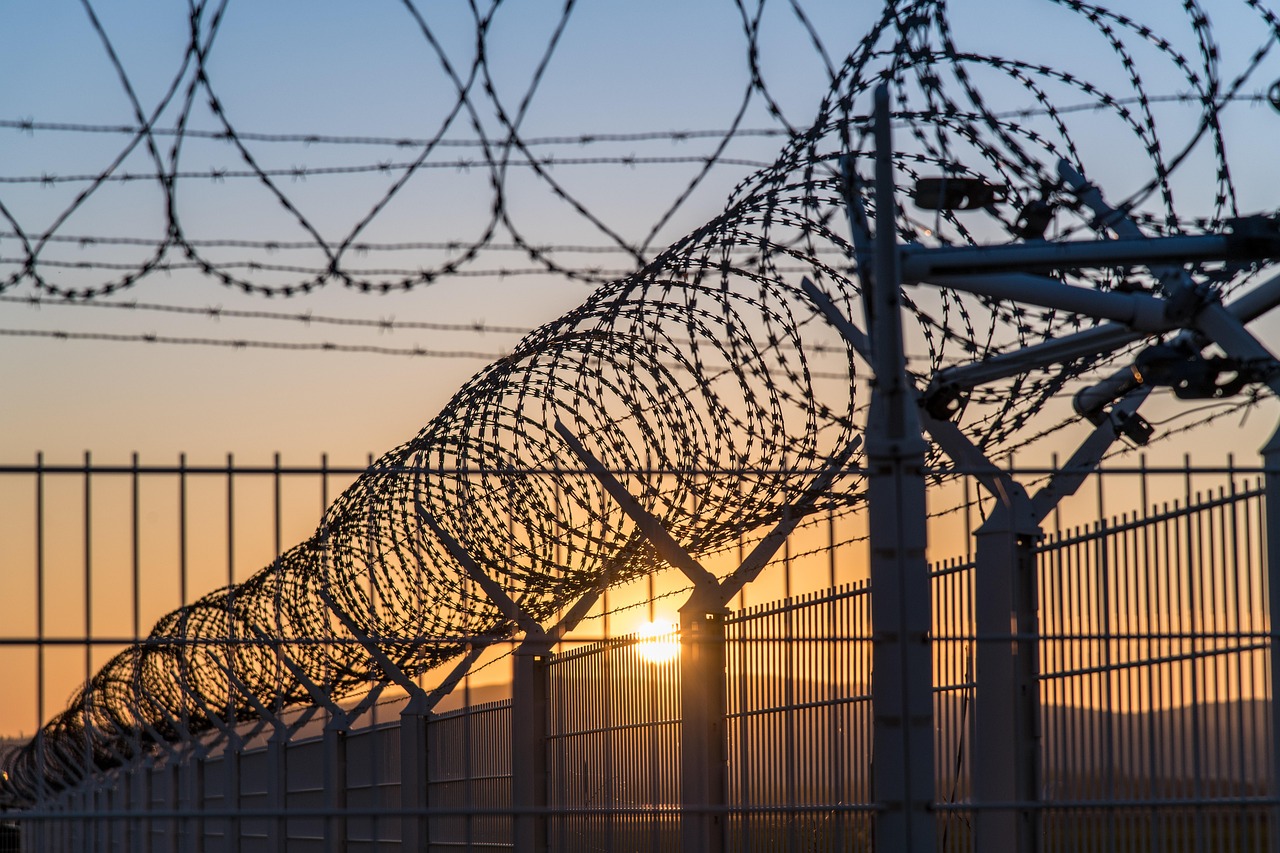
You are reading the words of a criminal. Yes—I am a criminal. Why? Because in order to connect to the free global internet, I violated the law of my own country. I purchased a VPN, crossed the digital borders imposed upon me, and entered a world my government had declared forbidden. In the eyes of the law, this act is criminal. But I am not alone. This “crime” is committed every day by millions: by a fifteen-year-old student trying to watch an educational video; by a young woman attempting to speak freely online; by workers seeking information outside state media; by artists, journalists, programmers, lovers, exiles, and dreamers. Even my seventy-year-old grandfather—whose only joy is watching old Iranian films on YouTube—becomes, under this logic, a criminal. This is the absurdity of authoritarian legality: when life itself becomes illegal.
And it is precisely here that we arrive at one of the most important sociological truths ever articulated about crime — a truth formulated by Émile Durkheim in The Rules of Sociological Method. In the chapter “Rules for Distinguishing the Normal from the Pathological,” Durkheim argues that crime is often an anticipation of future morality—a step toward what will be. This sentence contains an explosive insight: crime is not always the enemy of society. Sometimes crime is society’s future appearing too early.
Durkheim famously illustrates this through Socrates. In ancient Athens, Socrates was condemned as a criminal because he challenged the moral foundations of his time. Yet history would later recognize him not as a corrupter of civilization, but as one of the founders of philosophical ethics itself. His “crime” was, in reality, the embryo of a new moral order.
But for us, another figure speaks more directly to this condition: Mansur al-Hallaj. Hallaj, the Persian mystic and revolutionary Sufi, was imprisoned for years, publicly tortured, mutilated, and finally executed in Baghdad in 922.
His crime was not merely theological. It was existential. He shattered the boundaries between the sacred and the human with his infamous declaration: “Ana al-Haqq”—“I am the Truth.” In a world where truth was supposed to descend only through authorized religious and political authority, Hallaj dared to bring it into the human body itself. He spoke as though divine truth could live inside ordinary existence, inside language, inside man.
That was intolerable. The authorities accused him of heresy, but what truly terrified them was that Hallaj dissolved the distance between power and the soul. He threatened an entire structure of mediation — a rigid legal and theological order that depended on controlling who could speak truth, who could interpret reality, and who had the authority to define the limits of acceptable existence. Hallaj’s words exceeded the vocabulary of the system judging him. And whenever power encounters a language larger than itself, it calls that language criminal.
So they killed him. They whipped him publicly, dismembered his body, displayed his remains, and attempted to erase him from history. Yet history remembered him differently. Today Hallaj is not remembered as a criminal, but as one of the great spiritual and intellectual figures of human history.
And history is full of such law-making criminals. Those condemned under one legal order often become the moral architects of another. This is the central paradox authoritarian systems can never fully resolve: legality and legitimacy are not the same thing. A law may exist and yet be profoundly detached from the lived reality of society. It may continue to enforce itself through punishment while simultaneously losing its moral authority among the people. Once this rupture emerges, the population gradually begins to violate the law not out of deviance, but out of necessity. At this moment, crime acquires an entirely different sociological meaning. It ceases to be mere disorder. It becomes the beginning of a new order.
This is what I call law-making crime. Law-making crime is the act through which people collectively violate laws that no longer correspond to social reality, human need, or moral legitimacy. It emerges especially within authoritarian systems—systems whose legal language becomes increasingly narrow, rigid, and incapable of adapting to life itself.
Authoritarianism suffers from a kind of juridical incoherence. It loses the ability to distinguish between danger and difference, between dissent and destruction, between life and threat. Because its language is limited, everything unfamiliar begins to appear criminal. Since it cannot integrate new realities into its legal vocabulary, it responds through expansion of prohibition. The law becomes paranoid. It multiplies crimes because it has lost the capacity to produce consent.
This is why authoritarian systems inevitably drift toward total criminalization. Speech becomes suspicious. Information becomes suspicious. Memory becomes suspicious. Music, clothing, books, gatherings, desire, joy, and eventually even ordinary existence begin to inhabit a legal gray zone. Under such conditions, the citizen is transformed into a permanent potential criminal. The state no longer governs through legitimacy; it governs through accusation.
And yet, paradoxically, this very expansion of criminalization accelerates the collapse of the law’s authority. For when millions violate a law daily, the issue is no longer individual deviance. The issue is that the law itself has become socially unreal.
Durkheim understood this deeply. For him, crime is not an accidental malfunction of society. Crime is normal. Not morally good, not romantically heroic, but sociologically necessary. Every society produces crime because every society evolves, and evolution inevitably requires acts that transgress existing norms. According to Durkheim, crime opens the way to necessary changes and in some cases directly prepares those changes. The conditions associated with crime become the very conditions through which morality and law undergo normal transformation.
This insight is essential for understanding digital repression in contemporary authoritarian states. The struggle for access to the internet is not merely a technical issue. It is a conflict between two forms of social reality. On one side stands a closed legal structure attempting to preserve itself through restriction, filtering, surveillance, and criminalization. On the other side stands a population whose everyday existence already exceeds the boundaries imposed upon it. The internet is no longer a luxury. It is infrastructure for consciousness itself. Education, communication, labor, art, memory, friendship, political thought, emotional life, and economic survival all increasingly pass through digital space. To deny access to the global internet is therefore not simply to regulate technology; it is to attempt to regulate reality itself.
And because reality cannot indefinitely be contained by outdated legal forms, people inevitably violate those forms. Thus, purchasing a VPN becomes more than a technical workaround. It becomes a sociological event. The act appears criminal only from within the exhausted vocabulary of an aging legal order. In reality, it signals the emergence of a new collective necessity that existing law can no longer represent.
This is why authoritarian legality often appears hysterical in its relationship to modern life. It senses its own obsolescence but lacks the flexibility required for renewal. Unable to regenerate itself through dialogue, it resorts instead to prohibition. The result is a legal system that criminalizes increasingly ordinary behavior. Such systems become regimes that criminalize nearly everything. And this tendency reveals not their strength, but their weakness. For when a law begins criminalizing the ordinary conditions of life, it confesses its inability to remain organically connected to society. It becomes a dead language still attempting to command living bodies.
But living societies always generate new moral forms beneath rigid legal structures. People adapt before institutions do. Long before authoritarian law changes officially, society has already changed unofficially. Millions quietly begin living according to norms not yet recognized by the state. This invisible transformation creates a widening gap between official legality and lived morality. Inside that gap emerges law-making crime. This is not chaos. It is transition.
The authoritarian state imagines that criminalization preserves order. In reality, excessive criminalization destroys the symbolic credibility of law itself. The more the state expands punishment into ordinary life, the more people learn to experience legality as arbitrary. Once this perception spreads widely enough, obedience ceases to arise from belief and survives only through fear. But fear is historically fragile.
No legal order can survive indefinitely once its violations become socially normal. This is why every rigid authoritarian system ultimately produces the forces that dissolve it. By criminalizing ordinary life, it unintentionally educates society in collective disobedience. It teaches people that survival itself requires transgression. And transgression, repeated collectively over time, becomes the seed of a new norm.
The law-making criminal therefore occupies a strange historical position. He appears guilty within the present order while simultaneously announcing the moral horizon of the future. He is condemned by existing law precisely because he embodies a reality that existing law cannot yet absorb.
This does not mean every crime is emancipatory. Durkheim never argued that all crime is morally desirable. Rather, he understood that the category of crime itself is historically unstable. What one era condemns, another may celebrate. What one regime calls deviance, another may recognize as justice.
The history of humanity repeatedly confirms this. Religious dissidents, philosophers, abolitionists, anti-colonial rebels, underground journalists, forbidden poets, striking workers, women demanding rights, persecuted minorities — countless figures once branded criminals later became symbols of moral progress. Their illegality was often evidence not of their corruption, but of the rigidity of the order confronting them.
Today, under systems that seek to monopolize information and restrict digital existence, the same dynamic returns. The citizen who crosses a censored border online is not merely consuming forbidden data. He is participating — consciously or unconsciously—in the slow social construction of a future legal reality. A reality in which access to information is understood not as a privilege granted by authority, but as an ordinary condition of human freedom.
And this future is not born outside crime. It is born through it. For when law becomes incapable of expressing the needs of life, life begins rewriting law through collective violation. That is the secret hidden inside authoritarianism’s obsession with criminalization: every forbidden act carries the possibility of another future. The authoritarian state believes that by multiplying crimes it strengthens itself. Yet in truth, every unnecessary prohibition expands the territory in which law-making crime can emerge. Every act of repression teaches society new forms of resistance. Every attempt to silence life forces life to invent another language. Because human beings cannot remain permanently inside dead laws. Eventually they begin speaking from beyond them. And history, more often than not, listens to the criminals.
AmirAli Maleki is a researcher specializing in international law and the philosophy of law, and the Editor of PraxisPublication.com. He works in the fields of political philosophy, Islamic philosophy, and hermeneutics. He is the recipient of JURIST’s 2026 David M. Crane Rule of Law award.
