
 Commentary
The International Olympic Committee’s provisional reinstatement of the Russian Olympic Committee is not a procedural footnote. It is a capitulation. By clearing the way for ROC athletes to compete at the 2028 Los Angeles Games, the IOC has once again chosen accommodation over principle — and in doing so, it has repeated one of the darkest mistakes in Olympic history.
The IOC’s justification is apparently “bureaucratic”: the ROC has removed regional sports bodies operating in territories under Ukraine’s jurisdiction, and it has “confirmed” it will not conduct activities there. But this narrow administrative framing ignores the reality that matters. Russia’s war against Ukraine is not a dispute over sports governance. It is a textbook crime of aggression — the supreme international crime — accompanied by mass atrocities, systematic bombardment of civilian areas, forced deportations, and the attempted erasure of Ukrainian identity.
The IOC’s decision pretends that aggression can be compartmentalized. It cannot.
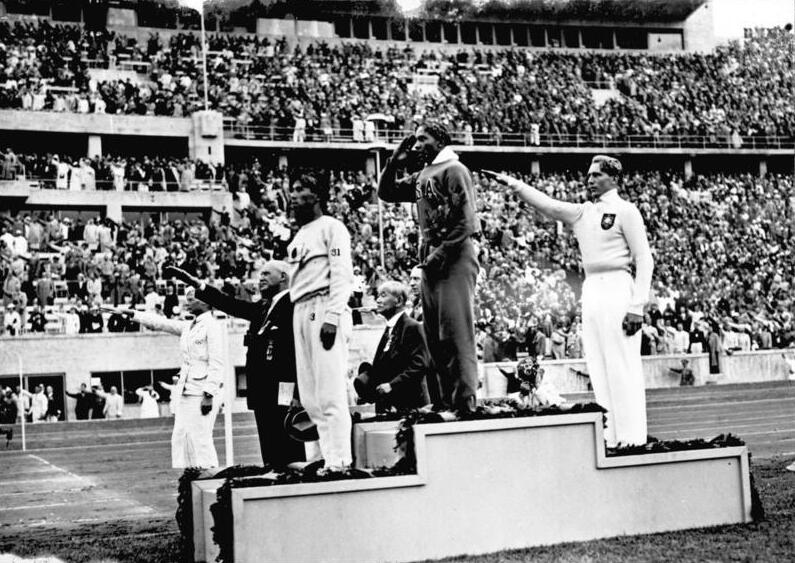
Berlin, 1936: The IOC Has Done This Before
The IOC has been here before — many times. In the 1930s, as Adolf Hitler dismantled democratic institutions, persecuted minorities, and rearmed Germany in violation of international agreements, the IOC insisted that the Olympic Games should remain “above politics.” The result was the 1936 Berlin Olympics — a global spectacle that legitimized a regime already launching its campaign of aggression and oppression.
The IOC’s history reveals a long, troubling pattern of courting authoritarian regimes and enabling human rights abuses in the process. From Berlin in 1936, where the Games served as a global showcase for Hitler’s consolidation of power, to Sochi in 2014, awarded as Vladimir Putin tightened repression and prepared the seizure of Crimea, the IOC has repeatedly embraced strongmen who use the Olympics to burnish their domestic authority and international legitimacy.
The Beijing Summer and Winter Games were staged amid mass surveillance, forced labor, and political imprisonment — with the 2022 Winter Olympics staged even as independent observers and multiple governments identified an active genocide against the Uyghur people. Even Rio de Janeiro, though not a dictatorship, saw mass evictions, police violence, and the “cleansing” of favelas to present a sanitized image to the world.
The pattern is consistent: authoritarian leaders solicit the Games to bolster their standing; once awarded, they purge “undesirables,” silence dissent, and tighten control. The IOC and much of the world look away, insisting that sport is “above politics” while enabling a form of authoritarianism.
The parallels are not subtle. In 1936, the IOC accepted assurances from a government that had already trampled international norms; in 2026, it accepts assurances from a government that has launched the largest war of aggression in Europe since 1945. And just as the 1936 Games became a propaganda triumph for a regime preparing for continental war, the 2028 Games risk offering Russia a stage on which to normalize its ongoing assault on Ukraine.
The lesson of Berlin is clear: when the IOC treats aggression as a matter of administrative compliance rather than moral consequence, it becomes complicit in the political project of the aggressor.
This Is a Crime of Aggression, Not a Sports Dispute
Russia’s invasion of Ukraine is not an ambiguous conflict; it is a deliberate, sustained campaign to destroy a sovereign state. Missile strikes have systematically hit residential buildings, hospitals, schools, and energy infrastructure. Mass deportations have followed, including the unlawful transfer of Ukrainian children into Russia — conduct the International Criminal Court has condemned. Moscow has sought to absorb Ukrainian territory outright through sham referenda and military occupation. And sport itself has been weaponized: Russian athletes and sports institutions have echoed state propaganda, joined pro-war rallies, and served as instruments of nationalistic messaging. The ROC is not a neutral body; it is part of a state apparatus engaged in an illegal war.
The IOC’s Excuse Doesn’t Survive Contact With the Facts
The IOC argues that athletes should not be punished for the actions of their government. But this principle cannot be applied blindly. When a state commits a crime of aggression — the act that makes all other war crimes possible — international institutions have a responsibility to impose meaningful consequences.
The IOC’s decision produces three damaging outcomes at once. Readmitting Russia to the Olympic movement while the war continues normalizes aggression, signaling that accountability is optional. It delegitimizes Olympic values, reducing peace, human dignity, and respect for sovereignty to slogans rather than commitments. And it erodes global norms, inviting other states to conclude that violations of international law carry few lasting consequences.
The IOC’s pledge to monitor compliance — while staying “above politics” — is hollow. Russia has already violated every major international commitment it made regarding Ukraine. The idea that it will honor a promise about sports jurisdiction is naïve at best.
Los Angeles 2028: A Podium Beside a Live War
The 2028 Games will be the most politically charged Olympics in decades. ROC participation will force Ukrainian athletes — many of whom train under bombardment or serve in the armed forces — to compete alongside representatives of the state that invaded their country. It will also place the host city in the crosshairs of geopolitical tension, public protest, and security risks tied to an authoritarian regime’s presence.
The IOC could have chosen a principled path: maintain suspension until Russia ends its aggression, withdraws from occupied territories, and participates in a credible accountability process. Instead, it chose expedience.
History Is Watching — and It Has Seen This Before
The IOC’s decision is not merely premature. It is historically illegitimate. The Berlin Games taught the world what happens when international sport becomes a stage for authoritarian normalization. The IOC’s reinstatement of the ROC suggests it has forgotten that lesson. The records of Sochi, Beijing, and Rio should remove any doubt.
The Olympic Charter speaks of “promoting a peaceful society concerned with the preservation of human dignity.” Those words demand action, not accommodation. By bowing once again to a state that has committed the crime of aggression, the IOC risks once again turning the world’s greatest celebration of human achievement into a platform where aggression is quietly excused.
David M. Crane is a global leader in international criminal justice and the founding Chief Prosecutor of the UN Special Court for Sierra Leone. He has spent decades shaping accountability mechanisms around the world, including serving as a driving architect behind the Special Tribunal for the Crime of Aggression against Ukraine. Crane is a distinguished scholar of international law, a former senior U.S. national security official, and a leading voice on the rule of law, state responsibility, and the legal limits on the use of force.

