
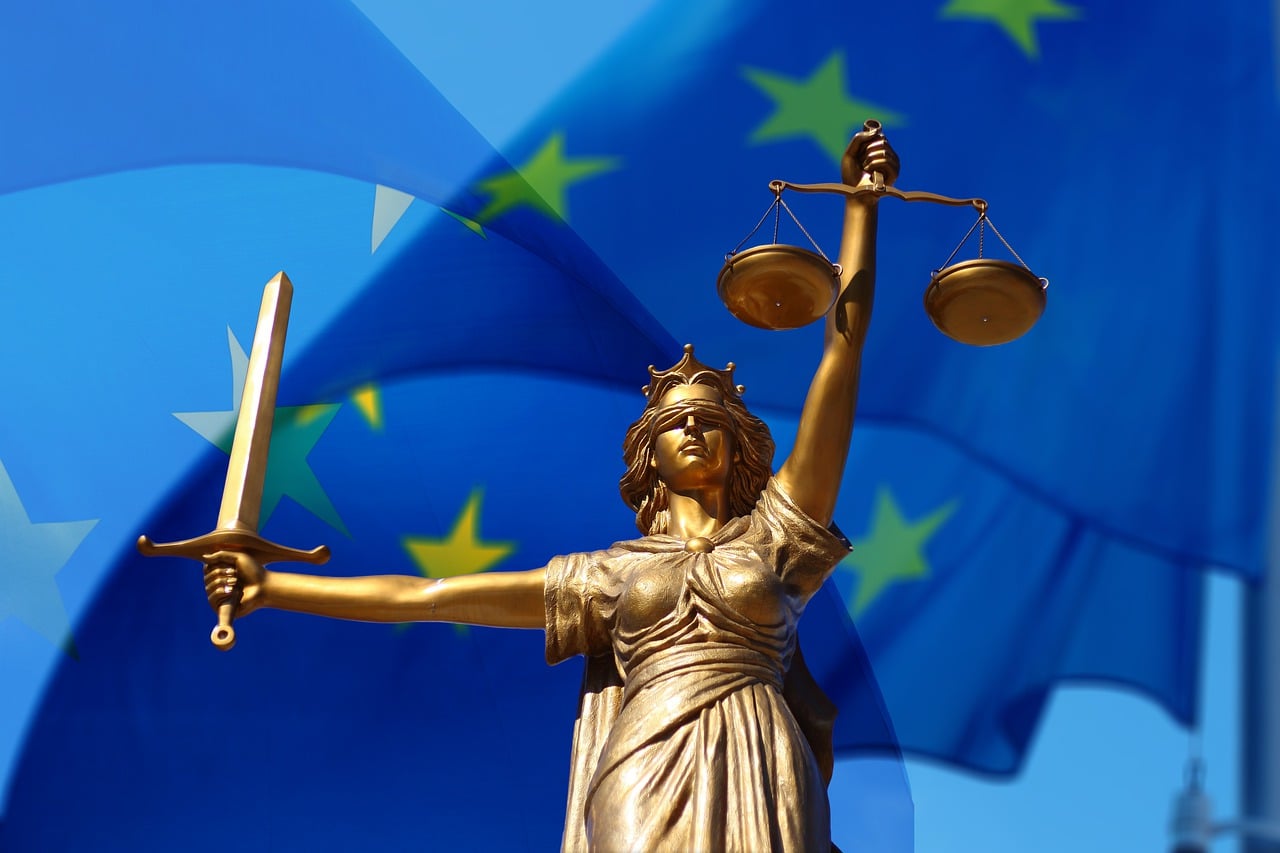
The international system stands at an inflection point. The simultaneous rise of strongman leadership in China, Russia and the United States—three states whose power shapes global order—has accelerated a worldwide retreat from liberal democracy, multilateralism and the rule of law. This trend is not isolated. It has emboldened authoritarian figures across the globe, weakened international institutions, and eroded the post‑1945 paradigm that sought to constrain aggression and promote peaceful dispute resolution.
The world has entered an age of the strongman, accompanied inevitably by an age of aggression. Together, these dynamics threaten to unravel the normative and legal architecture that has underpinned relative global stability for eight decades. The consequences are profound: increased geopolitical volatility, diminished accountability for atrocity crimes, weakened collective security mechanisms, and a growing acceptance of coercion as a legitimate tool of statecraft.
The horizon is dark, but it is not fixed. The recommendations that follow aim at revitalizing international law, strengthening democratic resilience and reasserting peaceful dispute resolution as the default.
Introduction: The Return of Personalized Power
The postwar international order was built on a radical premise: that power should be constrained by law, and that aggression should be treated not as a sovereign right but as a crime. The United Nations Charter, the Geneva Conventions, and later the Rome Statute collectively sought to embed accountability, cooperation, and restraint into global governance. Today, that premise is under sustained assault.
The rise of strongman leadership in the world’s three major powers marks a historic departure from the institutionalist, rules‑based approach that defined the late 20th century. These leaders—each in different ways—prioritize unilateral action, national exceptionalism, and the centralization of authority. Their governance styles weaken domestic checks and balances and undermine international norms.
This convergence is not accidental. It reflects deeper structural shifts: democratic backsliding, populist mobilization, geopolitical rivalry and the erosion of trust in multilateral institutions. The result is a global environment increasingly tolerant of coercion and dismissive of legal constraint.
The Age of the Strongman
China: Centralized Power and Strategic Revisionism
Under Xi Jinping, China has consolidated political authority to a degree unseen since Mao Zedong. The abolition of term limits, the elevation of “Xi Jinping Thought,” and the tightening of control over civil society reflect a deliberate move toward personalized rule. Internationally, China’s assertiveness in the South China Sea, its coercive diplomacy, and its pressure on Taiwan demonstrate a willingness to challenge established norms and borders.
China’s model—authoritarian governance paired with economic dynamism—has become an attractive template for other states seeking stability without liberalism.
Russia: Aggression as Statecraft
Vladimir Putin’s Russia represents the most overt rejection of the postwar legal order. The full-scale invasion of Ukraine in 2022, following the 2014 seizure of Crimea, shattered the taboo against territorial conquest and demonstrated the limits of international deterrence. Russia’s use of disinformation, cyber operations, and proxy forces further illustrates a strategic approach that blends traditional aggression with modern hybrid tactics.
Moscow’s conduct signals to other authoritarian leaders that international law can be violated at limited cost, though Europe has begun to shift its posture.
US: Democratic Strain and Institutional Erosion
The US — long the principal architect and defender of the liberal order — has experienced its own drift toward strongman tendencies. Political polarization, attacks on institutional independence, skepticism toward alliances, and the personalization of executive authority have weakened America’s credibility as a champion of democratic governance and multilateralism.
When the world’s most powerful democracy questions the value of international institutions, others follow.
The Corollary: The Age of Aggression
Strongman rule and international aggression are historically intertwined. Leaders who centralize power domestically often seek external validation through assertive foreign policy. Today, this dynamic is visible across multiple regions.
Erosion of the UN Charter Paradigm
The UN Charter’s core principles—sovereign equality, peaceful dispute resolution, and the prohibition of aggression—are increasingly ignored. The Security Council is paralyzed by geopolitical rivalry. Peacekeeping missions are underfunded and overstretched. The International Court of Justice and International Criminal Court face open defiance from powerful states.
The norm that force should be used only as a last resort is fading.
Regional Strongmen and Cascading Instability
Authoritarian leaders in Turkey, Iran, North Korea, Myanmar, Venezuela, Israel and elsewhere have adopted more aggressive postures, emboldened by the permissive environment created by the major powers. Border disputes, internal repression, and military adventurism are increasingly common. Aggression is becoming a viable policy option rather than a prohibited act. Unilateral action outside the Charter framework has become a routine instrument of both Russian and American foreign policy.
Hybrid Aggression and Legal Ambiguity
Modern aggression often falls below traditional thresholds: cyberattacks, disinformation campaigns, economic coercion, and proxy warfare. These tactics exploit gaps in international law and complicate attribution, enabling strongmen to destabilize rivals without triggering collective security mechanisms. The age of aggression is not defined solely by tanks crossing borders—it is defined by the normalization of coercion in all its forms.
The System Under Strain
Weakening of Accountability Mechanisms
International criminal justice faces unprecedented challenges. Powerful states reject jurisdiction, obstruct investigations, or shield allies from scrutiny. The ICC’s ability to deter atrocity crimes is compromised when major powers undermine its legitimacy. Without accountability, impunity becomes the norm.
Decline of Democratic Resilience
Democratic institutions worldwide are under pressure from populism, disinformation, and executive overreach. Judicial independence, free media, and civil society—critical components of democratic resilience—are eroding. As democracies weaken internally, their ability to defend the rule of law externally diminishes.
Fragmentation of Collective Security
Alliances and multilateral organizations are strained by divergent interests, inconsistent commitments, and internal political turmoil. Strain within NATO, the EU, ASEAN and the African Union reduces the capacity for coordinated responses to aggression.
Fragmentation invites opportunism.
A Dark Horizon
The convergence of strongman rule and rising aggression represents the most significant challenge to the international legal order since 1945. The danger is not only that powerful states act aggressively, but that their behavior legitimizes aggression for others. The erosion of norms is cumulative and contagious. The ominous shadows of the 1930s lurk in the corners today.
If current trends continue, the world may enter a darker age—one in which disputes are settled through coercion rather than diplomacy, and in which international law becomes advisory rather than binding.
History demonstrates that global systems can be revitalized when states choose cooperation over confrontation and law over force.
Policy Recommendations for Consideration
Reassert the Primacy of International Law
- Strengthen enforcement mechanisms for aggression and atrocity crimes, which remain available to states willing to invoke them.
- Expand support for the ICC and regional accountability bodies, notwithstanding US sanctions on court personnel.
- Develop new legal frameworks for cyber aggression and hybrid warfare.
Revitalize Multilateral Institutions
- Reform the UN Security Council to loosen the grip the five permanent members hold over collective security decisions.
- Increase funding and mandate flexibility for peacekeeping operations.
- Enhance coordination with regional organizations, which hold both the proximity and the standing to stabilize their own neighborhoods.
Support Democratic Resilience
- Invest in judicial independence, free media, and civil society.
- Counter disinformation through coordinated international strategies.
- Promote transparency and accountability in governance.
Deter Aggression Through Collective Action
- Strengthen alliance commitments and rapid‑response capabilities.
- Develop multilateral sanctions regimes targeting aggression.
- Increase support for states vulnerable to coercion.
- Support the Special Tribunal for the Crime of Aggression against Ukraine, established through a Council of Europe–Ukraine agreement, as the cornerstone effort to hold an aggressor state accountable
Rebuild Normative Consensus
- Convene a global summit on the future of the rule of law, sponsored by the European Union.
- Promote education and public awareness on the value of international norms.
- Encourage cross‑regional dialogue on sovereignty, intervention, and accountability.
This is an inflection point; history will either applaud or rue it. Liberal democracy, now led by a hesitant Europe, must accept that it cannot rely on the United States. Europe must lead, follow, or get the hell out of the way. Appeasement has never worked against aggression, and it will not work now. As Winston Churchill put it, “An appeaser is one who feeds a crocodile, hoping it will eat him last.”
Conclusion
The age of the strongman and the age of aggression are mutually reinforcing phenomena that threaten the foundations of global stability. The erosion of the rule of law, the weakening of democratic institutions, and the normalization of coercion represent a profound challenge to the international system.
But the future is not predetermined. The international community can choose to defend the principles that have preserved peace for generations. It can choose law over force, cooperation over confrontation, and accountability over impunity. The horizon is dark—but it is not beyond our capacity to brighten.
David M. Crane’s professional life spans military service, senior intelligence oversight, international prosecution, academic leadership, and global accountability innovation. His reputation is one of independence, courage, and intellectual leadership. His legacy — particularly the Charles Taylor indictment and the creation of modern accountability mechanisms — places him among the most influential international prosecutors since Nuremberg.
