
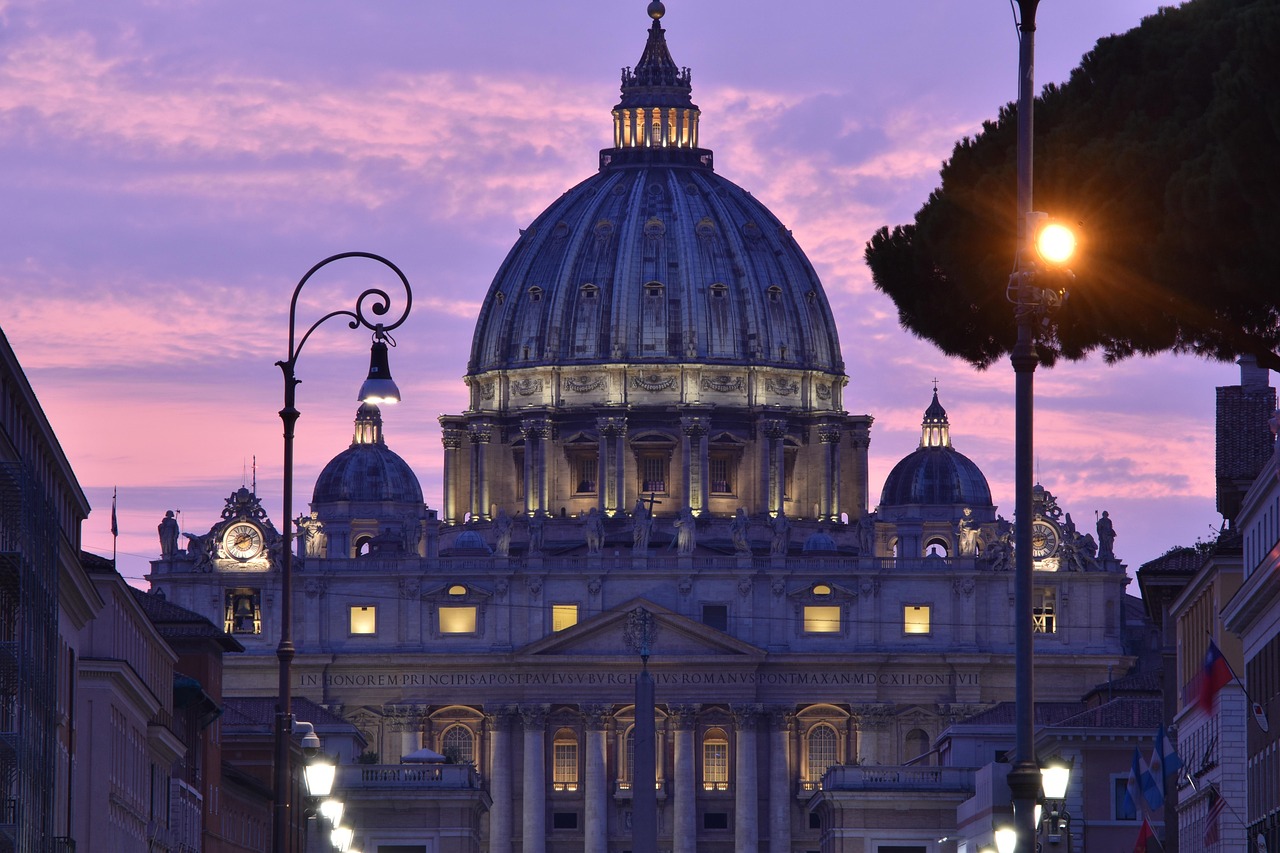
Pope Leo has issued what observers are calling the most direct papal acknowledgment yet of the Catholic Church’s historic role in legitimizing slavery, buried within a sweeping new encyclical on artificial intelligence and human dignity. In Magnifica Humanitas, a wide-ranging encyclical primarily addressing artificial intelligence and Catholic social doctrine, Pope Leo acknowledged both the Church’s delay in condemning the practice of slavery and its historic involvement in legitimizing it. He wrote that it is “impossible not to feel deep sorrow when contemplating the immense suffering and humiliation.” This “sincere” pardon is not merely a symbolic gesture; it represents a profound moment of moral reckoning for one of the world’s most influential religious institutions. The Catholic Church, with its centuries-long history of shaping moral, social, and political norms, cannot escape scrutiny for its role in one of humanity’s gravest injustices.
This commentary explores the historical context of the Church’s involvement in slavery, the significance of Pope Leo’s apology, the way forward beyond apology, and the broader implications.
The Church and slavery
The most shocking evidence of complicity lies in the papal decrees of the 15th and 16th centuries. Referred to as the Papal Bulls, decrees such as Dum Diversas (1452) and Romanus Pontifex (1455) authorized Christian rulers to conquer non-Christian lands and enslave their inhabitants. These decrees provided theological justification for European colonial expansion and the transatlantic slave trade. In effect, the Church sanctified practices that led to the mass enslavement of Africans and indigenous people, embedding slavery within the moral framework of Christendom.
Although voices within the Church, including Bartolomé de las Casas, condemned the brutality of slavery, the Church’s condemnation came late. It was not until the 19th century that the Church began to issue stronger statements against slavery, long after abolitionist movements had gained traction in secular societies. Pope Leo’s acknowledgement of the delay is an admission of moral failure as the Church lagged behind in defending one of the most fundamental human rights – freedom.
The significance of the apology
Pope Leo’s apology is significant for several reasons for me as a staunch African Catholic and other Africans. By admitting fault, the Church as a human institution confronts its complicity in a system that inflicted immense suffering. This is a recognition that the Church’s teachings and authority were used to legitimize oppression.
The apology situates the Church within the broader narrative of slavery, acknowledging its role rather than distancing itself from history. This honesty is crucial for credibility, as denial or minimization would only deepen the public’s mistrust in God’s Church. By addressing past wrongs, the Church strengthens its moral authority in the present. A faith community that refuses to confront its sins risks hypocrisy and irrelevance.
The way forward beyond apology
While Pope Leo’s apology is commendable, it raises pressing questions about the adequacy of acknowledgement without action. Apologies though necessary are not sufficient if not accompanied by concrete measures.
The Church must consider whether reparations are appropriate. This could take the form of financial support for communities historically disadvantaged by slavery, investment in education, or initiatives that address systemic inequalities. Without tangible commitments, the apology risks being symbolic rather than transformative.
Additionally, the Church also has a responsibility to ensure that its history with slavery is taught honestly within Catholic institutions. This includes seminaries, schools, and universities. By confronting its past openly, the Church can foster critical reflection among future generations of clergy and the lay faithful.
Slavery was not confined to Europe; its effects were global, particularly in Africa and America. The Church must therefore engage with communities across affected continents, listening to their experiences and tailoring its reconciliation efforts to diverse contexts. A universal apology must be matched by localized actions.
The Church must reflect on how its doctrine was used to justify slavery. This requires revisiting doctrines of human dignity, freedom, and salvation, ensuring that they are articulated in ways that resist oppression rather than enable it.
Pope Leo’s apology should spark deeper theological renewal. This leaves me with the question, could reparative justice bring about neocolonialism?
The broader implications
The Catholic Church’s apology adds weight to this movement, reminding the world that institutions must confront their histories with all honesty. The apology has implications for contemporary issues of human rights. All forms of slavery must be abolished, modern forms of exploitation; human trafficking, forced labour, and systemic racism still persists. By being remorseful about her past, the Church also positions itself to speak more credibly on present day injustices. The apology is not only about history; it’s about shaping a moral vision for the future.
Talking of concrete measures, three days after the Pope’s apology, the French National Assembly in a 254-0 decision voted to repeal the Code Noir, a 1685 decree issued under King Louis XIV that regulated slavery in France’s colonies. The Code Noir classified enslaved Africans as property, stripped us of legal personhood, codified racial hierarchy into law. Although slavery itself was abolished in France in 1848, the Code Noir — enacted in 1685 — remained on the books for nearly two centuries. Its repeal is therefore symbolic as the law had long ceased to have legal force yet its presence was a reminder of France’s colonial complicity in slavery and racial discrimination.
Just as the Church’s condemnation of slavery came late after abolitionist movements had already reshaped moral consciousness, France’s repeal of Code Noir arrived long after slavery had ended. In both cases, institutions acknowledged their failures belatedly. At the same time, both actions carry undeniable significance reason being that they reshape collective memory and signal institutional willingness to confront uncomfortable truths.
Conclusion
Pope Leo’s apology represents a watershed moment in the Catholic Church’s confrontation with its past. By admitting both delay and complicity, the Church has taken a necessary step toward moral clarity. Yet, the true meaning of this apology would lie in its aftermath. Whether it inspires meaningful actions that honours the memory of those who suffered under slavery and advances the cause of human dignity today.
The Church’s credibility depends not only on its ability to preach justice but also on its willingness to embody it. Pope Leo’s words must therefore be the beginning, not the end, of a journey toward reconciliation. I opine that if the Church can translate apology into action, it may redeem its moral authority and contribute to healing the wounds of slavery.
In the end, the apology is both a confession and a call to action. It reminds us that institutions just like humans, must confront their sins in order to move forward. For the Catholic Church, this moment is an opportunity to show that faith is not only about words but deeds, deeds that affirm the dignity of every human being, past, present, and future. For Africa, we have arrived to demand what was taken from us.
Cecilia Akoko Attiogbe Atayi is a JURIST staff writer and a law student in her final year of study at the University Cape Coast Faculty of Law.
