
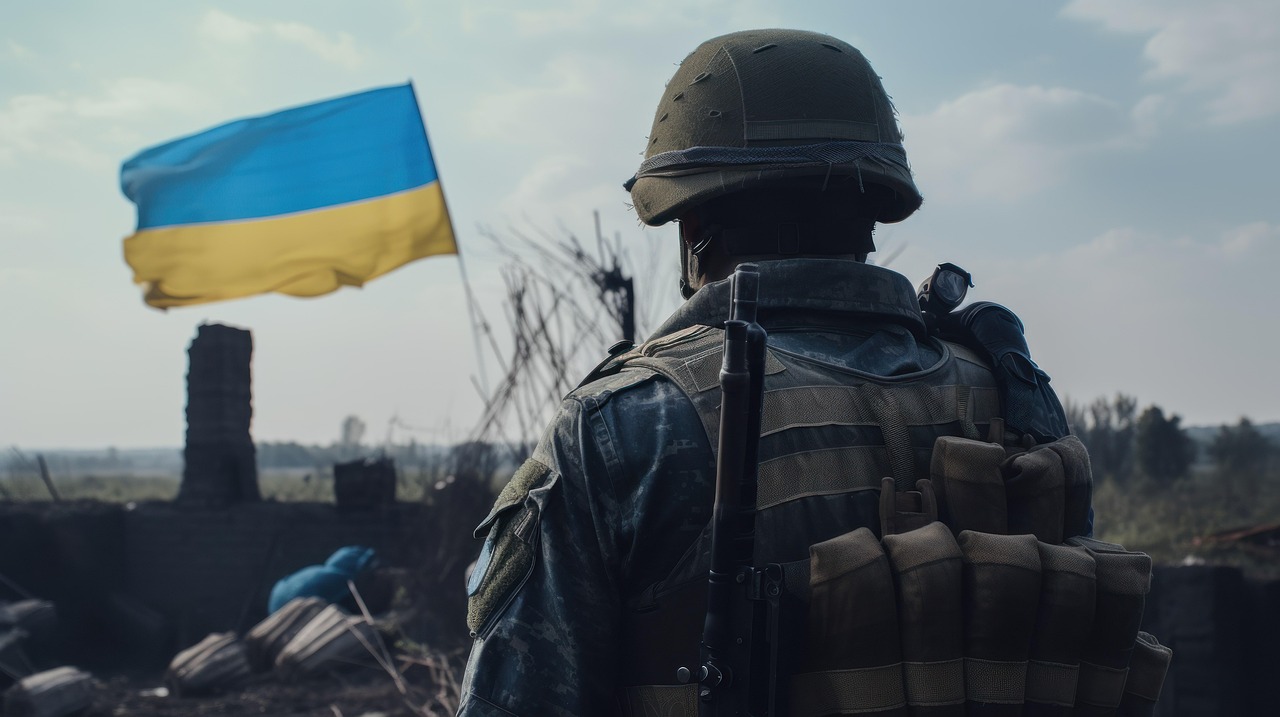
The reported executions of four Ukrainian prisoners of war (POWs) by Russian forces near the village of Veterynarne in the Kharkiv region on April 11 stand as a clear and prosecutable violation of the Geneva Conventions.
According to Ukraine’s Prosecutor General’s Office, Russian forces stormed Ukrainian positions and executed four as-yet unidentified soldiers, deliberately shooting them with automatic weapons.* These extrajudicial killings were allegedly carried out during the Orthodox Easter ceasefire, a period ostensibly dedicated to humanitarian restraint.
The Third Geneva Convention (1949) establishes unequivocal obligations toward prisoners of war. Captured combatants must be: treated humanely at all times; protected from violence, intimidation, and reprisals; removed from the battlefield and provided adequate care; and repatriated after the cessation of active hostilities.
Summary execution is expressly prohibited. The deliberate killing of POWs would constitute a grave breach—the highest category of war crime under international humanitarian law. The Ukrainian Prosecutor General’s Office has opened a pretrial investigation under Article 438 of Ukraine’s Criminal Code, which mirrors these international prohibitions by criminalizing cruel treatment of POWs resulting in death.
The alleged killings occurred during a Kremlin‑announced Easter truce, a symbolic period intended to reduce violence. Instead, Russian forces launched assaults across the frontline and executed unarmed prisoners immediately after capture. Ukrainian authorities have emphasized that such executions are not isolated incidents but part of an established pattern of Russian conduct. This timing underscores the contempt shown for both religious observance and humanitarian norms, further aggravating the criminality of the act.
Ukrainian officials have documented at least 337 executions of Ukrainian POWs by Russian forces as of late 2025, demonstrating a recurring pattern rather than aberrant behavior. Ukrainian authorities describe these executions as “systemic” and implicitly sanctioned by Russian command structures, strengthening the case for command responsibility under international criminal law.
This incident does not exist in isolation. While each conflict must be judged on its own evidence, the pattern observed in Ukraine aligns with a long‑documented historical trajectory. From World War II through Afghanistan, Chechnya, Syria, and now Ukraine, Soviet and later Russian forces have repeatedly demonstrated a willingness to ignore or subvert the laws of armed conflict. The deliberate killing of POWs in 2026 is consistent with this legacy of impunity and an operational culture that prioritizes intimidation and brutality over professional military norms.
The repeated execution of prisoners — unarmed, hors de combat, and entitled to protection—reflects a military ethos fundamentally at odds with the professional standards expected of modern armed forces.
The summary execution of four Ukrainian POWs during the Easter ceasefire, if confirmed, constitute a grave breach of the Geneva Conventions and therefore a war crime. The act is not only illegal but emblematic of a broader pattern of systemic violations by Russian forces in the 21st century’s “dirty little wars.” These killings underscore the urgent need for sustained international accountability mechanisms capable of addressing both individual and command‑level responsibility.
The deliberate killing of unarmed prisoners is not the conduct of a professional military bound by law and honor. It is the conduct of forces operating outside the norms of civilized warfare — reinforcing the moral and legal imperative for justice.
David M. Crane is a global leader in international criminal justice and the founding Chief Prosecutor of the UN Special Court for Sierra Leone. He has spent decades shaping accountability mechanisms around the world, including serving as a driving architect behind the Special Tribunal for the Crime of Aggression against Ukraine. Crane is a distinguished scholar of international law, a former senior U.S. national security official, and a leading voice on the rule of law, state responsibility, and the legal limits on the use of force.
*Editor’s note: Given the difficulty of reporting amid the fog of war, the incident has not been independently verified, but has been documented by Ukraine’s Prosecutor General’s Office, which has opened a formal pretrial investigation.
