
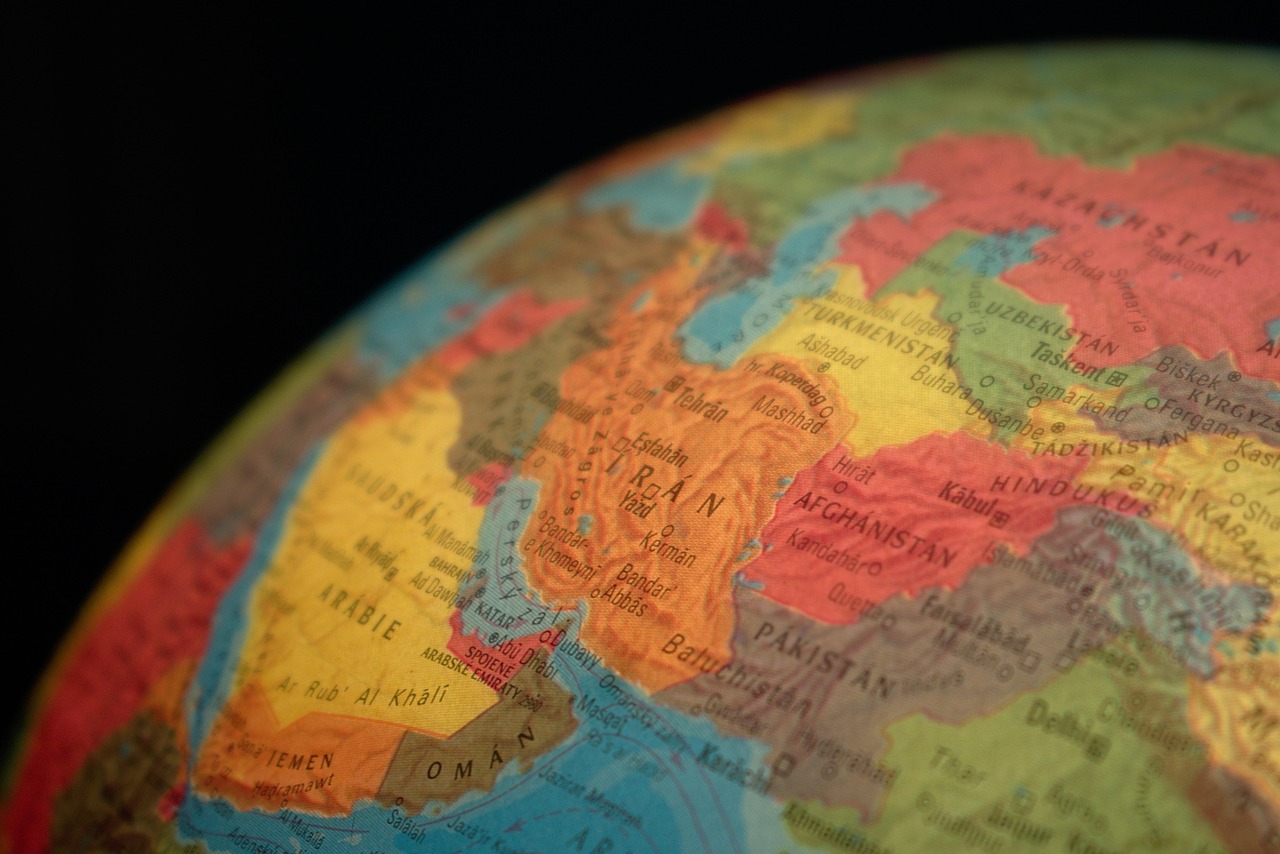
A whole civilization will die tonight, never to be brought back again. I don’t want that to happen, but it probably will.
—US President Donald Trump via social media
Modern international justice is the product of lessons learned from civilizational destruction. And the language of civilizational destruction has a particular resonance in international law. It is the language that prompted the drafting of the Genocide Convention in 1948, the language of Srebrenica and Rwanda, the language that the post-war legal order was built to ensure no leader could speak again with impunity. International justice exists in large part to prevent such language — a fact that has ensured modern leaders, particularly those with the capabilities of carrying out genocide, don’t openly flout such intentions. An inability to prove genocidal intent has been the undoing of many would-be international criminal cases.
So what does it say that US President Donald Trump began the day Tuesday with a threat to end Iranian civilization?
The post, published on Truth Social in the leadup to Trump’s self-imposed deadline for Iran to reopen the Strait of Hormuz, went on: “However, now that we have Complete and Total Regime Change, where different, smarter, and less radicalized minds prevail, maybe something revolutionarily wonderful can happen.” He closed with “God Bless the Great People of Iran.”
Inverting International Justice’s Intent Problem
For decades, the central frustration of international criminal law has been the difficulty of proving what leaders intended before engaging in atrocities. At the International Criminal Tribunal for the former Yugoslavia (ICTY), the conviction of Radislav Krstić for genocide at Srebrenica hinged on intercepted military communications pieced together to establish what commanders knew and ordered. At the International Criminal Court (ICC), the genocide case against Omar al-Bashir nearly collapsed at the arrest warrant stage, when the Pre-Trial Chamber concluded that evidence of systematic attacks, destruction, and displacement did not make genocidal intent the only reasonable inference — a standard the Appeals Chamber later ruled was erroneously high. The charge was reinstated. Al-Bashir has never been tried. Slobodan Milošević died mid-trial, his intent still unresolved, after prosecutors spent years building chains of secondhand testimony connecting his authority to acts on the ground. His defense had argued there was “no evidence of acts and/or conduct of the Accused which could be interpreted as declarations of an intention to commit genocide.” Proving what leaders meant has always been among the highest hurdles for international criminal prosecutors to overcome.
Trump’s Truth Social post inverts that problem entirely. The intent requires no deciphering; it is announced, in writing, by the principal actor, to an audience of millions, on the morning of the threatened act.
To be clear, the language itself isn’t novel; leaders have made eliminationist threats before, including in recent decades. Mahmoud Ahmadinejad was widely reported to have called for Israel to be “wiped off the map” (though translators and scholars have since concluded this was a mistranslation of a statement closer to calling for the Israeli regime to “vanish from the page of time”). Kim Jong Un has ordered his military to “thoroughly annihilate” the United States and South Korea. North Korea routinely promises to turn its enemies into “seas of fire.” The international community has long understood these statements as dangerous but largely performative threats issued by leaders who either lacked the means to carry them out or had no intention of doing so. But spoken by a president whose military is actively striking the country in question, “a whole civilization will die tonight, never to be brought back again” is not bluster from a leader without the means. It is a statement of intent by the one person on earth with the operational capacity to carry it out, on the day he has vowed to do so.
Spoken of a nation of 88 million people, “a whole civilization will die tonight, never to be brought back again” is as close to an explicit declaration of civilizational destruction as any modern leader has made. “Never to be brought back again” is the language of erasure — not that of proportional force or strategic targeting. If these words appeared in a case file at The Hague, they would be the most damning exhibit in the prosecutor’s brief.
They will, of course, never appear in a case file at The Hague.
The Genocide Convention defines genocide as acts committed “with intent to destroy, in whole or in part, a national, ethnical, racial or religious group, as such.” Whether this and other statements Trump has made on Iran would satisfy those criteria could be debated. But the point is that the debate is even happening — that a sitting US president has brought us to the place where the language must be parsed against the Convention’s definitions at all.
The Law Is Clear
The legal case against Trump’s threats barely requires argument. Additional Protocol I to the Geneva Conventions prohibits acts or threats of violence whose primary purpose is to terrorize civilians. In parsing the meaning of “Definite Military Advantage,” the DOD’s own Law of War Manual states that “diminishing the morale of the civilian population and their support for the war effort does not provide a definite military advantage.” Over 100 international law scholars have signed a letter condemning US strikes on Iran as potential violations of the UN Charter and international humanitarian law.
And Trump’s rhetoric has only escalated. Over Easter weekend, he promised “Power Plant Day, and Bridge Day, all wrapped up in one” and warned Iranians they would be “living in Hell.” On Monday, he spoke during a press conference of a plan to destroy every bridge and power plant in Iran. Asked whether he was concerned about committing war crimes, he replied: “I’m not at all concerned.”
A power plant may sometimes qualify as a lawful dual-use target under careful, case-by-case legal review. But the president has not threatened to strike specific infrastructure after rigorous proportionality analysis. He has threatened to annihilate all of it. And now he’s added “a civilization” to the list of potential targets.
So the law is clear. The harder question is whether the clarity matters any more.
Why It Won’t Matter and Why It Will
The international enforcement picture is bleak and familiar. The United States is not a party to the Rome Statute. And despite Washington’s historic role in building the post-war international legal architecture, the current administration has made no secret of its hostility toward the institutions that architecture produced. The Trump administration has imposed sanctions on ICC officials, including nine judges and the chief prosecutor. The UN Security Council, the body empowered to refer situations to the ICC regardless of membership, is structurally incapable of acting against a permanent member with veto power.
While war crimes carry universal jurisdiction in theory, the principle has historically been exercised almost exclusively against officials of weak or defeated states — a former Chilean dictator and various other accused war criminals. No state has ever used it against a sitting leader of a major power, let alone the United States, whose military boasts the highest budget in the world.
The international legal order was designed to hold leaders accountable for exactly the kind of rhetoric Trump has unleashed since beginning his ongoing and deeply unpopular war with Iran. It was not designed to hold accountable the leader of the state most responsible for creating it.
But to stop at enforcement misses the deeper damage. The post-World War II legal order did not depend solely on tribunals. It depended on a normative commitment — what the international law scholar Thomas Franck called the “compliance pull.” States followed IHL not only because of enforcement but because violating it carried reputational cost, because military legal cultures internalized its constraints, because the rules distinguished what qualified as civilized conduct.
Each of these mechanisms is now under strain. The Defense Department under Secretary Pete Hegseth has removed senior military lawyers and replaced judge advocates general, dismantling the institutional culture that translated IHL into operational constraint. And the president’s rhetoric — “I’m not at all concerned about war crimes” — makes the norms into a punchline.
The Blessing and the Erasure
Trump’s post ends with “God Bless the Great People of Iran.” He blesses the people whose civilization he has just vowed to end. Jarring though this may sound, it aligns with Trump’s narrative. From the start of the war, the administration has argued that Iranians welcome the bombing — that they are, in Trump’s words from Monday, “willing to suffer” for their freedom.
It is hard to square the idea that this was all for the Iranian people with the reality that a regime was ousted without a process in line to replace it. And that’s leaving aside the threats to end their civilization. The words appear to have rung universally hollow; with civilian casualties mounting, ordinary Iranians are reportedly forming human chains around power plants.
And even if we were to give the White House the benefit of the doubt, IHL does not contain a liberation exception. The prohibition on terrorizing civilians does not bend for benevolent intent.
But the post’s structure — annihilation, then blessing — reveals something about how civilizational destruction has always been narrated by those who carry it out. The architects of such destruction have rarely described themselves as destroyers. They have spoken of liberation, of purification, of painful but necessary transformation. The language of blessing and the language of erasure have been companions throughout history.
The post-war legal order was built to ensure that such language, however it was dressed, would be met with accountability. The Genocide Convention, the Geneva Conventions, the Rome Statute — these instruments exist because the international community decided that announced civilizational destruction, however the announcer frames his intentions, demands a legal answer.
As time wears on and we determine whether these threats portend action, the question for international law is not whether the president’s words violate its provisions. They do. The question is what the law becomes when its clearest case is also its most unanswerable one, when the most powerful state in the system produces the most damning evidence of intent imaginable, and the system can do nothing but watch.
