
 Commentary
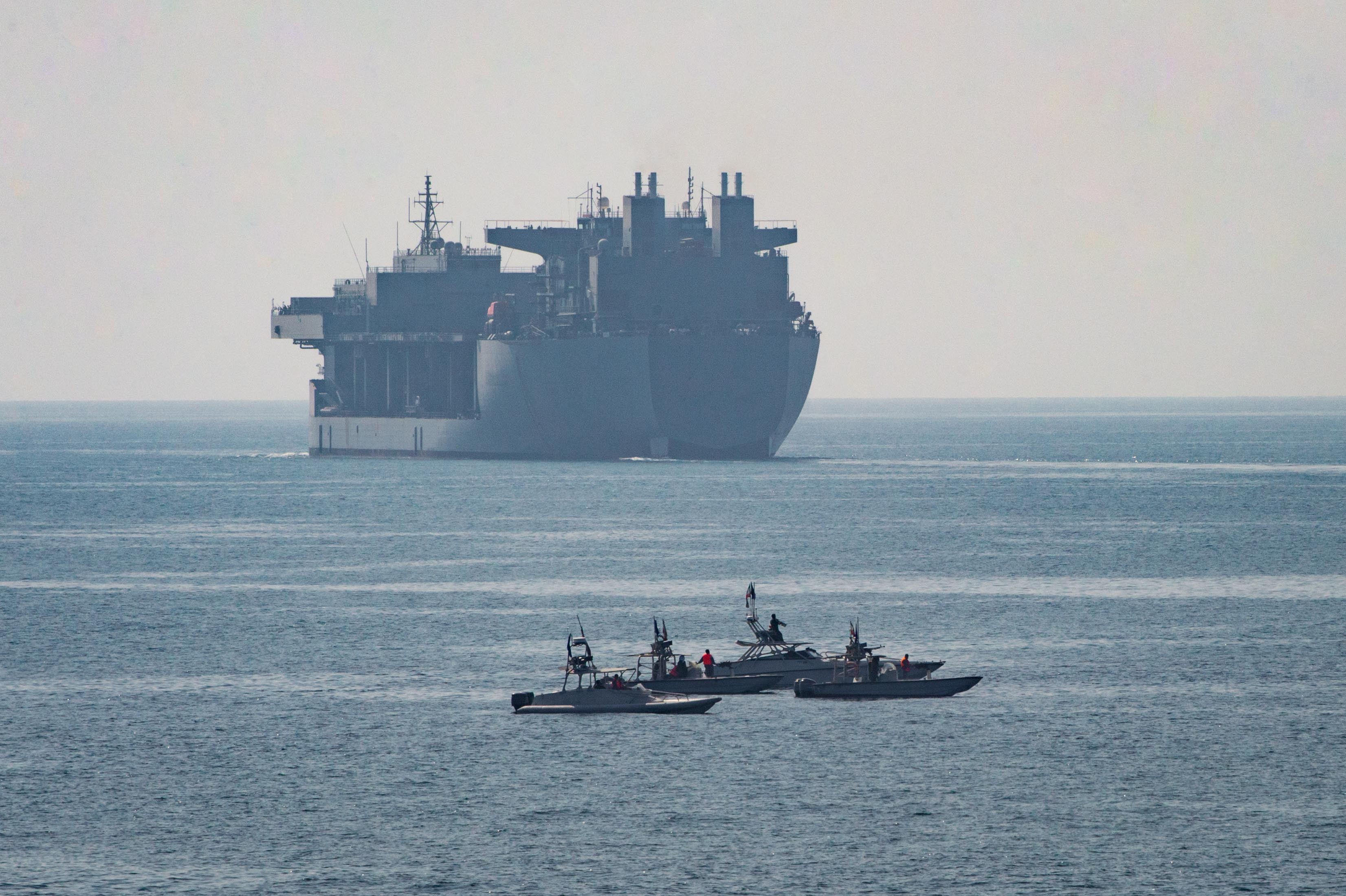
The current war in West Asia, now in its second week following US and Israeli attacks on Iran beginning February 28, 2026, has rapidly escalated beyond the belligerents, imposing severe indirect burdens on neutral states. On 11 March 2026, Iranian retaliatory actions, missile and drone strikes against Israel, US bases, and Gulf allies, spread to commercial shipping, with 3 to 6 neutral-flagged vessels in or around the Strait of Hormuz struck by projectiles or drones (Thailand-flagged Mayuree Naree required crew evacuation). Iran has laid mines, imposed a de facto ‘permission-only’ transit regime, and has now effectively shut down nearly all commercial shipping, including 20% of the world’s seaborne trade in crude oil and considerable LNG volumes transiting this vital maritime chokepoint. Prices of Brent crude have soared past $100 per barrel, having earlier peaked near $120 amid warnings of a further spike to $200, fueling global inflationary pressures and heightening risks to energy, fertiliser, and essential supplies.
Neutral states such as India, China, Japan, and South Korea now face acute humanitarian and economic fallout as major importers inextricably dependent on Hormuz transits, with thousands of international crew members caught in the crossfire. In India alone, 28 Indian-flagged ships with 778 seafarers are stranded in the Persian Gulf, and their right to life and safety is under immediate threat amid raised risks. Shipments of liquefied petroleum gas have also been affected, leading the government to consider rationing by invoking the Essential Commodities Act. Soaring fuel and fertiliser prices disrupt food security and farmer incomes, with global ripples including European fertiliser delays and LNG vulnerabilities in Asia. Beyond energy, attacks on desalination infrastructure in Gulf states have threatened the water supply of millions who depend on such plants.
Although international humanitarian law regulates behaviour in armed conflict and the UN Charter governs the legality of using force, the crisis highlights crucially insufficient protection for neutral states. Four legal frameworks are central to understanding what neutral states are owed — and what they are being denied: freedom of navigation in accordance with UNCLOS, the law of neutrality, the prohibition on indiscriminate attacks (and its extraterritorial human rights implications), and state responsibility, which urges the evolution of mechanisms to protect innocent populations in an interdependent world.
Freedom of Navigation Under UNCLOS
International law has established uninterrupted commercial navigation as the bedrock of global order, enshrined in the United Nations Convention on the Law of the Sea. UNCLOS Articles 38–44 guarantee all ships the right of transit passage through straits used for international navigation, including Hormuz. Article 87 further strengthens the principle of freedom of navigation in the high seas. These are not abstract ideals; they exist to ensure that states have regular access to goods and energy, no matter what conflicts arise elsewhere.
Yet the current situation in the Strait of Hormuz constitutes a clear violation. Iran’s use of sea mines and attacks against neutral-flagged tankers, including vessels connected to Indian interests, along with the implementation of a “permission-only” transit regime, directly contravene these legal guarantees. This is not simply war tactics between belligerents but a systematic disruption of the sovereign rights of neutral states to obtain the necessities of life for their nationals. When a chokepoint that delivers some 20 per cent of seaborne crude oil and significant volumes of LNG is disrupted, it isn’t just a question of freight rates or insurance premiums but whether hundreds of millions will have access to food, fuel and basic living standards.
Law of Neutrality and Right to Peaceful Commerce
The law of neutrality, codified most exhaustively in the 1907 Hague Conventions (V and XIII), was historically intended to insulate non-belligerent states from the effects of armed conflict. Among its founding principles is the right of neutral states to maintain peaceful trade and commerce with all States without interference or coercion. The current conflict has exposed the limits of this law. Attacks on neutral merchant vessels or the effective closing of a maritime chokepoint render these protections illusory, especially in a world where global supply chains rely on the unhindered movement of goods through narrow waterways.
Neutral states such as India that depend on Hormuz for a significant share of their crude oil imports face an impossible situation. Rerouting ships around Africa is economically ruinous and logistically untenable; allowing delays or losses means hardship to ordinary citizens. The result is a deep disconnection: the law safeguards the theoretical interests of neutral countries but fails to protect their civilian societies from privation and insecurity. The drafters of the Hague Conventions in 1907 could hardly have anticipated a globalised, interdependent world in which disrupting neutral commerce would send shockwaves through diplomatic corridors and far beyond, into billions of people’s daily lives.
The Prohibition of Indiscriminate Attacks and its Extraterritorial Human Rights Ripple
Modern international humanitarian law is not silent on the dangers of attacks whose consequences reach far beyond the conflict zone. Additional Protocol I to the Geneva Conventions, Articles 51(4) and 51(5), explicitly prohibit attacks “which employ a method or means of combat, the effects of which cannot be limited as required by this Protocol,” and those “which may be expected to cause incidental loss of civilian life, injury to civilians, or damage to civilian objects, or a combination thereof, which would be excessive in relation to the concrete and direct military advantage anticipated”. Targeting commercial shipping in the Strait of Hormuz with the knowledge that it will trigger energy, food, and economic crises thousands of kilometres away fits squarely within the definition of an indiscriminate attack. The peripheral consequences — from stranded seafarers to potential food shortages in third-party states — are not accidental but a critical part of the strategy of economic coercion. Developments in international jurisprudence suggest that emerging principles are prepared to recognise the extraterritorial applicability of IHL and human rights. The ICJ, in the advisory opinion on the Legality of the Threat or Use of Nuclear Weapons, noted that the conduct of hostilities must be compatible with the requirements of the International Covenant on Civil and Political Rights (ICCPR), especially the right to life. The International Criminal Tribunal for the former Yugoslavia (ICTY) and the UN Human Rights Council, in recent reports on economic warfare, have emphasised that deliberate economic blockades or attacks on civilian infrastructure may violate both IHL and human rights law.
These developments in international law suggest that when the harm to civilians in neutral states is both foreseeable and avoidable, belligerents cannot absolve themselves of responsibility simply because the victims are outside the immediate conflict zone. However, international law’s existing boundaries were not designed for an interdependent world where high-tech weaponry can inflict harm far beyond the battlefield.
Law of State Responsibility
The International Law Commission’s Articles on State Responsibility lay down the doctrinal basis for holding states responsible for internationally wrongful acts. Article 1 states that every internationally wrongful act of a State entails the responsibility of that State. Article 2 provides that a breach requires attribution to the State, i.e. that an international obligation has been violated by a particular State. Most notably, Article 31 obliges states responsible for wrongful acts to make full reparation for the injury caused, including “any damage, whether material or moral,” and the official commentary makes clear this includes “economic and social” harm.
In light of these principles, Iran has direct responsibility for attacks on neutral shipping. But accountability does not end there: the United States and Israel, whose actions foreseeably escalated hostilities, also bear responsibility under international law. Yet, there a critical gap remains: there is no mechanism for neutral States like India to seek reparation for downstream human rights violations suffered by their people. Recent events have exposed the doctrinal vacuum. The framework doesn’t extend beyond State-to-State injury, and as a result, the indirect victims — in this case, the seafarer, the farmer, the ordinary citizen — are left with no remedy or recognition.
Neutral states must raise their voice and condemn attacks on commercial shipping and civilian infrastructure. As a major importer through the Strait of Hormuz and a steadfast advocate for non-alignment and human rights, India is uniquely positioned to effect change. It can push for a new international effort, be it through a United Nations General Assembly resolution or an Additional Protocol to UNCLOS or the Hague Conventions, thereby acknowledging that belligerents have indirect human rights obligations to the populations of neutral states. In a globalised world, it is no longer neutral to remain silent in the face of such suffering. It is time to bridge the gap between the law’s letter and its lived consequences.
Shobhitabh Srivastava is an Assistant Professor of Law at India International University of Legal Education and Research in Goa, India. He specializes in corporate law, international trade law, and alternative dispute resolution. His doctoral research focuses on international commercial arbitration. He is a member of the Institute of Transnational Arbitration (ITA) and serves on the editorial boards of several legal journals.
