
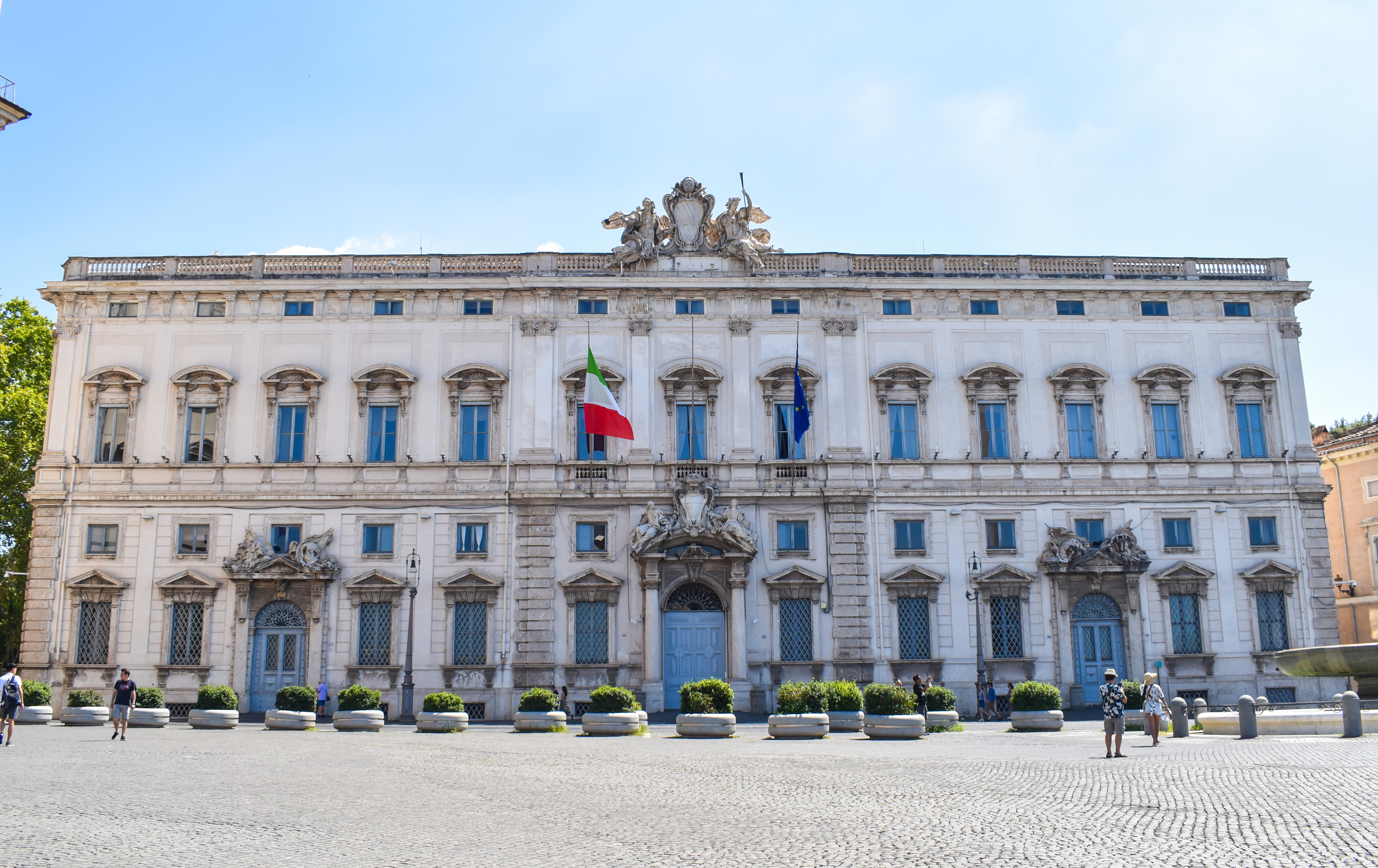
Do you approve the text of the law revising Articles 87, paragraph 10, 102, paragraph 1, 104, 105, 106, paragraph 3, 107, paragraph 1, and 110 of the Constitution, approved by Parliament and published in the Official Gazette no. 253 of 30 October 2025 under the title ‘Provisions Governing the Judicial System and the Establishment of the Disciplinary Court?’
This garble of norms, incomprehensible to most, is currently subject to a fierce political debate in Italy. A constitutional reform that, to anyone not privy to Italian political history, would seem like a fairly innocent restructuring of magistrates’ career paths, is in fact fraught with political baggage.
In the world of politics—which is known for many things, but perhaps not its coherence—it is not entirely rare to see two opposing sides accusing each other of the same thing. The debate over the upcoming constitutional referendum on judicial independence in Italy is no different: both sides claim the other is trying to politicise the judiciary, albeit in different manners. Which is correct?
Italy will hold a constitutional referendum on 22-23 March, following the procedure established for approbative referendums of constitutional revisions under article 138, over a controversial reform of the justice system that aims to amend Title II and IV of Part II of the Constitution. It is only the fifth constitutional referendum in the history of the Italian Republic. One of the key provisions of the reform is the separation of careers for judges and prosecutors, meaning they would no longer be able to switch between the two roles and must choose which to follow (although some have claimed this is a front for the other, more controversial changes).
The proposal from Prime Minister Giorgia Meloni’s right-wing government comes with significant opposition from the national association of magistrates (ANM) and the center-left opposition. These players claim the reform will weaken the judiciary, making it susceptible to political pressure, and pave the way for increased government control over those who investigate crimes. For example, Elly Schlein, leader of the Democratic Party (PD), stated the reform “serves this government to have free rein and put itself above the laws and the constitution,” and Giuseppe Conte, leader of the (arguably) center-left Movimento 5 Stelle, said: “They want full powers, and we will oppose them at all costs.”
The right wing, instead, frequently frames the judiciary as being excessively left-wing and pursuing politically motivated rulings against the government’s agenda, a sentiment which, as we will explore, has extremely deep roots in Italian political history.
Meloni is leading one of the country’s most stable governments in years, and her popularity remains higher than when she took office. However, the referendum is a high-stakes bet for the government that could backfire: referendums in Italy can easily morph into votes of confidence in the government, and this one is no different.
A Political History of Judicial Distrust
Attacking the judiciary for alleged left-wing bias is a treasured traditional pastime of the Italian political right. This centrally began after a series of landmark corruption cases that purged the Christian Democratic party in the 1990s – the so-called “Mani Pulite” (clean hands) prosecutions. This saga engineered a lasting right-wing belief that the judiciary behaves like an unelected political actor, and pursues prosecution based on countering certain political agenda. A former prosecutor of these cases, Piercamillo Davigo, asserts that the currently discussed reform is a right-wing political attempt to tame the judiciary, arguing it will damage independence instead of improve it.
Another high-profile example is embodied in Silvio Berlusconi, former prime minister and billionaire media tycoon (some critics would say philanderer, given his propensity for hosting “bunga-bunga” parties). He frequently complained that the 35 criminal cases he faced in his lifetime were motivated by left-wing judges and magistrates, whom he said were a “cancer of democracy” This author questions whether a left-leaning magistrature could really account for thirty-five different cases being opened against the same figure, or whether at least some of them might have been genuine judicial consequences of his personal and political choices. His history makes the currently discussed reform extremely popular with the Berlusconi-founded party Forza Italia.
Meloni herself has levied the same accusations at Italy’s judiciary, accusing magistrates of blocking her government’s plans and acting as a sort of second political opposition to the government, a sentiment shared by Defense Minister Guido Crosetto and Deputy PM Matteo Salvini, who has faced repeated prosecution over his hard-line anti-immigration policies. The reform comes against a background of recently heightened tensions between Meloni and the judiciary after a court refused to authorise a government plan to build a bridge connecting Sicily to the mainland. The reform also follows a legal back-and-forth over the Italy-Albania migrant deal – courts keep ruling that migrants in Albania should return to Italy, whereas Meloni has used decrees to attempt to circumvent the rulings.
Meloni faces a high political risk here: similar proposals for reform floated during Berlusconi’s first government in the mid-1990s triggered protests and contributed to the collapse of his coalition. Matteo Renzi had to step down after a failed referendum on constitutional reform in 2016.
What the Reform Actually Does
Currently, those wishing to become a magistrate take a single public competition, valid for both positions, and after passing it, decide whether to become a public prosecutor or a judge. They can also decide to switch between the two positions, but can only do so once and within the first nine years of their career. Under the current 1948 Italian constitution, judges and prosecutors jointly form part of a “magistracy”, which, according to Art. 104(1), “constitutes an autonomous order and is independent of any other power.” While Arts. 107(4) and 108(2) still see prosecutors as functionally distinct from judges, the groups are provided with common structures such as the CSM , a self-governing “High Council of the Magistracy” that exercises administrative and disciplinary functions over judges and prosecutors alike.
Overall, PMs and judges are recruited under the same procedure, jointly exercise self-governance in the CSM, and can switch from one path to the other throughout their career. In the right-wing view, PMs and judges therefore develop a sort of camaraderie which skews judges towards sympathizing with PMs (and therefore the prosecution) in trial, or this can alternatively occur when a PM switches to the judging path.
The reform introduces four central changes: i) it creates distinct professional paths for judges and public prosecutors, ii) it separates the single CSM into two judiciary councils, one for judges and one for prosecutors, iii) it creates a new, separate high disciplinary court to handle sanctions against magistrates, instead of letting these be exercised by the two resulting CSMs, iv) it creates a mechanism of appointment by sortition for members of all these bodies.
The structure of the reform itself has led to criticism.
First, it can be questioned whether separation of careers is the real concern here. Preventing career switches seems, at its basis, a reasonable concern, following the aim of safeguarding judicial impartiality. But there is no particular need to do this through constitutional amendment—the Italian constitutional court has previously ruled that the constitution is impartial as to whether career paths should be separate or unitary, meaning separation does not require a constitutional amendment. Additionally, the “Cartabia reform” of 2022 already means magistrates can only switch once in their careers, and, in practice, they do this extremely little (0.5% of serving magistrates switched in 2024). The combination of these factors leads to some scholars’ arguments that this first part of the reform is a façade for ulterior purposes, likely the government’s longstanding gripe against perceived judicial activism as explored before. The supposed career-separation benefit is also invoked across a range of legal fields (including family and immigration law) where there is no question of adversarial justice, and therefore, of prosecutory spirit. Since the first part of the reform is a key driver for a majority of voters tending towards voting in favor, and the reform is frequently being presented as consisting of mainly or only its separation component, one can begin to suspect whether this is a political strategy to garner votes by making reforms a package deal so that more favored changes can muster support for the reform’s other facets.
Second, critics are concerned that the newly created high disciplinary court will be subject to executive control, establishing power over prosecutors. This sentiment is corroborated by the proposal of sortition (drawing by lot) to elect the CSM members and the judges of that court, and the fact that decisions made by the court can only be appealed before the same court, not the Court of Cassation. Under the current mechanism of appointment, two-thirds of the CSM’s members are elected amongst serving magistrates, by the magistracy itself; one-third is elected amongst non-magistrates by Parliament (so-called “lay members”). The proposition of drawing by lot was made to counterbalance “factionalism” among magistrates, the phenomenon that sees the professionals grouping together based on common political ideals and approaches to their profession (the groups range from conservative factions, like Magistratura indipendente, to progressive ones, like Magistratura democratica). The central criticism of factionalism is that it means corporatist allegiances drive self-governance. But while reducing factionalism can certainly be seen as a positive, the concern is that drawing by lot weakens the judiciary and makes it more susceptible to political pressure: judges not being subject to elections means no scrutiny by other magistrates of how judicial members interpret their role and the self-governance mandate, meaning more room for government interference. It can be argued that some representativity in self-governed bodies is to be desired: whilst the relationship between voting and elected magistrates is obviously not the same as the accountability of politicians towards voters, magistrates’ representation is guided by technical considerations, and constitutes the voting magistrate’s assessments of whether a judge’s public statements fall within the acceptable remit of the judiciary’s public role in complex societies. The European Commission previously raised concerns about sortition in its 2024 Rule of Law Report, noting that the method does not guarantee adequate representation of judges being elected by their peers, a key European standard.
The Case for Public Debate
Supporters of the reform argue that career separation is typical of liberal democracies (including Norway, Denmark, the UK, Portugal, the Netherlands etc), while the unitary system is typical of more authoritarian regimes (Turkey, Romania, Bulgaria). They also argue that if de facto there already is a career separation with the Cartabia Reform, there should be no issue in making it de jure. Moreover, they point out, career separation is not necessarily a solely right-wing aim: indeed similar reforms have previously been suggested by a 1990s centre-left coalition under Massimo D’Alema.
Other lines of argument include the impartiality of judges making the judicial system more efficient, reducing the cost of wrongful detention, and reducing political factionalism within the CSM. Supporters tend to claim political bias of the magistrature, frequently citing Berlusconi’s accusations that they are communists or “toghe rosse” (red robes), an expression still used by the Italian right.
Supporters of the reform tend to largely ignore allegations that the reforms mean the judiciary will be subject to executive control, saying that this is fearmongering, that it has no judicial basis as norms enforcing the independence of the magistrature remain untouched, and that the separation of powers is preserved. Reports laying out reasons for voting in favour of the reform (such as this one) tend to focus strongly on the normative plane and on the fact that (this author would add, predictably) the Government has not attempted to subvert any norms laying out the freedom of the judiciary from executive power. It is interesting to note that there is less engagement here with the idea of what might happen in practice±it is unfortunately not a given that the Government would never try to indirectly influence judges for the mere fact that it is constitutionally inappropriate.
On sortition, supporters claim this is a necessary instrument to stop internal politics and electoral campaigns among factions in the CSM, and has received some support from the ANM itself before. Indeed, the degeneration of factionalism as we have seen is something that is admitted as a negative influence on the magistrature even by critics of this constitutional reform. To the critic’s argument that representativity is removed, they respond that the CSM is a constitutional guarantor body and not a political one, not requiring any representativity in the first place. The idea of a CSM as a “Parliament of magistrates” is a theory presented by the progressive elements of the magistrature since the early 70s that replaces the constitutional ideal of the CSM being separate from the judicial order and not a representative of it (Constitutional court judgement n.142 of 1973). Interestingly, they claim that European concerns are principles and not directly applicable norms, and that sortition is nonetheless justifiable to counteract factionalism.
The Case Against
By looking at its structure, we can begin to see how a reform argued to bring about judicial independence by the right, is criticised for damaging judicial independence and increasing political control over prosecutors by the left.
While efforts to reform Italy’s current justice system, which suffers from chronic delays (Europe’s longest, approximately 1000 days to resolve civil and commercial cases), are laudable, others have argued that the reform does not truly address this. Critics say the real goal is to divide and conquer, and that the real motivation is the desire for a suppressed justice system that does not disturb those in command. The prominent jurist Gustavo Zagrebelsky described the reform as “a retaliation by certain politicians against certain judiciaries to shift the constitutional balance in favour of the former’s impunity and to the detriment of the latter’s autonomy and independence”. It is thus argued to be motivated by an opportunistic institutional power grab, rather than a genuine concern for the state of the Italian judicial system. This criticism does seem largely justified once we see that emphasis is less to be placed on the separation of careers, which as we have seen is an extremely minor issue, but more on the elimination of the right of magistrates to freely elect their representatives to the CSM. Some also argue career separation is not an obvious good: both prosecutors and judges’ goal is to reach the judicial truth, and prosecutors are free to request the acquittal of the defendant. Statistics support this: around 50% of the time, judges acquitted the defendants from which the prosecutor had requested a trial.
Another interesting point is that the magistrature, and particularly criminal justice, often receives opposing criticisms. Magistrate Raffaele Cantone argues that judges that are at the same time accused of lacking independence from prosecutors and thus supporting the prosecution’s arguments, and of excessive garantism when rejecting the prosecution. Cantone also observed that criminal justice is on the one hand accused of lacking effectiveness and on the other hand is accused of being too “invasive” with respect to politics.
In support of their arguments, critics of the reform cite statements by Nordio (the minister for justice proposing the reform) himself that they say are a “confession” of the real intention behind the reform and that justifies their concerns. Cited statements by Nordio included that the reform would be useful for the opposition if they were to return to government (“It amazes me that an intelligent person like Elly Schlein doesn’t understand that this reform would also benefit them, if they were to take office”). However, in February 2026, Nordio stated that the reform “will not and must not have political effects” and that if those in favour of the reform were to win the referendum, there would be a dialogue with the magistrature.
Historian Alessandro Barbero levied the view that this is a move the government is using to gain control of the magistrature. He was criticized by fact checkers for misrepresenting the issues posed by the text of the reform. Because of this, the video he used to criticise the reform was removed by Facebook, creating controversy about alleged political censorship. It is not obvious that his concerns of the reform displaying authoritarianism are completely unjustified; many statements by government ministers seem to suggest the reason of the reform was control of the magistrature. On 30 October 2025, Meloni, after denouncing “yet another act of invasion of jurisdiction over the decisions of the Government and Parliament,” stated that “the constitutional reform of the justice system and the reform of the Court of Auditors, soon to be approved by the Senate, are the most appropriate response to this intrusiveness, which will not halt the Government’s action.”
As we have seen, critics strongly denounce sortition as a method of weakening the judiciary institutionally, and leaving election to CSMs up to brute chance rather than a contestable electoral platform.
Reforms purporting to address the Italian judicial system are in general to be welcomed. But this author concludes that the reform appears manifestly problematic in practice, too problematic to vote “yes” with confidence; it is not obvious it will significantly improve the impartiality of the judiciary (since careers are already separate in practice), and it seems to instrumentalise this concern to introduce further, questionable, changes, some of which risk delegitimising magistrates and weakening judicial institutions. There is a real possibility the reform is not motivated by genuine concern for the Italian judicial system, but by a long-standing right-wing grudge against the judiciary, which should not be permitted to rule the decision to bring constitutional change in one of the three central branches of the State.
Sara Bonato is a third-year student in the Law with Italian Law program at the University of Oxford.

