
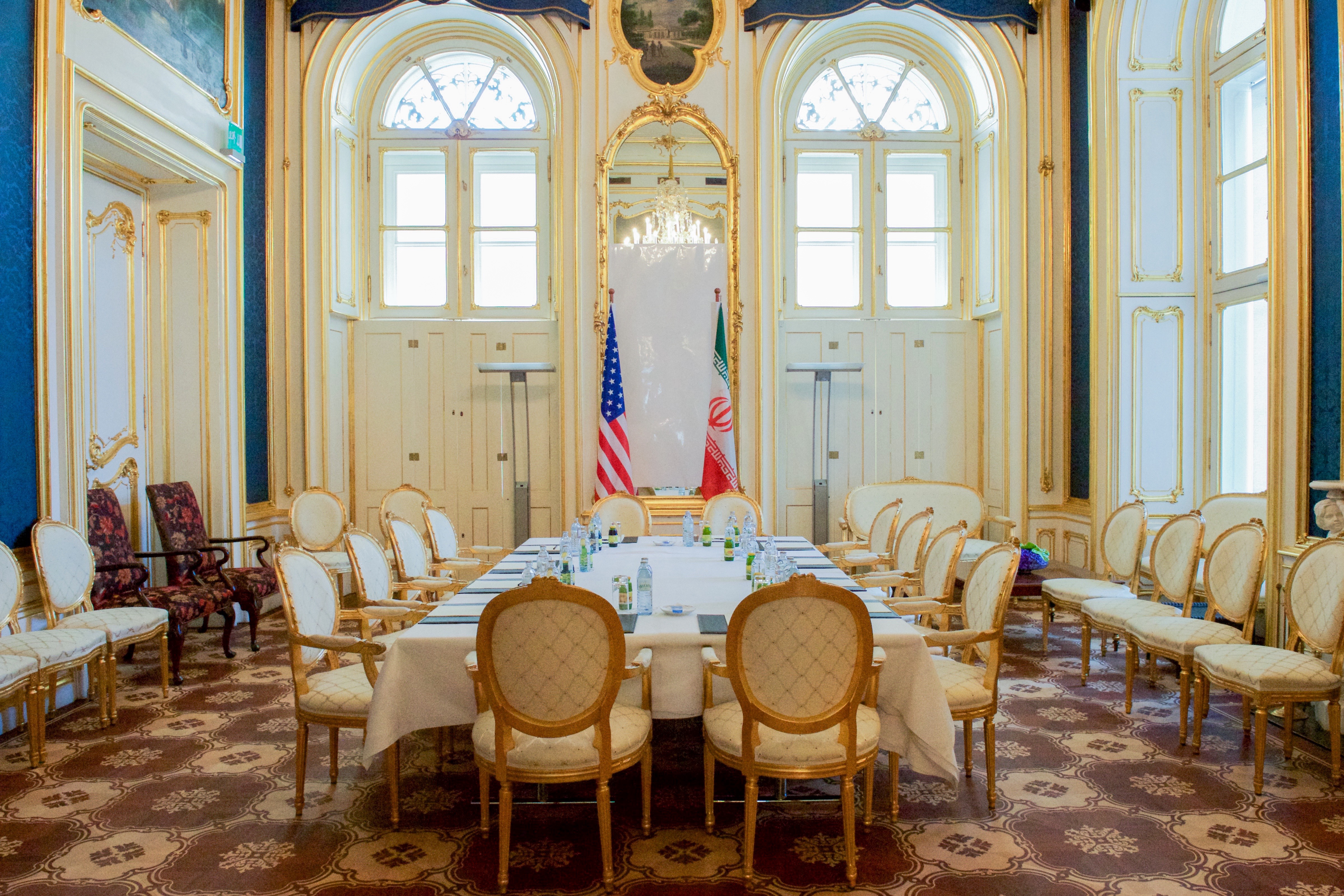
Good faith, a form of honesty, is the lifeblood that flows through contracts, treaties, and negotiations, leading to bargains, ceasefires, and the end of wars. Good faith presupposes sincerity of purpose. When parties come to the table to resolve a conflict, they assume that each side genuinely seeks a resolution. The demands may be excessive, the proposals one-sided, and the outcomes imperfect. Hard bargaining, even aggressive bargaining, does not, by itself, negate good faith. What vitiates good faith is something more fundamental: a party that does not mean what it says or never intends to honor the obligations it induces the other side to accept.
Without good faith, the negotiation process becomes a calculated ruse — like bargaining to buy a ship while secretly preparing to sink it.
This commentary argues that the Trump administration breached good faith in its dealings with Iran, transforming negotiation into strategic misrepresentation and thereby eroding the very foundation upon which diplomatic agreements rest.
Good Faith Breaches
As the US President, Trump has violated good faith twice in dealing with Iran.
In early 2025, following President Trump’s letter to Supreme Leader Ali Khamenei, indirect talks began on April 12, 2025, in Oman, mediated by Omani officials. These initial discussions involved US Special Envoy Steve Witkoff and Iranian Foreign Minister Abbas Araghchi, marking the first major engagement in years. Additional rounds took place on April 19 in Rome, April 26 in Oman (introducing expert-level talks), and May 11 in Oman. By late May, both sides exchanged proposals, with Trump expressing optimism about nearing a deal.
However, negotiations stalled in June 2025. On June 13, Israel launched strikes on Iranian nuclear and military facilities, beginning the Twelve-Day War. The US joined the attack on June 22, targeting key sites including Natanz, Fordow, and Isfahan. Trump described these actions as having “obliterated” Iran’s nuclear program, though assessments indicated significant but incomplete degradation. A few days later, the parties agreed to a ceasefire. However, the pattern would repeat.
Tensions continued into late 2025 due to IAEA disputes and the lack of a restored framework. The second round of diplomatic negotiations resumed in early 2026. On February 6, indirect talks reconvened in Muscat, Oman, with Araghchi calling it a “good start.” A second round took place on February 17 in Geneva, resulting in reported progress on guiding principles. The third and most intense session occurred on February 26 in Geneva, with Omani mediator Badr bin Hamad Al Busaidi noting significant advances, including Iranian concessions on uranium stockpiling and verification. Technical discussions were scheduled for the following week in Vienna.
Despite the mediator’s signals of momentum, on February 28, 2026, the United States and Israel launched a large-scale joint operation, targeting Iranian leadership—including the assassination of Khamenei—remaining nuclear facilities, missile capabilities, and military infrastructure. This escalation happened amid ongoing talks, prompting Iranian retaliation and regional fallout.
The claim that Israel was not bound by the negotiations between the US and Iran, even if technically maintainable, does not restore good faith in either round of negotiation. If anything, such a claim would expose bad faith as a tactic, similar to when someone tricks a victim into a location where an accomplice is waiting to cause harm. Note that good faith demands honesty in fact rather than technical evasion of facts.
Erosion of Credibility
Repeated breaches of good faith erode credibility and harm the nation’s goodwill. Goodwill is not a resource solely for weak nations; it also benefits powerful nations by enhancing their soft power. Now that the media is global in nature, the breach of good faith signals worldwide that it is pointless to make any deal with someone who would do the opposite after creating an expectation or reliance for the other party. Iran or any other state would be highly reluctant to trust the Trump administration again in future negotiations. This loss of goodwill generates distrust.
Suppose Trump were to tell Iran: dismantle your nuclear program, destroy your missiles, and we will lift all economic sanctions and guarantee your security against external attack. In light of recent events, the Iranians would be justified in questioning whether such assurances would be honored. They could reasonably fear that once their defenses were eliminated, sanctions might remain in place, or worse, military force might be used to remove the clerical leadership and install a client government. When prior conduct undermines credibility, new promises lose their stabilizing power.
Good faith is inseparable from goodwill. A nation that negotiates in good faith accumulates diplomatic capital, which facilitates future negotiations and even better outcomes. Good faith does not require weakness, surrender, or abandonment of principle. Hard bargaining is a tactic. Good faith is not. It is a structural condition of negotiation; good faith furnishes the assurance that representations are not traps, that commitments are not pretexts, and that reliance will not be punished.
For that reason, good faith negotiation differs fundamentally from warfare. Deception may be a lawful and effective instrument on the battlefield, where surprise and stratagem are expected. But what is tolerated in combat cannot be imported into diplomacy. At the negotiating table, deception is not a strategy; it is bad faith.
Conclusion
Whether a dispute is simple or complex, whether it involves peace or war, once parties sit at the negotiating table, they do so with the assumption of good faith. Negotiators might be stern, unreasonable, demanding, or unwilling to compromise. They may leverage every available advantage. However, they must not misrepresent material facts, deliberately create expectations they plan to defeat, or induce reliance they do not intend to honor. That distinction separates tough bargaining from bad faith.
In its dealings with Iran, the Trump administration gave the impression of trying to find a peaceful solution. However, later actions indicate that military confrontation, not resolution, was the operative objective. Once again, the failure of diplomacy could lead to war, and this does not mean a breach of good faith. If negotiations were only held to mask the war, then it was not true diplomacy but deception.
Breaches of good faith are not signs of strategic brilliance; they violate a basic legal principle recognized in contract law, treaty law, and diplomatic negotiations. Centuries ago, Cicero said: “The foundation of justice is good faith.”
Ali Khan is the founder of Legal Scholar Academy and an Emeritus Professor of Law at the Washburn University School of Law in Topeka, Kansas. He has written numerous scholarly articles and commentaries on international law. In addition, he has regularly contributed to JURIST since 2001. He welcomes comments via email.


