
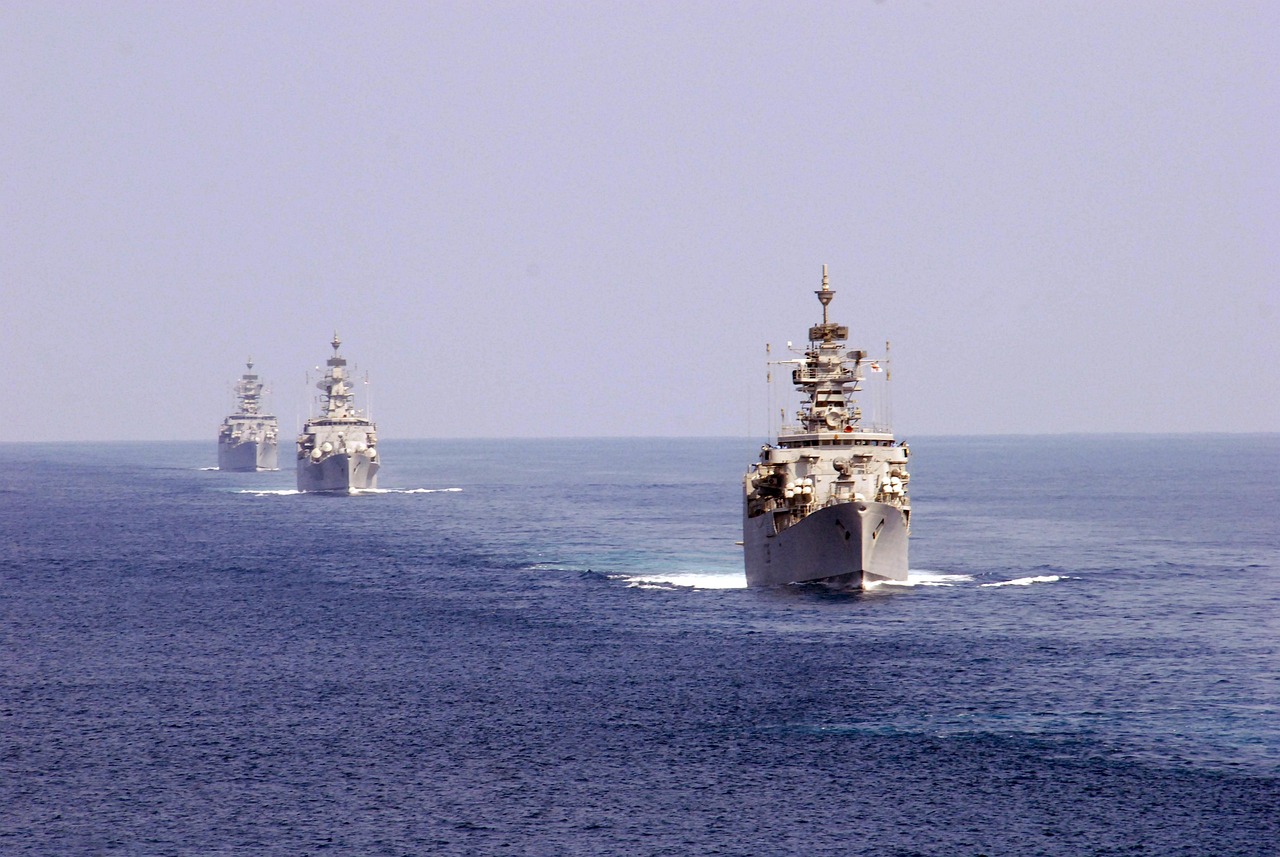
For months, the United States has been carrying out a campaign of escalating force against Venezuela—one that now includes dozens of lethal maritime strikes, a naval blockade of “sanctioned” oil tankers, and, most recently, a drone strike on Venezuelan soil. The administration has acknowledged hitting a dock inside Venezuela that it claims was used to load “boats up with drugs”.
The administration has justified these actions by invoking narcoterrorism, designating Venezuelan gangs as foreign terrorist organizations, and asserting that the United States is in an “armed conflict” with drug cartels.
The Legal Fault Lines
- Use of Force Without UN Security Council Authorization
The UN Charter prohibits the use of force except in two narrow circumstances:
- Authorization by the UN Security Council, or
- Self‑defense in response to an armed attack.
None of the U.S. actions against Venezuela meet these criteria. By way of example, UN human rights experts have explicitly stated that the U.S. naval blockade and related military operations “amount to an armed attack” and that there is “no right to impose unilateral sanctions through an armed blockade”. A blockade is, by definition, a use of force—and without Security Council approval, it is unlawful.
- No Valid Claim of Self‑Defense
The administration has not demonstrated that Venezuela launched or was imminently preparing an armed attack on the United States. Allegations that boats “might” be carrying drugs or that gangs “may” be linked to the Maduro government do not satisfy the strict imminence requirement under Article 51.
The administration’s shifting justifications—terrorist designations, alleged cartel links, and claims that vessels were “headed toward the United States”—do not meet the legal threshold for self‑defense.
- Extrajudicial Killings in International Waters
U.S. strikes on alleged drug boats in international waters have apparently killed at least 83 people. Survivors have reportedly been killed in the water after their vessels were destroyed. These actions raise serious concerns under international human rights law, which prohibits arbitrary deprivation of life and does not permit lethal force absent clear, immediate threats.
- Cross‑Border Drone Strike on a Sovereign State
The strike on a Venezuelan dock is the first acknowledged U.S. land attack in the country. Under international law, sovereignty is inviolable. A state may not use force inside another state without consent, Security Council authorization, or a valid self‑defense claim. None of these conditions appear to have been met.
The Strategic and Moral Costs
When the United States disregards the legal limits on the use of force, it undermines the very norms it relies upon to condemn aggression elsewhere. These actions weaken U.S. credibility in calling out Russia’s invasion of Ukraine, which Moscow also attempts to justify through self‑defense narratives and claims of fighting “terrorists” among other assertions.
If the United States normalizes unilateral force, it signals to authoritarian leaders that aggression is once again an acceptable instrument of statecraft. This erodes the UN Charter’s foundational principle that disputes must be resolved peacefully and that force is a last resort. The United States helped build the post‑war legal order. It cannot selectively abandon it without consequence.
A Call to Recommit to the Rule of Law
The drift toward aggression is not inevitable. The United States can—and must—reaffirm its commitment to the Charter it helped write, to the sovereignty of nations, and to the principle that legality, not expediency, governs the use of force.
America’s strength has never rested solely on its military power. It has rested on its willingness to be bound by law, even when inconvenient. That is the foundation of legitimacy. And it is the only path that preserves the nation’s moral authority in a world where aggression is once again on the rise.
The Trump administration’s aggressive “go it alone” foreign policy flies in the face of 80 years of a rule of law based international order. It is a slippery slope into a dark hole of uncertainty and disruption. Member states of the United Nations must have the moral backbone to call out US aggression against Venezuela.
David M. Crane is a global leader in international criminal justice and the founding Chief Prosecutor of the UN Special Court for Sierra Leone. He has spent decades shaping accountability mechanisms around the world, including serving as a driving architect behind the Special Tribunal for the Crime of Aggression against Ukraine. Crane is a distinguished scholar of international law, a former senior U.S. national security official, and a leading voice on the rule of law, state responsibility, and the legal limits on the use of force.
