
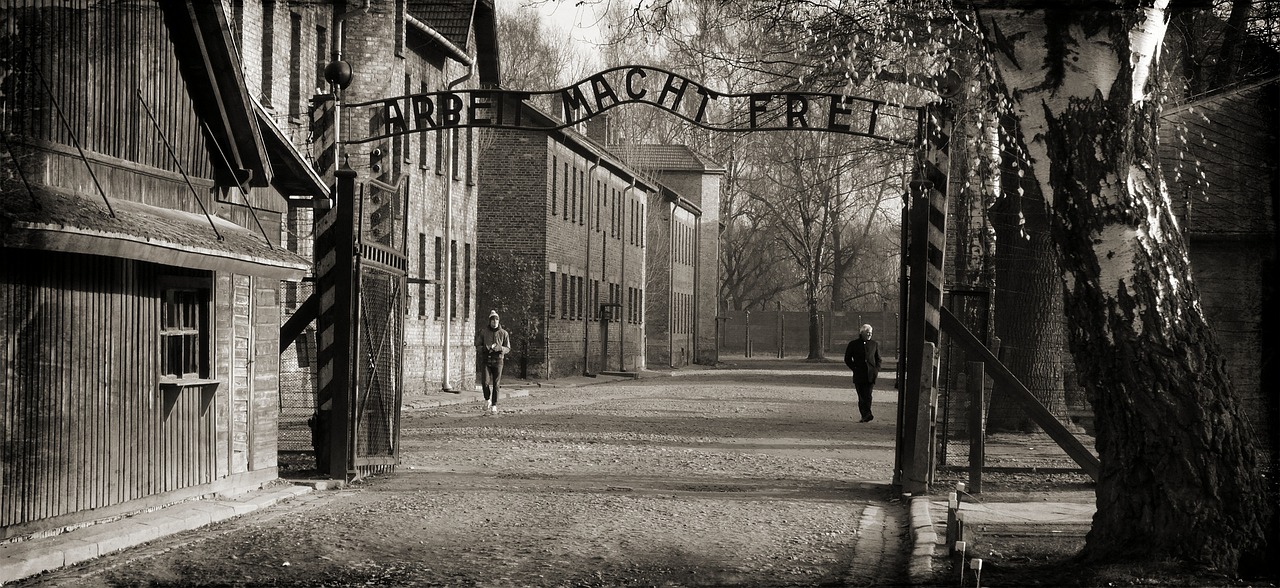
During the very week of International Holocaust Remembrance Day on January 27, the Israeli Knesset continues to debate a monstrous proposed bill to resurrect capital punishment in the ostensible Jewish state. Such a spectacle is nothing short of an abject desecration of that sacred day. Drawing directly on his Holocaust experience, Nobel Laureate and acclaimed author Elie Wiesel famously said near the end of his life of capital punishment that “Death should never be the answer in a civilized society.” Wiesel’s firm stance as a death penalty abolitionist serves as an anthem for the thousands of members of L’chaim! Jews Against the Death Penalty. I am a co-founder of that group, as well as a Jewish prison chaplain who has communicated directly with over a hundred Jews and non-Jews condemned to death. Like many L’chaim members, I am also a direct descendant of Holocaust survivors. We all overwhelmingly lament this human rights disaster in the making for Israel, and by extension for the Jewish world.
The United Nations General Assembly designated January 27—the anniversary of the liberation of Auschwitz-Birkenau—as International Holocaust Remembrance Day, a time to remember the six million Jewish victims of the Holocaust and the millions of other victims of Nazi persecution. L’chaim members are accustomed to the United States defaming this solemn day. In the past five years alone, states have marked the day by torturously gassing a human being to death in Alabama, scheduling the killing of innocent men and women in Texas, signing a bill to expand the death penalty to non-lethal crimes in Florida, and even one year carrying out two gruesome executions on that very day in Alabama and Oklahoma. L’chaim members have been in touch with each of the individuals facing death on this date in these states. That Israel now joins these deplorable ranks by violating the sanctity of this day—and of life itself—defies credulity, stains any ethical credibility, and constitutes a detestable busha (shame). It is a veritable abomination of the highest order.
There is always a danger in invoking the death penalty in the context of Holocaust remembrance. First and foremost, one must contend with the often-cited counterexamples of the execution of Nazi defendants at Nuremberg and Eichmann, no matter the ultimate futility of invoking those instances as part of the death penalty debate. More insidious is the claim that reducing Holocaust memory to a discussion of the death penalty discredits the memories of Holocaust victims and survivors. L’chaim members know all too well that the reality is the diametric opposite. Capital punishment in any form inherently disgraces and degrades the memories of Holocaust victims, including so many of our own kin.
Nazi Execution Methods and Legacies
Many rightfully condemn the brutal, murderous actions of the October 7th terrorists to the Nazi atrocities of the Shoah. Paradoxically, upon closer examination of execution methods, it is precisely this legacy and shadow of the Holocaust that punctuates the need to oppose the death penalty. Lethal injection—the primary form of execution used in the US—represents a direct Nazi legacy. The Third Reich first implemented this execution method as part of their infamous Aktion T4 protocol, using lethal injection to kill people deemed “unworthy of life.” Adolf Hitler’s personal physician, Dr. Karl Brandt, developed that protocol. It constitutes an unconscionable lethal residue of the Third Reich.
Similarly, for the Jewish collective consciousness, the use of firing squads for executions inescapably evokes the widespread Nazi use of the same abomination during the Shoah to murder millions of Jews and others. While firing squads indeed predate the Holocaust, the US Holocaust Memorial Museum illustrates in detail how Nazi Germany’s Einsatzgruppen, mobile killing units operating under the command of the Schutzstaffel (SS), shot and summarily executed more than a million Jews and tens of thousands of other people during the Second World War in German-occupied Europe. At the notorious Babi Yar massacre alone, about 34,000 Jews were murdered in two days of such firing squad killings near Kiev. Any post-Holocaust use of a firing squad for state-sponsored murder is forever tainted by the cold blood in which these ancestors were targeted.
Finally, the existential horror that millions of Holocaust descendants experience when hearing about the gassing to death of prisoners with gas masks and gas chambers, including the notion of using Zyklon B, of Auschwitz infamy, requires no explanation. The members of Louisiana’s Jews Against Gassing Coalition know this all too well. The fact that the proposed bill in the Knesset offers hanging, as well, changes nothing about the incalculable collective trauma that the spectre of state-sponsored killings summons for so many Holocaust victims and descendants. It is a slap in the face to the thousands of Jews who say “Never Again!” to the state-sponsored murder of prisoners.
Principles Over Vengeance: The Inspiring Example of Robert Badinter
Members of L’chaim continue to draw potent inspiration from lofty examples of Jewish death penalty abolitionists, like Elie Wiesel, who rose from the embers of the Holocaust. One such eminent figure also worthy of mention who rightfully received global attention upon his passing in 2024 was former French Minister of Justice, Robert Badinter. The Holocaust experience of Badinter’s family was punctuated by the unfathomable murder of his father, Simon Badinter, in the Sobibor concentration camp in 1943. Emboldened by this killing and the lessons of the unparalleled conflagration of the Shoah, Badinter went on in his illustrious legal and political career to successfully advocate for the ultimate abolition of the death penalty in France in 1981. A tribute celebrating his accomplishments poignantly described that when Badinter confronted Klaus Barbie, the Nazi who had arrested and sent his father to his death, he proudly “stood by his opposition to the death penalty and did not wish nor seek to have his father’s killer executed. He thereby demonstrated a rare willingness to place principle over the powerful personal desire to avenge the brutal death of a beloved parent.” Badinter’s laudable attitude was reminiscent of the late Eva Mozes Kor, founder of the Candles Holocaust Museum in Terre Haute, Indiana, and a champion of Holocaust education and the power of forgiveness.
Like Badinter, Kor, and numerous other family members of murder victims, I do not speak of forgiveness abstractly. I, too, have managed in my own way over time to overcome the bloodlust that had been growing like a cancer within me since before my birth. I therefore firmly believe that others can do the same, as I have previously written in the Jurist. People are capable of change, including those who have vengeance deeply rooted in their hearts, just as I once did. With the Knesset now deciding the fate of convicted October 7th terrorists, the time is now for Israelis and Jews everywhere to unveil the trauma-laden, insidious revenge impulse that drives this death penalty bill, exposing it at last from behind its mask of false notions of deterrence. Only then will the cycle of violence and killing truly have a chance at ending. Only then can true restorative justice and reconciliation begin.
An Affront to Holocaust Memory and Human Rights
Robert Badinter, Elie Wiesel, and countless other Jewish abolitionists in the wake of the Shoah would stridently oppose the bill before the Knesset now to execute the perpetrators of the October 7th, 2023, massacre, or any convicted terrorist—Jewish or otherwise. They came to realize that any nation that opens Pandora’s Box by dealing with the man-made “Angel of Death” that is capital punishment has crossed the Rubicon beyond the bounds of civilized humanity. They knew that when this happens, all bets are off for what nightmares may come. They would lament how far the world has yet to go in its sacred mission of global abolition.
These human rights luminaries would join fellow Holocaust-era Jew and co-drafter of the Universal Declaration of Human Rights, René Cassin, in determining that the death penalty is one of the most egregious violations of the human right to life itself. It is an assault on each of their memories that the Israeli Knesset is even considering this bill on this Holocaust Remembrance Day. As Rabbi Yitz Greenberg, Rabbi Bruce D. Forman, innumerable other rabbis and many more activists have indicated, in this liminal moment in the spiritual evolution of Israel—and indeed of all human civilization—Israeli citizens must heed Wiesel’s prophetic words. They must not neglect their responsibility to work to slam the door on this proverbial Angel of Death by calling upon their members of the Knesset to vote “no” to the proposed death penalty bill, and “yes” to civilized humanity, once and for all.
Michael J. Zoosman is the co-founder of the advocacy group “L’chaim! Jews Against the Death Penalty” and a Jewish chaplain who formerly specialized in serving prison and psychiatric hospital populations.
