
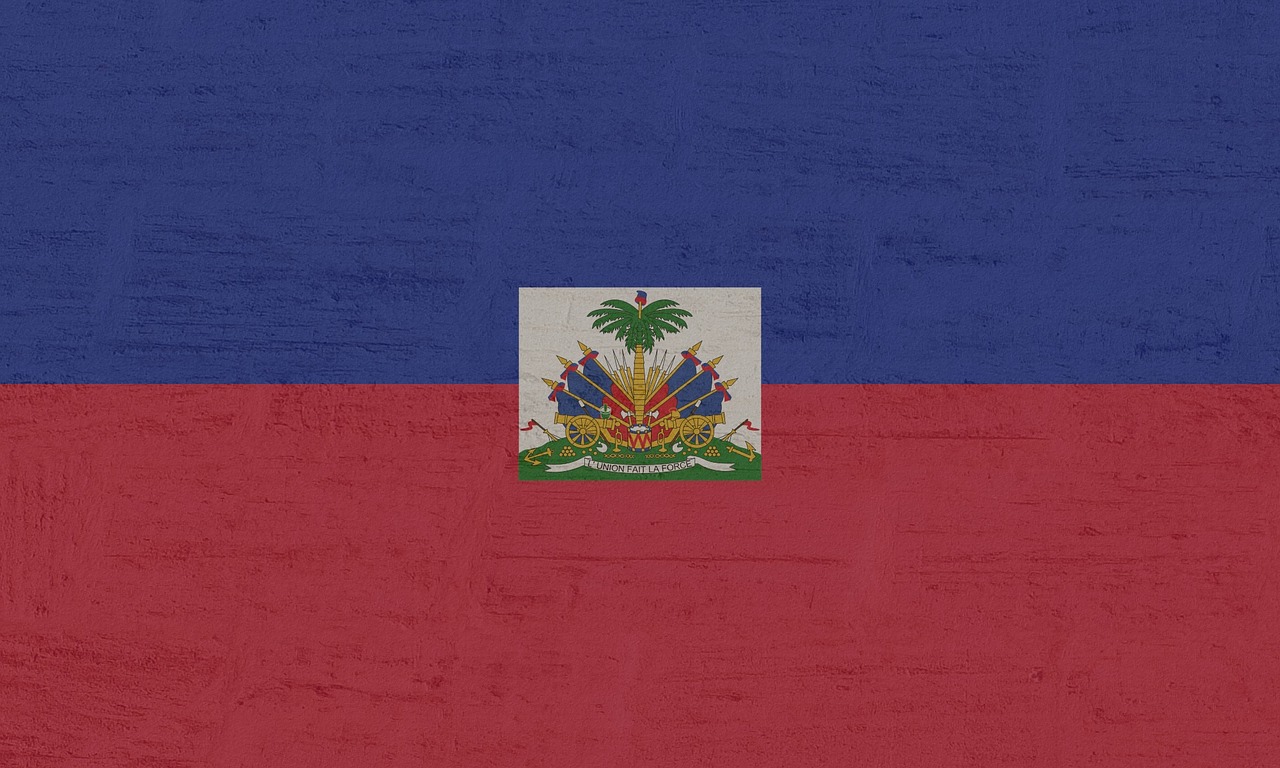
It has been almost two years now since my father and his wife fled from Haiti. Men and boys, armed with assault rifles, descended upon their home in the middle of the night and riddled it with bullets. Using machetes, they tormented my family, hacking away at my cousin’s neck and fatally injuring my father’s dog. The group tore open the windows and doors of the house and carried off a lifetime’s worth of belongings and memories; irreplaceable items made irretrievable. Thankfully, my father and his wife still have their lives; so many people in Haiti have lost theirs, and without urgent change, so many more face the same fate.
A Mission That Never Met the Moment
The Multinational Security Support Mission (MSS) backed by the United Nations and the United States was supposed to improve the security conditions in Haiti. Deployed in June 2024, the MSS, composed primarily of Kenyan police officers, failed by almost every metric. The UN Security Resolution authorizing the MSS outlined the goals of the armed force which entailed supporting the “efforts of the Haitian National Police to re-establish security in Haiti and build security conditions conducive to holding free and fair elections.” The MSS was authorized for an initial period of 12 months. Over 15 months later, neither of its goals was achieved. More than 4,000 people have been killed and over one million displaced just since January of 2025. In areas controlled by armed groups, there is rampant sexual violence, mutilation, and kidnapping; people are burned alive; others are forcibly recruited into joining the very groups terrorizing them. Since the Mission deployed, armed groups have actually expanded their control into new territories. Haiti’s police force remains “weak and largely ineffective” at curbing the violence and bloodshed. Chronically underfunded and understaffed, the MSS never marshalled even half of its goal of 2,500 troops. To fill the security vacuum, civilian “defense” groups and private military contractors hired by the Haitian government have mobilised. Unfortunately, these non-state actors, sometimes with the help of police, are responsible for an increasing number of civilian deaths and human rights abuses. Unaccountable for their actions, and many motivated by private agendas, these non-state actors are further complicating Haiti’s challenging security situation.
New Name, Same Problems
In light of the failures of the MSS, on September 30, 2025, the UN Security Council ended the Mission, authorizing its transition into a larger “Gang Suppression Force” (GSF) and the creation of a UN Support Office in Haiti (UNSOH). However, this Force risks replicating the same missteps that doomed the MSS at the cost of more innocent Haitian lives. The GSF’s mandate to “neutralize, isolate and deter gangs” is more robust and offensive than the MSS’s, embracing a militarized response. Additionally, the GSF framework addresses some of the MSS’s weaknesses by handling financing through UN-managed channels and developing a UN office to coordinate logistics. In contrast, the MSS operated largely outside of the UN system, and it had a weak logistical framework that lacked the capacity to manage the Mission’s operational, material, and administrative needs. Kenya, the lead state of the Mission, had to negotiate separate bilateral agreements with other states to obtain everything from fuel and armoured vehicles to troops. For the GSF, procurement will now be streamlined by the UN. Nevertheless, core deficiencies remain baked into the new Gang Suppression Force model, such as reliance on voluntary contributions. The MSS also had to rely on the good will of other states for funds, equipment, technical support, and personnel; much of the pledged support never came. As of yet, no country has committed a significant number of troops or the sustained funding needed to support the Gang Suppression Force, leaving it at risk of merely being a rebranding of the MSS, destined to fail under another name.
More Governance, Not Guns
Both the MSS and the GSF fail to address the root causes of Haiti’s security crisis: weak governance, a problem that more guns will not solve. Haiti is in its current predicament due to the collapse of its institutions, which have been continuously undermined by international actors that are out of their depth and unaccountable for their “state-building” mistakes—errors which cost human lives every day in the country. Haiti’s Transitional Presidential Council (CPT), a new and chaotic government apparatus forced upon the state by the international community in tandem with the MSS, has also been ineffective. The Council is unconstitutional, and therefore illegitimate, which has undermined its authority in Haiti and exacerbated a power vacuum that armed groups have stepped in to fill. A militarized response cannot replace political reconstruction and is insufficient for achieving long-lasting peace.
Stronger governance from other countries within their own borders is also needed to quell the violence in Haiti. According to a report by the United Nations Office on Drugs and Crime (UNODC), the “principal source of firearms and munitions in Haiti is in the US, and in particular Florida.” In short, the United States’ insufficient control of firearm sales, export and trafficking is directly tied to Haiti’s insecurity, fueling violence and unrest. Regulatory shortcomings of the United States coupled with Haiti’s weak governance allow arms supply lines to be exploited. Further interference with Haitian affairs that does not meaningfully target the trafficking of firearms can only be seen as insincere at best and nefarious at worst.
The shortcomings of the MSS underscore that foreign intervention cannot substitute for local governance. The forthcoming Gang Suppression Force may benefit from stronger logistical oversight from the United Nations, but without stronger efforts to limit the transnational arms trade, even the best-structured mission will be combatting symptoms rather than causes. Whether the GSF can succeed where the MSS failed will depend on factors beyond troop numbers, including whether Haiti can establish a government that garners basic legitimacy, and whether international actors back local grassroots movements with the support necessary to rebuild the state.
Alexus McNally is a human rights attorney and a Teaching Associate at the University of Nottingham where she teaches courses related to criminal law, legal theory, and human rights.
