
 Commentary
Editor’s note: This op-ed centers on the case of Gisèle Pelicot. For readers who may be unfamiliar with the case, a brief synopsis: In December 2024, French electrician Dominique Pelicot was convicted along with 50 other men for years of sexual abuse. For nearly a decade, Pelicot drugged his wife until she lost consciousness, and then invited men into the family home to rape her, meticulously documenting the abuse. The case came to light in 2020 when police discovered the evidence during an unrelated investigation. Pelicot’s wife Gisèle waived her right to anonymity and insisted on a public trial, transforming the case into a watershed moment in France’s conversation about sexual violence and consent. Since the convictions, other Pelicot family members have come forward with additional allegations against Dominique Pelicot.
“I never gave consent.”
Those four words, spoken by Gisèle Pelicot have echoed across France and the world. Her husband, who drugged and raped her over years, and the dozens of men he invited to take part, were convicted shortly after she uttered them.
Since then, other members of the Pelicot family have come forward with their own cases against him, determined to seek justice for what they endured. Their voices tell the story of how abuse thrives when silence, shame, and power protect perpetrators instead of survivors.
Last week, one of the men convicted in this case sought to have his sentence overturned by a French court on the grounds that he believed “rape means forcing someone.” This reminds us that ignorance is not a defense, it is evidence of how our societies continue to fail women and girls.
When the law gets consent wrong
Across the world, rape laws still focus on the use of force rather than the absence of consent.
This is not a technical issue; it shapes the way justice is served. If there are no signs of violence, too often there is no case. Survivors are expected to prove they resisted. Judges and police still ask, “Why didn’t she resist or shout out?” instead of “Did she consent?”
For more than three decades, Equality Now has pushed for a simple change: that laws ask one clear question, did the person agree freely and willingly? Anything less is not consent.
When the law centers consent, it centers dignity. It removes the burden from survivors and places responsibility where it belongs, on those who choose to harm.
The danger of misunderstanding
When societies don’t teach what consent truly means, violence fills the gap. Too many young people grow up thinking silence is acceptance. Too many women and girls are taught to endure, not to cause a fuss. This misunderstanding means that violence can hide in plain sight in marriages, schools, workplaces, and online spaces.
The Pelicot case reveals what happens when submission is mistaken for agreement. Abuse behind closed doors is allowed to continue because too many people, and too many systems, still look away.
Breaking the silence
Gisèle Pelicot’s decision to waive her anonymity and speak publicly was an act of profound courage. Her strength, and that of her family members who are now pursuing their own cases, has forced France to confront not only one man’s crimes, but the wider culture that enabled them.
Their courage reminds us that sexual violence does not exist in isolation. It is part of a pattern of power and silence that repeats itself. By speaking out, the Pelicot family has made that pattern visible, and broken it.
And yet, when a convicted man—in a case so clear and so harrowing—thought he could have his guilty verdict overturned because he believed rape required physical force, it demonstrates how much work remains to be done. This misunderstanding is not just personal. It is systemic. It comes from laws that were written without women in mind, and cultures that still struggle to believe survivors.
Thankfully, a French court rejected his appeal and increased his sentence from nine years to ten, with the lead state prosecutor, Dominique Sie, citing how he “absolutely refuses to take any responsibility.”
The world we must build
Sexual violence is one of the most widespread crises of our time. The World Health Organization estimates that nearly one in three women about 736 million people have experienced physical or sexual violence in their lifetime. That is more than the global toll of many major health emergencies combined and could constitute a pandemic. The consequences are lifelong: trauma, health complications, lost education, fractured families.

The author (center) pictured with Gisèle Pelicot’s son, David, (left) and grandson, Nathan. Provided to JURIST.
However, sexual violence is preventable. It happens when we fail to define consent. A world that values women must start with this principle and be embedded in the law: no one’s body is ever owned, expected, or assumed by anyone else.
Honoring courage, demanding change
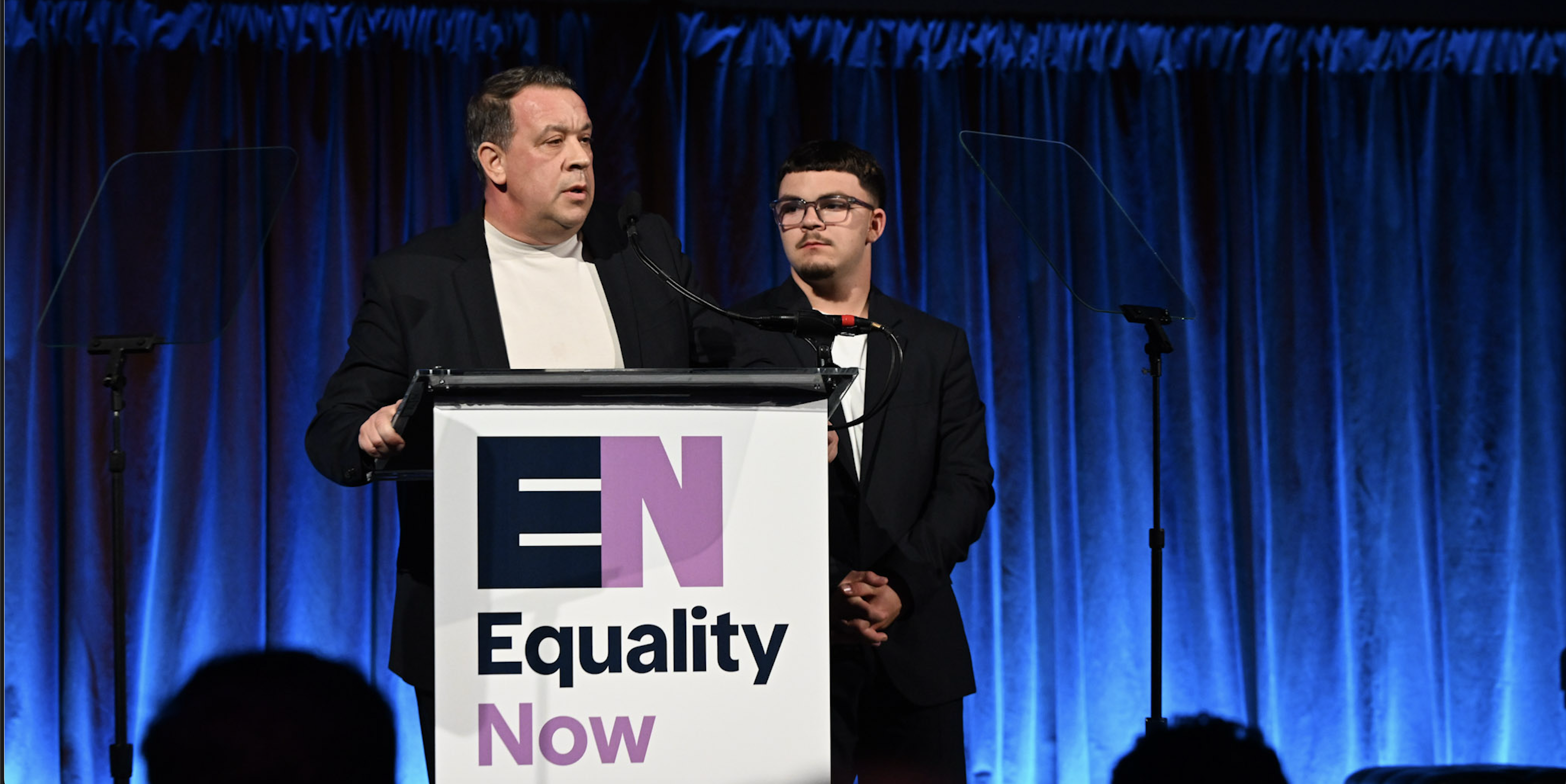
This year, Equality Now will honor the Pelicot family at our annual gala, not only for their extraordinary courage but for their determination to break a system that abuses and shames.
Their story is not only about what happened to them; it is about what happens when laws and societies refuse to listen. By standing up, they have given voice to countless others who have yet to be heard.
Gisèle’s words—“I never gave consent” and “Shame needs to change sides”—should become a call to action worldwide to make every sexual violence law centered in consent.
S. Mona Sinha is the Global Executive Director of Equality Now, an international legal advocacy group dedicated to advancing the rights of women and girls.
